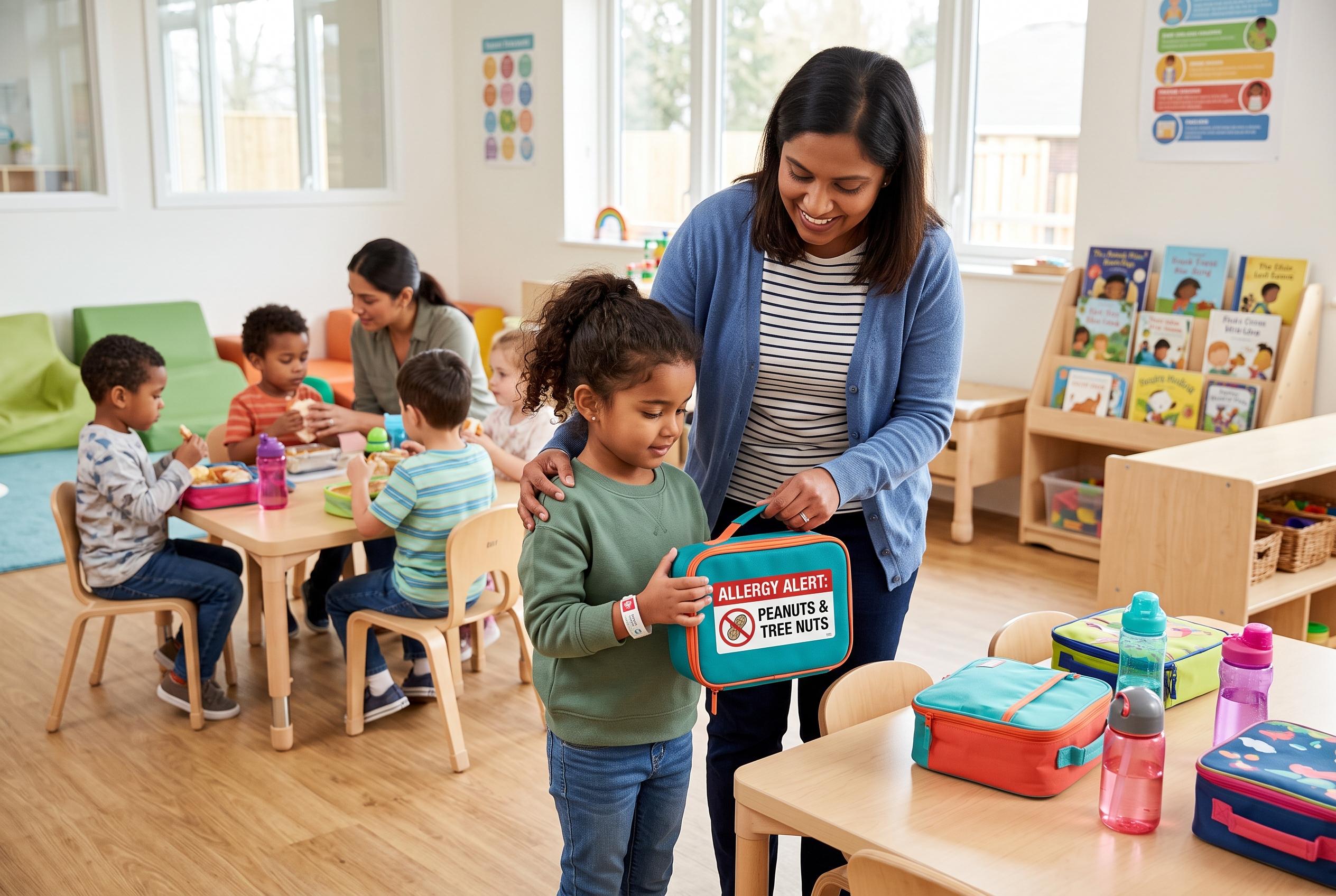

Lunchbox stickers can support allergy awareness but are insufficient on their own. Experts emphasise the importance of clear, durable labels combined with proper planning, education, and ongoing communication to protect children with food allergies in childcare and school environments.
A lunchbox sticker will not keep a child with a food allergy safe on its own, but it can be a useful extra cue for teachers, carers and other adults who need to spot the risk quickly. That matters because young children may not yet read confidently, and busy classrooms and childcare rooms do not always leave much time for second guesses. Allergy experts say the bigger picture still has to include a written care plan, staff training, supervision, food-label checks and age-appropriate education. According to the Cleveland Clinic and Healthline, a child’s allergy plan should be individualised, shared with school staff and updated so caregivers know the allergens, symptoms and emergency steps.
For that reason, the best allergy label is usually the simplest one. A short, familiar word such as PEANUT, MILK or EGG is easier to recognise at a glance than technical terminology, especially for younger children and relief staff. The label should also be easy to see: strong contrast, large type and a clear layout matter more than flashy design. Mass General advises parents to focus on avoidance, communication and teaching, which fits well with a label that is meant to support safety, not replace it.
Pictures can help too, particularly for children who are still learning to read. A peanut symbol, milk carton or egg icon can reinforce the written word and make the message easier to remember. But colour alone is not enough. A red sticker may catch the eye, yet the warning still needs text and a simple symbol so the meaning is clear even if the colour is missed or the child has trouble distinguishing it.
Consistency is another part of making the system work. The same wording and icon can be used on lunchboxes, drink bottles, snack tubs and bags so children begin to associate the design with their own allergy. Durability matters as well: labels need to survive washing, moisture and daily handling. Companies that make allergy labels say waterproof or dishwasher-safe materials are designed for exactly that kind of wear, while childcare food-label suppliers emphasise clear markings that can be removed cleanly when containers are washed and reused.
Even the best sticker, though, cannot replace a proper allergy management plan. Cleveland Clinic and Healthline both stress that children’s allergy information should be written down, shared with caregivers and tied to emergency instructions. That means the lunchbox label should sit alongside the child’s current medical plan, contact details and treatment instructions, not in place of them. It also means families still have to read food labels every time, because ingredients and manufacturing processes can change.
Education matters just as much as labelling. Children need to learn not to swap food, not to accept snacks from friends and to ask a trusted adult if they are unsure. Parents and carers should also talk through birthdays, excursions, camps and other events where food is shared more casually. The simple goal is to make the warning visible and understandable, then back it up with routine, communication and care.
Done well, an allergy label is not a medical document and not a guarantee. It is a practical reminder that helps adults act quickly and helps children begin to recognise their own safety cues. That makes it useful, but only as part of a wider system built on planning, supervision and clear communication.
Disclaimer: This content is for informational purposes only and is not intended to be a substitute for professional medical judgment, advice, diagnosis, or treatment.