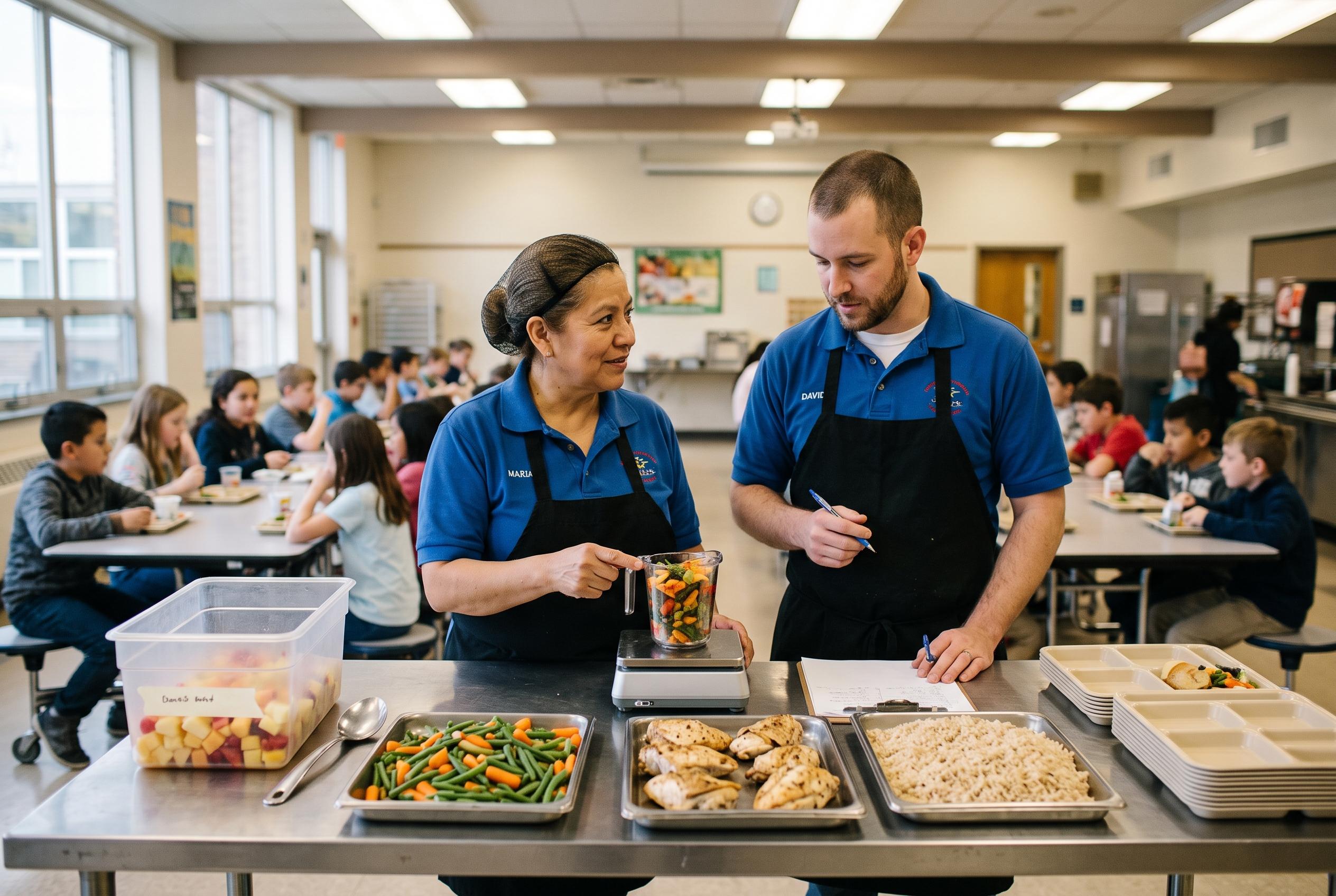

Key suppliers and wholesalers are creating a data-driven framework to evaluate how planned changes to School Food Standards affect what children eat, aiming to provide evidence on policy effectiveness amid rising food costs and reform efforts.
Key suppliers and wholesalers serving England’s school meals sector have begun designing a framework to measure how planned changes to School Food Standards affect what children are offered and what they actually eat.
The work is being carried out by partners in The School Food People, who argue that without data gathered before and after the rules change, any assessment of the new standards will be guesswork. Estefania Di Cuffa, managing director for education at Green Gourmet, is coordinating the project. After a meeting on 25 September, she said the group had settled on two central measures: what is served and what is eaten. Those headline indicators would sit alongside more detailed measures covering compliance, supply challenges, financial viability, meal take-up, lunchbox content, waste, nutritional intake and cost per meal eaten.
The Department for Education is expected to bring in the revised standards in the 2027/28 academic year for primary schools. According to the government, the changes will tighten rules on vegetables, fruit, whole grains, fibre, pulses, processed meat, sugar, salt and saturated fat, with ministers linking the reforms to efforts to reduce childhood obesity and improve concentration in class. The wider policy backdrop also includes the expansion of free school meals to every child in a household receiving universal credit from September 2026, a move the government says will reach more than half a million additional pupils and lift 100,000 children out of poverty.
Industry concern about school food provision has been building alongside those reforms. Bidfood, one of the major suppliers in the sector, has backed calls for universal free meals in primary schools, wider entitlement for benefits-based free school meals, ring-fenced funding for the universal infant free school meals scheme and higher spending to keep pace with rising food costs. Separate local authority decisions have underlined the financial pressure on caterers, with Nottinghamshire County Council recently pausing a planned 40p rise in school meal prices after citing higher food, staffing and energy costs.
The School Food People now plans another working session in October to decide where the data can be collected, how practical it will be to gather and which measures should be prioritised. The aim is to present a framework to the Department for Education in January, build a baseline through to June 2027 and then compare that with post-implementation data in 2028. The group says the approach is intended to be practical, credible and evidence-led, so that schools, suppliers and officials can judge whether the policy changes are improving children’s meals in the real world.
Disclaimer: This content is for informational purposes only and is not intended to be a substitute for professional medical judgment, advice, diagnosis, or treatment.