

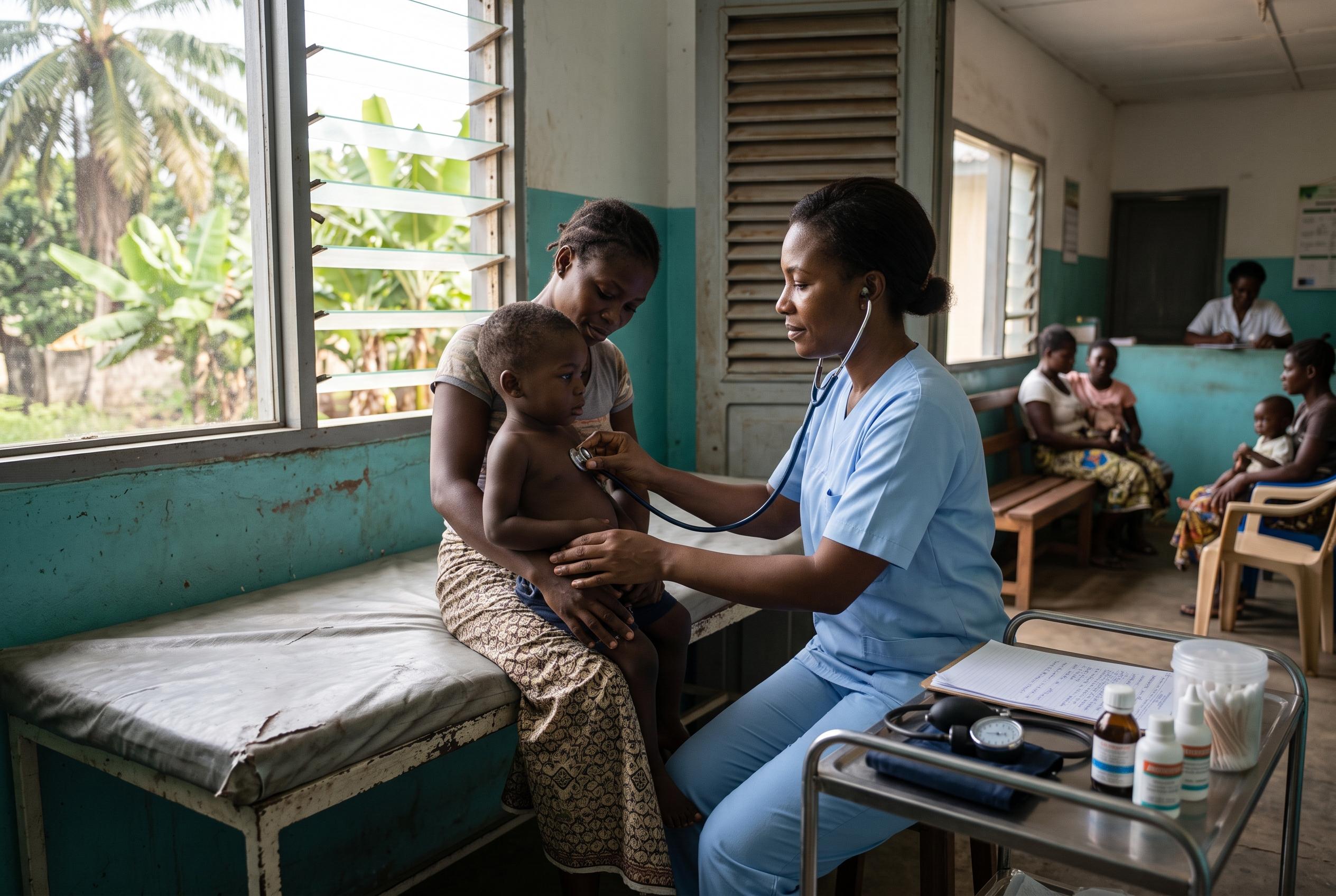

Despite severe staffing shortages and infrastructure challenges, São Tomé and Príncipe has recorded no deaths from malnutrition this year, highlighting both progress and systemic vulnerabilities in its health and nutrition sectors.
São Tomé and Príncipe has recorded no deaths from malnutrition so far this year, a milestone in a country that still has only three national nutritionists and where even the main hospital struggles to secure clean drinking water. Local teams working on the National Nutrition Plan and the Maternal and Child Nutrition Monitoring Plan say the result reflects gradual progress, but also exposes how fragile the system remains.
Miguel Jarimba, the national co-ordinator for the Portuguese charity Helpo, says the shortage of specialist staff is still severe. Yet he points to a sign of hope: the first locally trained cohort supported by the organisation, with backing from Portuguese teachers as well, is due to graduate with 13 new nutritionists. Clara de Sousa, who leads the national nutrition plan, said the absence of any malnutrition-related death this year is, to her recollection, the first time the country has achieved that outcome.
The most serious cases are referred to the central hospital in the capital, but De Sousa said access to potable water there remains a major problem. When the supply fails, water is reportedly delivered by fire service trucks, though it is not always clean. Meanwhile, Maria Tavares, who oversees the child nutrition monitoring programme for Helpo, says the wider picture is hampered by patchy, irregular and often unreliable data, even as some indicators, such as acute undernutrition, have improved.
Tavares said the charity carried out consultations this year for 355 children aged up to five, part of a broader 3,282 nutrition consultations, and that decentralised monitoring in communities and health centres has helped compensate for the lack of trained nutritionists. Nurses and community health workers are being used to identify children at risk and refer them on for treatment. The latest available figures show chronic malnutrition among children under five at 17.2%, acute malnutrition at 4%, low birthweight at 8.4% and anaemia affecting 67.5% of children aged six to 59 months.
The charity says those conditions can hinder growth and also damage cognitive development, undermining learning and later-life prospects. Because most of the country’s nutrition data dates back to 2019, Helpo is this month launching a national survey to assess nutritional status and eating habits, in partnership with the health and agriculture ministries, in the hope of shaping stronger public policy and more targeted intervention.
The challenge extends beyond clinics and screening. Emanuel Montóia, who co-ordinates the National School Food and Health Programme, says the state inherited the scheme from the World Food Programme and Helpo, which now act as partners. The programme reaches about 50,000 children, around a quarter of the population, and in many cases provides the only hot meal pupils receive.
Officials had aimed to supply food to 300 schools for 180 days a year, but have managed only about half that. The programme raises pigs and chickens, sends meat and eggs to schools, and grows crops including tomatoes, chayote, onions, carrots, beetroot, green beans and cabbage. Even so, funding shortfalls have forced it to sell some livestock, eggs and produce simply to keep going. Helpo also supports the scheme through sponsorships that help cover school materials, meals, enrolment and fees.
The wider economic backdrop remains difficult despite signs of progress. In December 2024, the United Nations removed São Tomé and Príncipe from the category of least developed countries, citing sustained gains. But the country still faces deep poverty and vulnerability, with around 13% of the population living in extreme poverty and more than two-thirds affected by socio-economic fragility.
Disclaimer: This content is for informational purposes only and is not intended to be a substitute for professional medical judgment, advice, diagnosis, or treatment.



