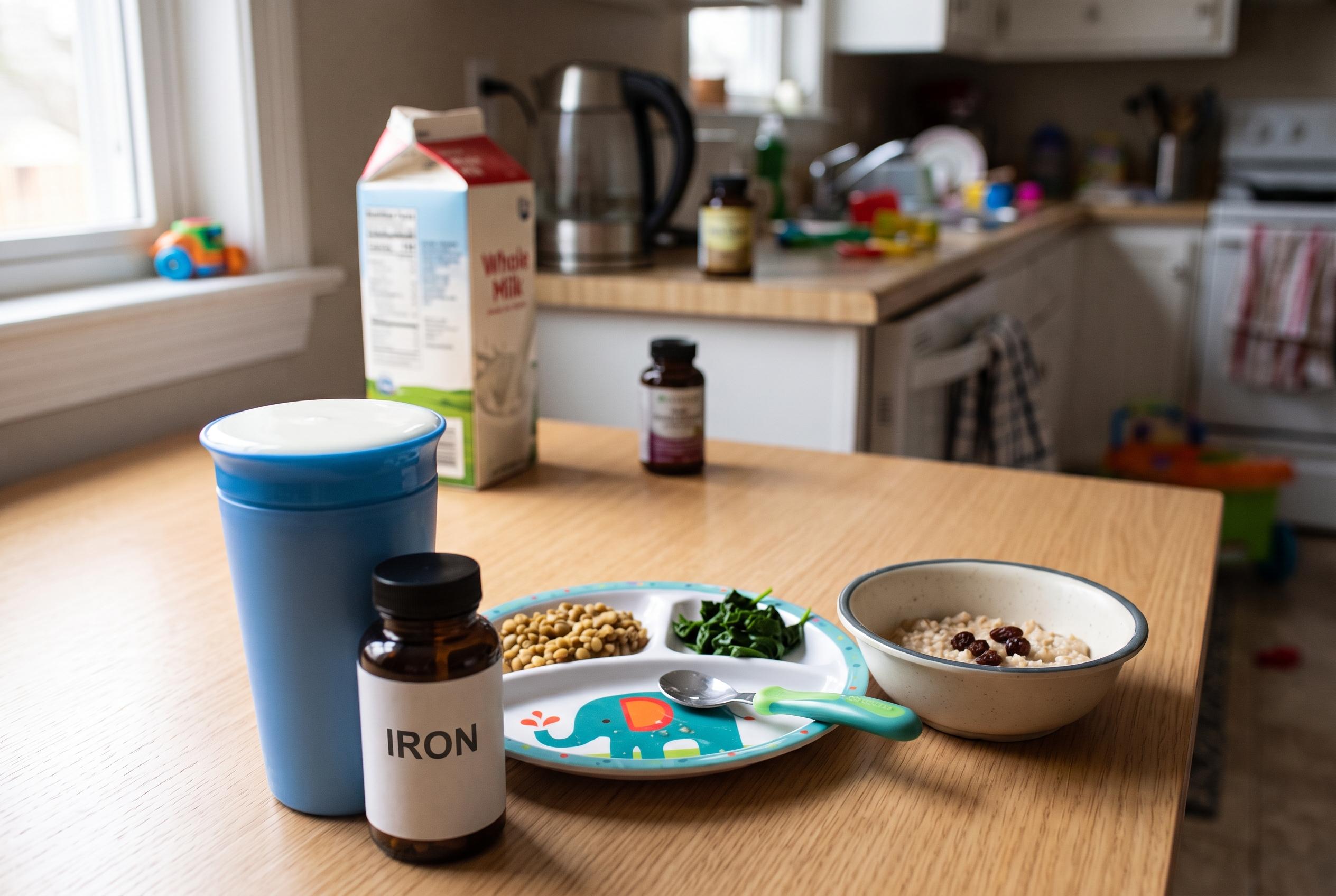

Emerging reports from Australia and the UK highlight a dangerous trend: over-reliance on cow’s milk in young children potentially causing severe anaemia. Experts emphasise the importance of a balanced diet to prevent health risks.
The recent warnings about toddlers drinking too much cow’s milk have struck a nerve with many parents, but doctors say the problem is not milk itself. The risk comes when milk crowds out solid food, especially iron-rich meals, and leaves a young child short of the nutrients needed to make healthy red blood cells.
In Australia, clinicians have linked three toddler deaths over the past two years to severe iron deficiency anaemia, after the children were drinking more than a litre of cow’s milk a day. Dr Sally Campbell of Queensland Children’s Hospital told the ABC that infection helped tip the children into crisis, but that the underlying problem was profound anaemia caused by excessive milk intake.
British doctors say the same pattern can occur here, although it remains uncommon. HuffPost UK reported that one child in the UK, Anaya Khaanan, was said to have died after developing severe anaemia linked to a largely milk-based diet. Dr Arindam Das, a paediatrician, told the publication he had recently treated a toddler with severe iron deficiency anaemia and low blood albumin associated with heavy milk consumption, adding that swelling can sometimes be an unusual warning sign.
Specialists stress that cow’s milk can still be part of a healthy diet after the first birthday. Dr Asiya Maula, a private GP, told HuffPost UK that the concern is excess, not milk in moderation. Milk contains little iron and is filling, so a child who drinks too much may eat less meat, fish, eggs, beans, lentils, leafy greens and fortified cereals, all of which help prevent deficiency.
Children’s Health Queensland says cow’s milk can also interfere with iron absorption, which makes balance even more important. Great Ormond Street Hospital notes that iron deficiency anaemia develops when the body cannot make enough healthy red blood cells, and the signs may include pallor, tiredness, irritability, poor appetite and reduced energy. As the condition worsens, children may become breathless, develop a fast heartbeat, struggle with growth or show unusual cravings for non-food items.
Guidance for parents is straightforward: babies under 12 months should not rely on cow’s milk as their main drink, and after age one, about 350ml a day is usually enough, according to NHS advice quoted by HuffPost UK. If a toddler is routinely drinking more than 500ml a day, especially instead of meals, clinicians suggest speaking to a health visitor, GP or dietitian. Water is best between meals, and iron-rich foods should be offered regularly, with plant sources paired with vitamin C to improve absorption. The message from doctors is simple: milk is useful, but it should complement a varied diet, not replace it.
Disclaimer: This content is for informational purposes only and is not intended to be a substitute for professional medical judgment, advice, diagnosis, or treatment.