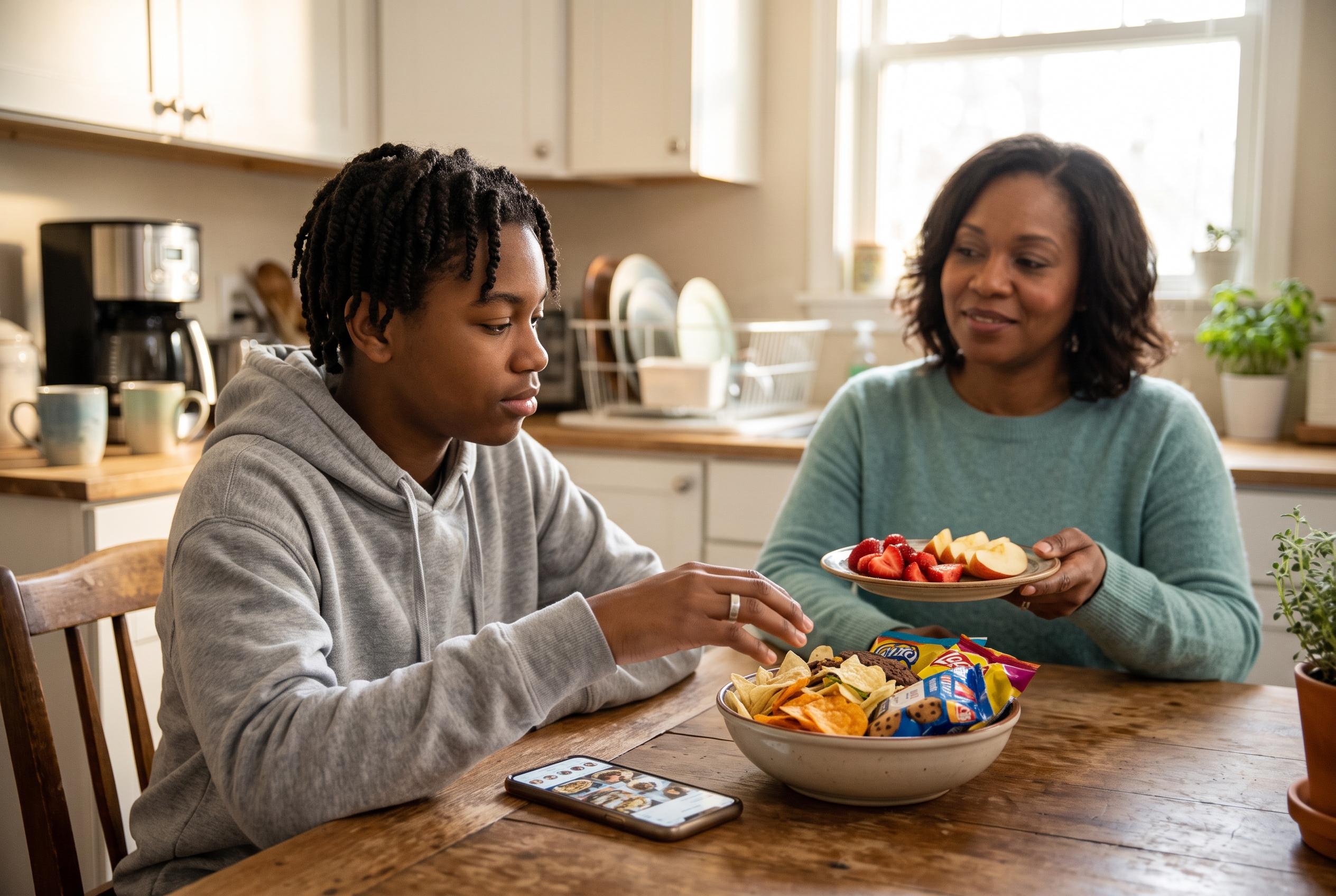

New research from NYU highlights that Black teenagers are more drawn to racially similar food influencers, leading to a greater preference for unhealthy snacks and raising concerns about targeted social media advertising’s impact on youth eating habits.
New research from psychologists and health scientists at New York University suggests that Black teenagers are especially drawn to food influencers who share their race, and that this attention can translate into a greater preference for unhealthy snacks. The study adds to a growing body of evidence that social media marketing can shape young people’s eating habits in ways that are closely tied to identity and representation.
Emily Balcetis, an associate professor of psychology at NYU and the study’s lead author, said adolescence is a key stage for social modelling, when young people are especially alert to cues about what is popular and desirable. In her view, influencers who appear similar to their audience can command more attention and help set norms around what followers value and consume.
The researchers ran two experiments. In the first, more than 500 Black and White teenagers were shown posts from adolescent or young adult influencers promoting either a food item or a non-food product. The participants then rated how appealing the influencer seemed and how likely they would be to interact with the post. They were also asked to choose between healthy and unhealthy snacks displayed side by side. Black participants were more likely to find Black influencers interesting than White influencers, and when unhealthy foods were involved, greater visual interest was linked with a stronger tendency to pick the less healthy option. Among White participants, the racial match between viewer and influencer did not produce the same effect.
A second experiment, involving nearly 900 Black, White, Hispanic and East Asian teenagers, found similar patterns among Hispanic and East Asian participants. The researchers again saw no meaningful effect of racial similarity on visual interest among White adolescents. Their findings are consistent with earlier work showing that minority teenagers are more likely to engage with unhealthy food and drink brands on social media, and with studies suggesting that racially targeted advertising can be especially persuasive for Black and Latino youth. Public health researchers have also argued for community-led responses, including advocacy campaigns aimed at reducing the influence of unhealthy food marketing on young people.
Balcetis said the findings point to visual attention as a central mechanism linking racially targeted marketing to unhealthy food choices. The broader concern is not simply that adolescents see more adverts, but that the adverts may land with greater force when the person promoting the product feels familiar, aspirational or culturally proximate.
Disclaimer: This content is for informational purposes only and is not intended to be a substitute for professional medical judgment, advice, diagnosis, or treatment.