

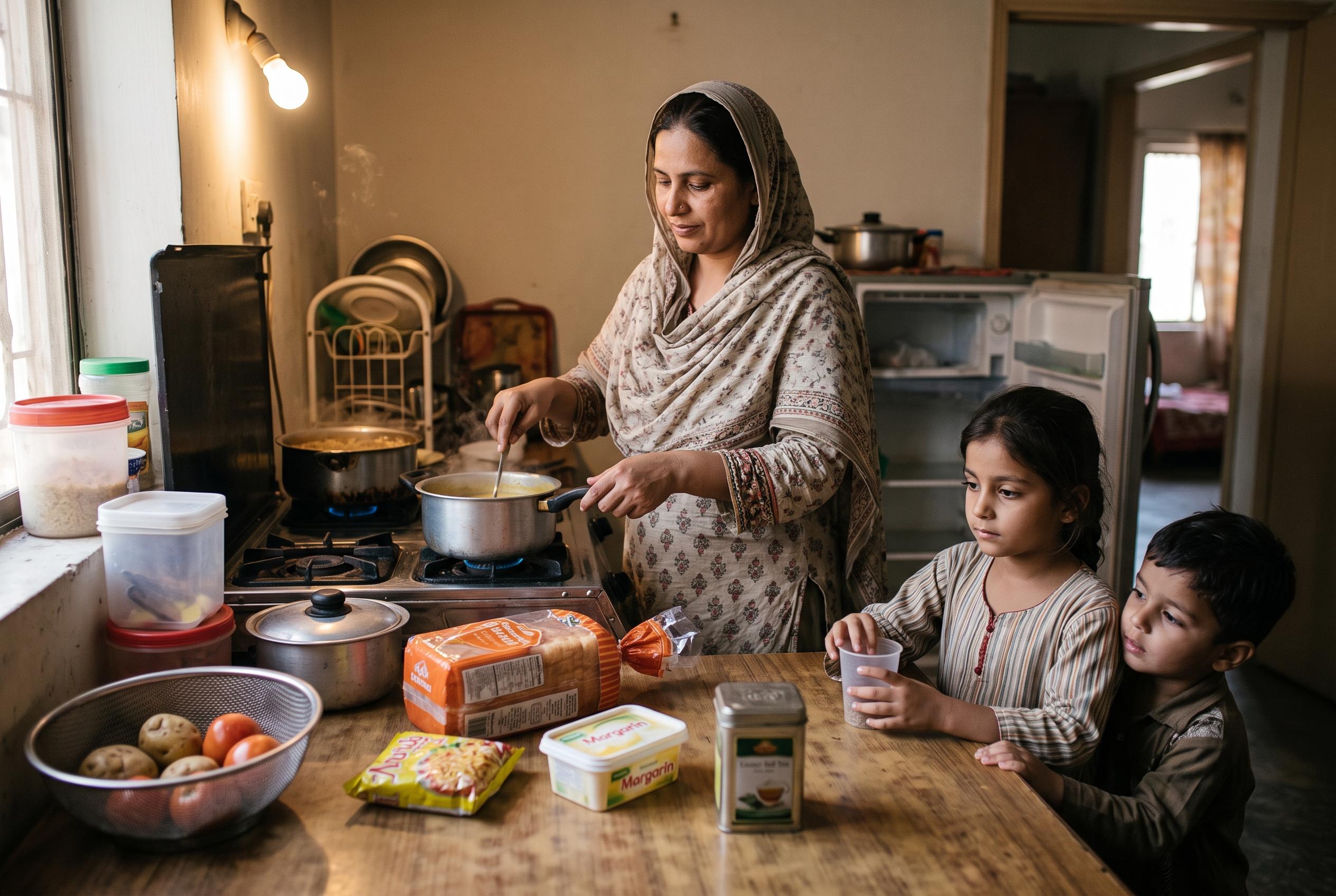

Over 60% of Pakistanis cannot afford a healthy diet, exposing a crucial shift in food insecurity from calorie supply to nutritional quality amid policy failures and rising costs, warns FAO.
More than 60% of Pakistanis cannot afford a healthy diet, a finding that underlines how deeply food insecurity is now tied to nutrition rather than simple calorie supply. The issue is not only that many households are short of money; it is that the food system is failing to make the right foods available at prices people can actually pay. The result is a country where under-nutrition persists alongside rising obesity and diet-related disease, a combination that health experts say reflects structural problems in what is grown, traded and subsidised.
The Food and Agriculture Organisation has warned that Pakistan’s food supply is skewed towards staples and sugar, while vegetables, fruit, legumes, pulses, roots and tubers remain in short supply. In a presentation in Pakistan in February 2026, FAO analysts said policy choices could make a measurable difference, particularly by reducing food losses, which they described as the most effective and cost-efficient intervention. Their analysis also tested other options, including lifting productivity in deficit crops and redirecting public support away from wheat towards fruit and vegetables, reinforcing the argument that agrifood policy must be designed around nutrition rather than output alone.
That message aligns with earlier FAO research showing that healthy diets are typically far more expensive than diets defined only by enough calories. FAO’s global work has also shown that affordability cannot be fixed by nutrition education alone if families simply cannot buy the foods they are advised to eat. In Pakistan, a 2024 joint report by FAO, the Food Prices for Nutrition project at Tufts University and the Government of Pakistan found that high prices for recommended food groups, combined with low disposable income, leave healthy diets out of reach for many households. The report called for regular monitoring of diet costs so that agriculture, pricing and social protection policies can be adjusted to reflect what people actually need to eat.
For policymakers, that means the response has to stretch well beyond food production targets. FAO’s broader guidance on healthy-diet indicators argues that governments need better data on the cost of nutritious food, stronger action on food losses, and more evidence-based support for crops that improve diet quality. In practical terms, that could include investment in storage, transport and cold-chain systems, as well as measures that make fruit, vegetables and pulses more affordable and accessible. Without that shift, Pakistan risks continuing to produce enough food in aggregate while still failing to nourish a large share of its people.
Disclaimer: This content is for informational purposes only and is not intended to be a substitute for professional medical judgment, advice, diagnosis, or treatment.



