
With escalating food insecurity across Nigeria’s North-East and dwindling international support, experts call for a shift to locally funded, community-based nutrition systems to prevent further crises amid funding shortfalls.
Nigeria’s worsening hunger emergency is increasingly exposing the limits of dependence on foreign aid. In communities across the North-East, local responses have started to fill gaps left by shrinking international support, from women’s savings groups pooling money for treatment costs to volunteers screening children and mothers making nutrient-rich Tom Brown flour from local grains. The authors argue that World Humanitarian Day should prompt a harder question: what happens when the external funding that sustains life-saving nutrition care begins to disappear?
The scale of the crisis remains stark. United Nations-backed food security assessments project that 34.7 million Nigerians will face acute food insecurity during the 2026 lean season, while the World Food Programme says nearly 35 million people are affected by food insecurity nationwide. The FAO has also warned that more than 5.4 million children could be acutely malnourished, with the conflict-hit North-East remaining the epicentre of the emergency. Borno, Adamawa and Yobe continue to bear the heaviest burden, alongside rising insecurity in other parts of the country.
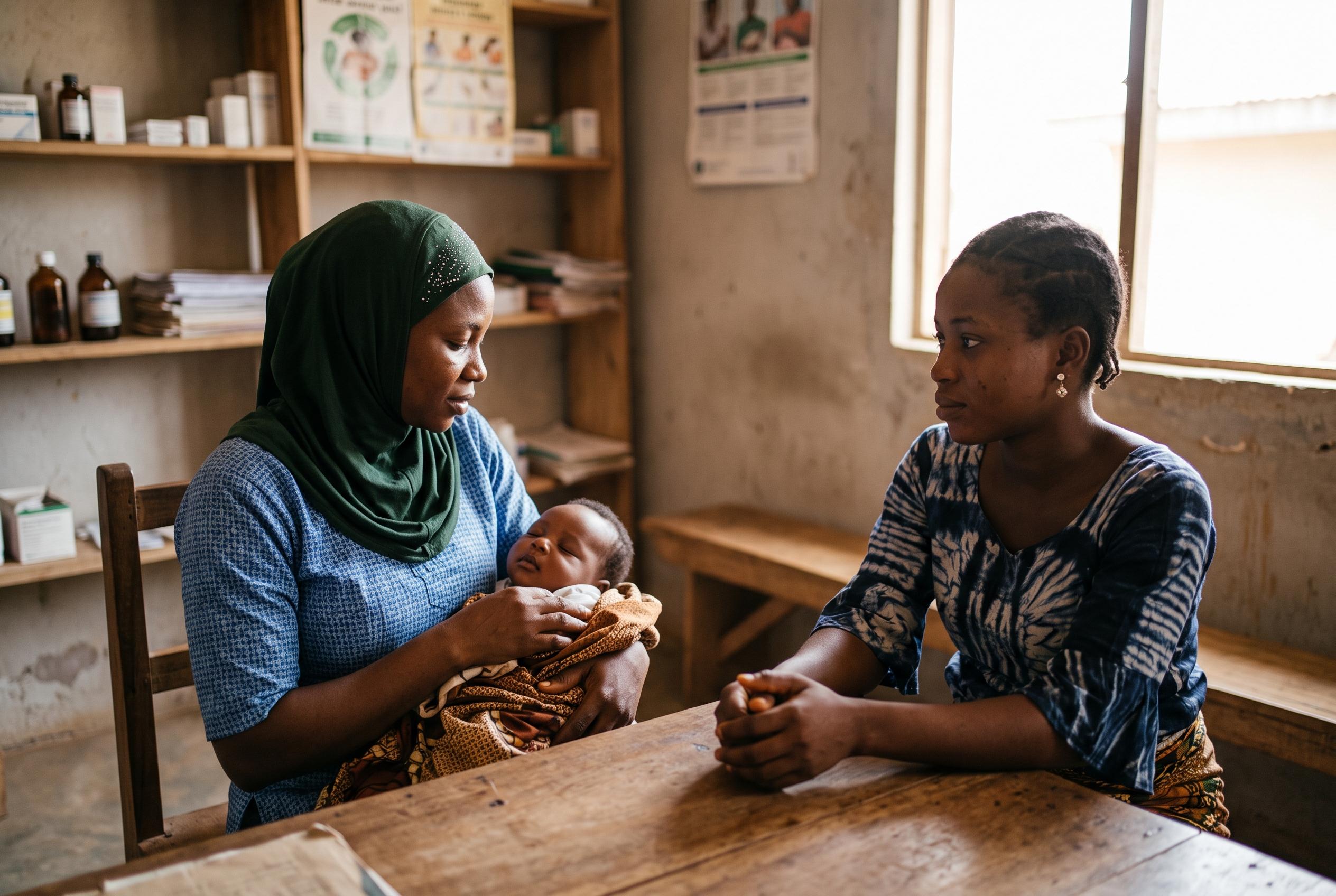
Yet the article also points to a system that already works when it is properly funded: Nigeria’s community-based management of acute malnutrition, known as CMAM. This model treats severely malnourished children close to home through outpatient care, home support and ready-to-use therapeutic foods, rather than waiting for them to reach hospitals. The authors cite the example of Hadiza Ibrahim, a community volunteer in Mafa, Borno State, who screens around 40 children a day with a mid-upper arm circumference tape and guides mothers on infant feeding and nutrition. They say the results from earlier donor-backed work were strong, with high recovery rates and thousands of caregivers trained.
The problem, they say, is not local ability but fragile financing. Once United States funding to World Food Programme-supported nutrition clinics dried up in 2025, services contracted sharply. By mid-2026, the WFP said it could reach only 740,000 of 6.2 million food-insecure people across three North-East states, while its own warnings said at least 1.3 million people risked being left without vital support unless fresh money arrived. The authors also note that Nigeria’s 2025 humanitarian appeal was funded at just 16 per cent by August that year, and that the nutrition sector still faces a $73.2 million shortfall in 2026.
Their case is for a shift from donor dependence to domestic responsibility. They argue that the government’s pledge to move towards a more locally led humanitarian response should now be matched by money in the budget, including a national nutrition emergency fund, better integration of community nutrition into primary healthcare and guaranteed funding for volunteers and other frontline workers. In their view, the lesson is simple: community-led nutrition support can save lives, but only if it is treated as public infrastructure rather than temporary charity. The cost, they argue, is lower than the cost of repeated crises, and the model has already proved itself.
Disclaimer: This content is for informational purposes only and is not intended to be a substitute for professional medical judgment, advice, diagnosis, or treatment.