

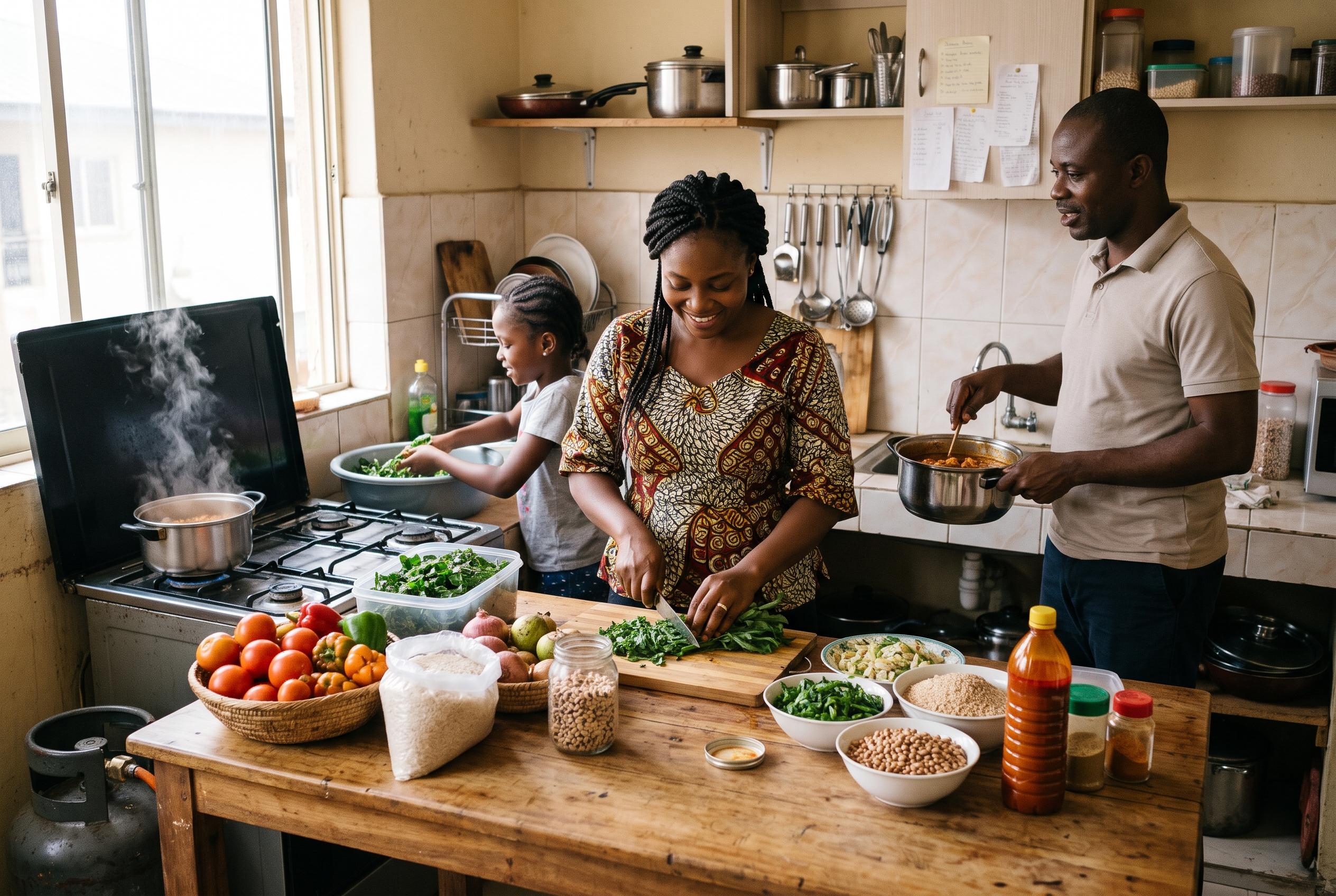

The rising cost of a nutritious diet is pushing Nigerian households towards cheaper staples, but careful planning and local foods can help preserve variety and essential nutrients.
A healthy plate in Nigeria is becoming harder to afford, and for many households the problem is no longer about lifestyle preferences but about survival. As food prices keep climbing, parents are being forced to decide which essentials can be stretched, skipped or replaced. Eggs, milk, fish, meat, chicken, vegetables and fruit are increasingly competing with rent, transport, school fees and other unavoidable expenses.
According to the National Bureau of Statistics, the average daily cost of a healthy diet for one adult rose from ₦858 in January 2024 to ₦1,451 in November 2024, before reaching about ₦1,589 by April 2026. Other reports based on the same figures said the latest increase reflected broad-based food inflation, with animal-source foods the most expensive category even though they accounted for a relatively small share of daily calories. The estimates also do not include transport or cooking costs, such as gas, which push the real price of meal preparation even higher.
The strain is showing up in Nigeria’s nutrition outcomes as well. UNICEF has said Nigeria has the second-highest burden of child stunting in the world, a sign of long-term undernutrition that often begins with poor access to diverse meals in early childhood. That reality gives a sharper edge to an issue many families now face every day: how to feed children and adults well when a balanced plate costs far more than many households can comfortably spare.
Yet a nutritious diet does not have to depend on imported produce or expensive ingredients. Small changes can make meals more varied without pushing costs out of reach. Local vegetables such as ugu, waterleaf, okra, carrots and cabbage can add colour and essential nutrients to soups, stews, rice and yam dishes. Seasonal produce is usually cheaper, and shoppers who compare prices in local markets and buy only what they can use before it spoils are often better able to control spending.
Beans and other legumes can also help fill the gap left by pricier meat, fish and eggs. Bean porridge, moi-moi, akara, groundnuts and cowpeas provide protein and fibre at a lower cost than many animal products. For families that cannot buy large quantities at once, smaller but more regular purchases may be easier to manage.
Nutrition experts often advise households to aim for at least one deliberately balanced meal each day. That might mean pap with moi-moi or akara for breakfast, rice with beans and vegetables, or yam with an egg-and-vegetable sauce when affordable. The idea is not to treat one meal as a full solution, but to make sure the day includes foods that provide energy, protein and vitamins rather than relying only on starch.
Planning ahead can also reduce waste and save money. Checking the kitchen before going to market, drawing up a simple weekly menu and cooking in batches can all help households stretch their budgets. Leftovers should be stored safely and reheated properly, while dry foods are best kept in clean, airtight containers. In a period when even basic nutrition has become expensive, small habits may be one of the few tools families can use to keep healthier meals within reach.
Disclaimer: This content is for informational purposes only and is not intended to be a substitute for professional medical judgment, advice, diagnosis, or treatment.



