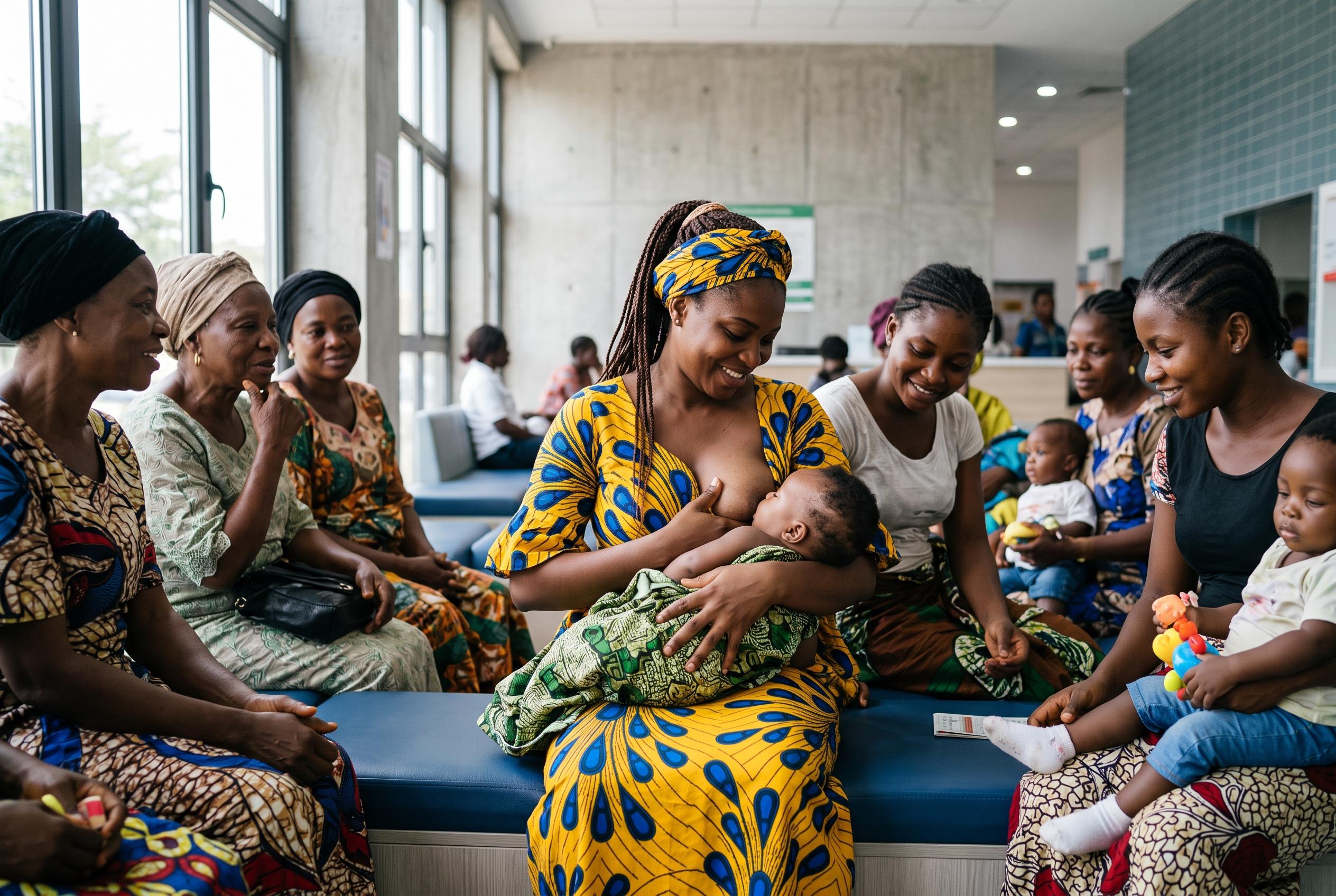

Nigeria launches a nationwide initiative to combat declining breastfeeding rates, highlighting the importance of community, policy support, and workplace measures to improve child survival and maternal health amid persistent myths and weak systems.
Nigeria’s latest breastfeeding campaign has been driven as much by the country’s weak support systems as by the medical case for breastmilk itself. UNICEF and the federal health ministry used World Breastfeeding Week in August to press the point that too many babies are still missing recommended feeding practices, while the 2023-24 National Demographic and Health Survey showed early breastfeeding initiation had slipped to 36 per cent from 42 per cent in 2018. Vanguard also reported that only 12 states plus the Federal Capital Territory currently provide paid maternity leave long enough to cover the full six months recommended for exclusive breastfeeding. (fmino.gov.ng)
The official message was blunt: breastfeeding is not simply a private choice inside the home, but a public-health measure with consequences for illness, nutrition and survival. In separate August appeals, the Federal Ministry of Health and Social Welfare said babies should be put to the breast within an hour of birth, fed only breastmilk for six months, and then continue breastfeeding alongside suitable complementary foods up to the age of two or beyond. The Guardian reported UNICEF’s warning that Nigeria’s low rates of early initiation and exclusive breastfeeding are helping to drive preventable childhood illness, malnutrition and deaths. The ministry turned that argument into a nationwide programme, with a national commemoration on Monday, 3 August 2026, alongside community outreach, health-worker training and media campaigns across all 36 states and the FCT. (guardian.ng)
At community level, that national push played out in practical terms. On 7 August, the Health Writers Association of Nigeria took its advocacy to Majidun Primary Health Centre in Ikorodu, Lagos, where pregnant women and nursing mothers were urged to start breastfeeding immediately after delivery and to avoid giving infants water or herbal mixtures during the first six months. Radio Nigeria Lagos reported that HEWAN president Vivian Ihechu described breastfeeding as a proven and sustainable way to cut infant deaths, while Janet Otah, chief nursing officer at the clinic, told mothers that breastmilk is a complete meal and said breastfeeding should continue up to two years alongside nutritious local foods introduced from six months. The same event was also used to underline benefits for mothers, including lower risks linked to heavy post-delivery bleeding and some longer-term illnesses. (radionigerialagos.gov.ng)
Much of the Lagos outreach was aimed at undoing persistent myths. According to Nigeria Health Online, Dr Opeyemi Osunyomi, the medical officer of health for Ikorodu West Local Council Development Area, told mothers not to throw away colostrum, calling it a baby’s “first natural vaccine”. She said the thick first milk is packed with antibodies and nutrients that help protect newborns even before routine immunisations begin. Ihechu also warned against giving babies water, teas or herbal concoctions, presenting those practices as a direct challenge to exclusive breastfeeding rather than a harmless tradition. (nigeriahealthonline.com)
The same speakers were careful not to reduce the issue to slogans. Osunyomi advised breastfeeding women to build balanced diets around affordable local foods such as fish, eggs, vegetables, fruit and carbohydrates, rather than assume adequate nutrition requires expensive products. She also warned against self-medication and unverified traditional remedies, saying some medicines and herbal preparations may be unsafe in pregnancy or while breastfeeding. Radio Nigeria Lagos said Ifeoma Ibe of She Arises Foundation linked breastfeeding to emotional, physical and psychological bonding, urging mothers to use touch, eye contact and speech during feeds. The common thread was that mothers need food, rest, accurate advice and support if breastfeeding is to be sustained in real life. (nigeriahealthonline.com)
UNICEF’s Lagos field office made the same point more directly when it turned to workplaces and families. Celine Lafoucriere said south-west Nigeria, with its busy markets, hospitals and large population of working mothers, could lift breastfeeding rates if employers offered practical help rather than token sympathy. The Guardian reported her call for adequate maternity leave, flexible hours, private spaces for feeding or expressing milk, crèches and breastfeeding breaks without penalty. She said health workers should provide consistent advice and resist misleading marketing of breastmilk substitutes, while husbands, grandmothers, mothers-in-law and religious leaders should actively support nursing mothers. “A mother cannot do this alone,” Lafoucriere said. (guardian.ng)
The campaign has also spread beyond Lagos into a wider argument about information and policy. Punch reported that UNICEF convened a two-day media dialogue in Enugu for journalists from Benue, Imo, Cross River and Enugu states, in collaboration with the Broadcasting Corporation of Abia State and with funding from the US government, the United States Mission in Nigeria, the Child Nutrition Fund, the Gates Foundation and The Church of Jesus Christ of Latter-day Saints. At that meeting, Dr Hilary Ozoh described breastfeeding as one of the most effective investments a society can make, while Dr Ijeoma Onuoha-Ogwe said the aim was to keep pressure on policymakers over family support, office and market spaces for nursing mothers, and accurate year-round coverage. Dr Chikezie Obasi put the stakes starkly, saying nearly 820,000 child deaths could be prevented each year through optimal breastfeeding, and called for compulsory six months’ paid maternity leave. (punchng.com)
That leaves Nigeria with a message that is simple in principle but demanding in practice. Breastmilk may be described by officials as safe, hygienic, readily available and cheaper than formula, but the August campaign repeatedly returned to the same obstacle: mothers cannot carry the burden alone. The ministry called collective support for breastfeeding an investment in healthier children and stronger families, while Lafoucriere used a more intimate register when she addressed exhausted women directly: “To every mother in Lagos feeding her child right now, alone in the quiet hours of the night, we see you. You are giving your child their first and best gift.” (fmino.gov.ng)
Disclaimer: This content is for informational purposes only and is not intended to be a substitute for professional medical judgment, advice, diagnosis, or treatment.