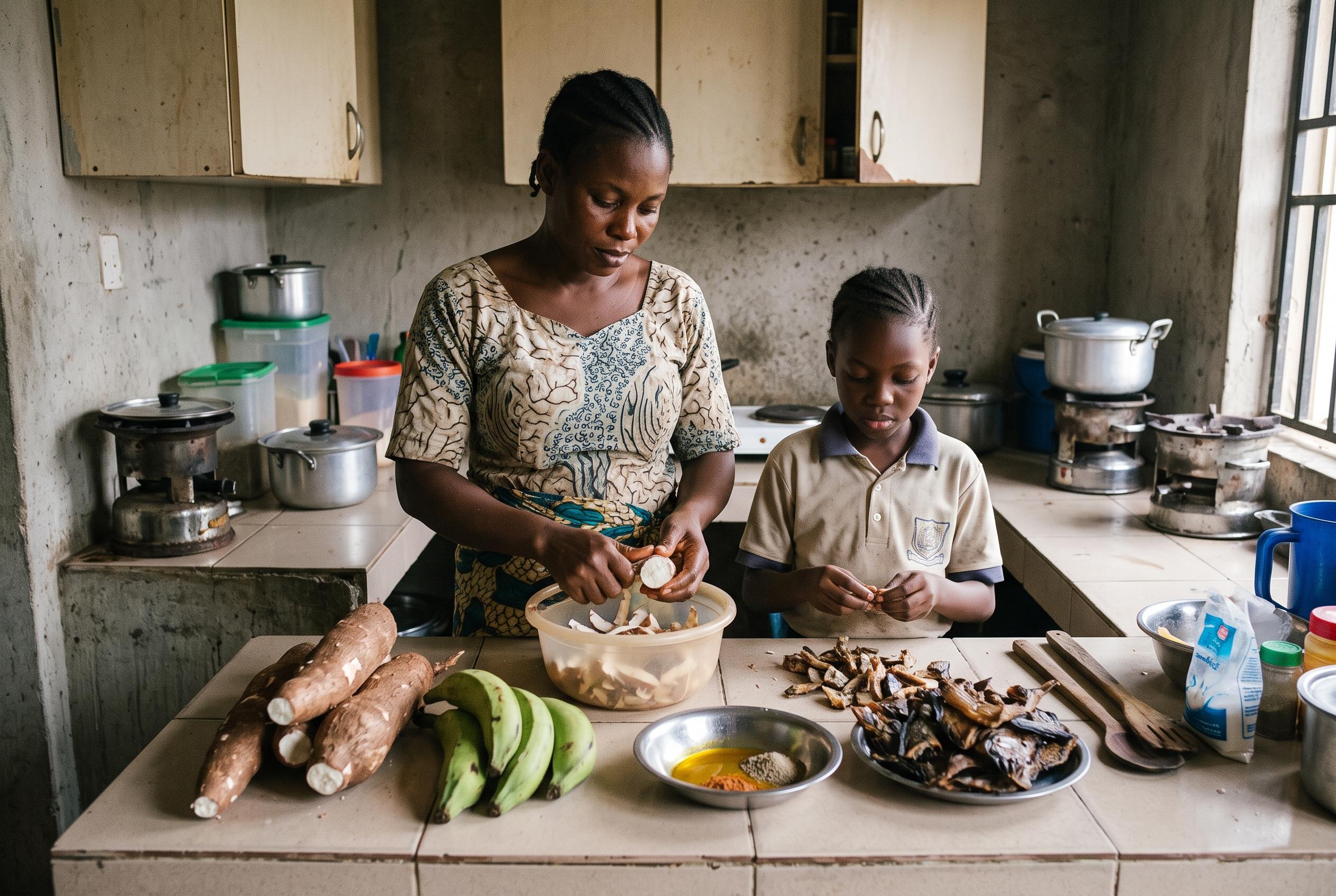

As inflation and currency devaluation hit household budgets, Nigerian families are adapting their diets, often sacrificing nutritional value for affordability, raising concerns about long-term health impacts.
For Alele Hamzat, a mother of four in Nigeria, breakfast has become less about nutrition than arithmetic. The family that once started the day with eggs, tea and bread now relies on boiled yam or garri, a cassava meal soaked in water. She told Vanguard that the goal has changed from eating well to simply eating at all.
Her experience reflects a wider strain across Nigeria, where inflation, a weaker currency and the removal of fuel subsidy have pushed food beyond the reach of many households. Vanguard reported that families once able to manage varied meals are now turning to cheaper staples, while food vendors say demand for rice and beans has collapsed. According to the National Bureau of Statistics, about 65.8% of Nigerian households cannot afford healthy, nutritious or preferred foods because of money problems.
Other reporting points to how severe the squeeze has become. TV360 Nigeria said the National Bureau of Statistics found that 71% of households have been hit by rising food prices, with shortages especially acute in June, July and August. TheCable reported that a United Nations study estimated 191.2 million Nigerians could not afford a healthy diet in 2025, up sharply from 137.5 million in 2017, as the minimum daily cost of that diet rose from $2.78 to $4.17 over the same period.
The result is a quiet but damaging shift in what many people eat. Dietitians quoted by Vanguard warned that families are replacing fresh fish, meat and vegetables with noodles, bouillon cubes and low-quality oils because those items stretch further. Charles Alozie, a clinical nutritionist, said the pattern amounts to a drift towards “empty calories” that can worsen long-term health. Doctors say the impact is most serious for pregnant women and young children, who need regular protein and micronutrients for healthy growth.
The economic pressure is also changing how people shop and sell food. Restaurant owner Dorathy Agbede told Vanguard that customers who once bought beans, rice and vegetable soup now often order only one meal a day, while some buy on credit. Traders and home cooks say portions are shrinking and meals are being skipped entirely, a coping strategy that researchers and aid groups describe as a sign of food insecurity rather than thrift. Public health experts are calling for lower farm input costs, better roads and stronger protection for farmland to ease food inflation and restore access to balanced diets.
Disclaimer: This content is for informational purposes only and is not intended to be a substitute for professional medical judgment, advice, diagnosis, or treatment.