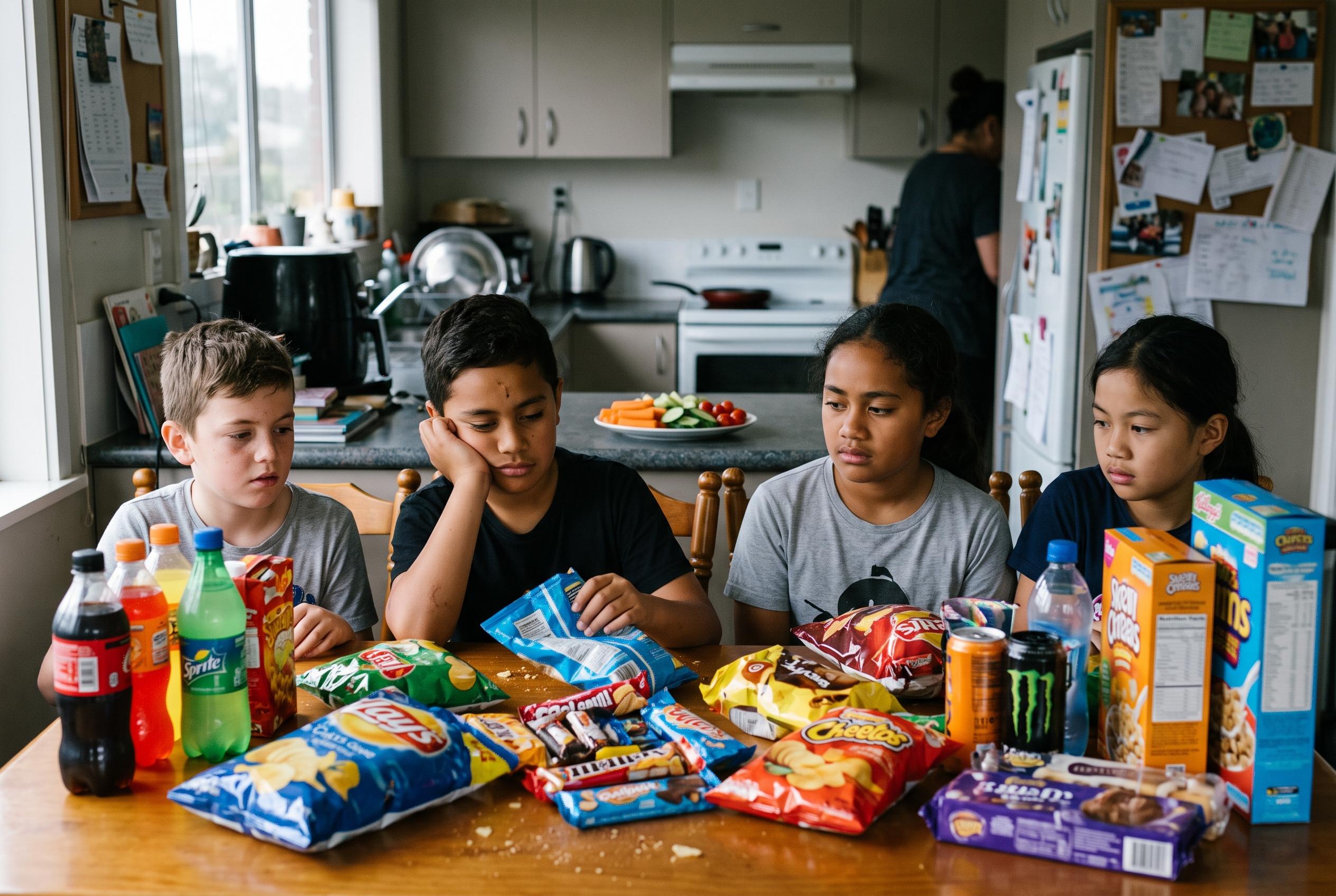

A damning new report criticises New Zealand ministers for failing to improve food environments, leaving children exposed to harmful marketing and inadequate nutritional support amid rising obesity and diet-related illnesses.
Researchers have accused New Zealand ministers of failing to act on food policy, saying children are bearing the cost as unhealthy diets and obesity continue to drive preventable illness. A new benchmarking assessment found little meaningful progress on measures designed to improve food environments, despite repeated calls from public health experts for stronger intervention.
Dr Sally Mackay, the lead author and a researcher with Health Coalition Aotearoa and the University of Auckland, said a panel of experts found very little had changed in policies intended to support children’s health. The report argues that governments have repeatedly left in place conditions that favour the food industry over measures that would be cheaper and more effective at reducing non-communicable diseases.
The scale of the problem remains significant. Health Coalition Aotearoa says unhealthy diets and excess body weight account for a substantial share of premature death and disability in New Zealand, while the new benchmarking work says about 15% of years of life lost annually to disability or death are attributable to obesity and unhealthy diets. Public health groups also say the evidence has long been clear that mandatory policies, rather than voluntary pledges, are needed to shift the food supply and protect children.
One of the sharpest criticisms in the report concerns marketing. Dr Kelly Garton, a senior researcher at the University of Auckland and a food spokesperson for Health Coalition Aotearoa, said children are exposed to large volumes of junk-food advertising across the day. The organisation cites University of Otago research suggesting children see far more unhealthy food adverts than healthy ones, reinforcing concerns that current rules do little to limit exposure.
The report’s main recommendations include expanding the healthy school lunch programme, tightening restrictions on food marketing to children, introducing a sugary drinks levy, setting targets for salt and sugar reduction, and strengthening school food standards. Advocates also want a new national nutrition survey and permanent funding for a more nutritious version of Ka Ora, Ka Ako, saying this would help address hardship among families where food insecurity is common.
Sande Mareroa-Gates, another Health Coalition Aotearoa spokesperson, said food policy can help reduce health inequities and improve wellbeing, particularly for households that struggle to afford enough kai. The group argues that families living on low incomes are not short of insight about what works; rather, they need governments to back affordable healthy food with policy, not rhetoric.
Disclaimer: This content is for informational purposes only and is not intended to be a substitute for professional medical judgment, advice, diagnosis, or treatment.