

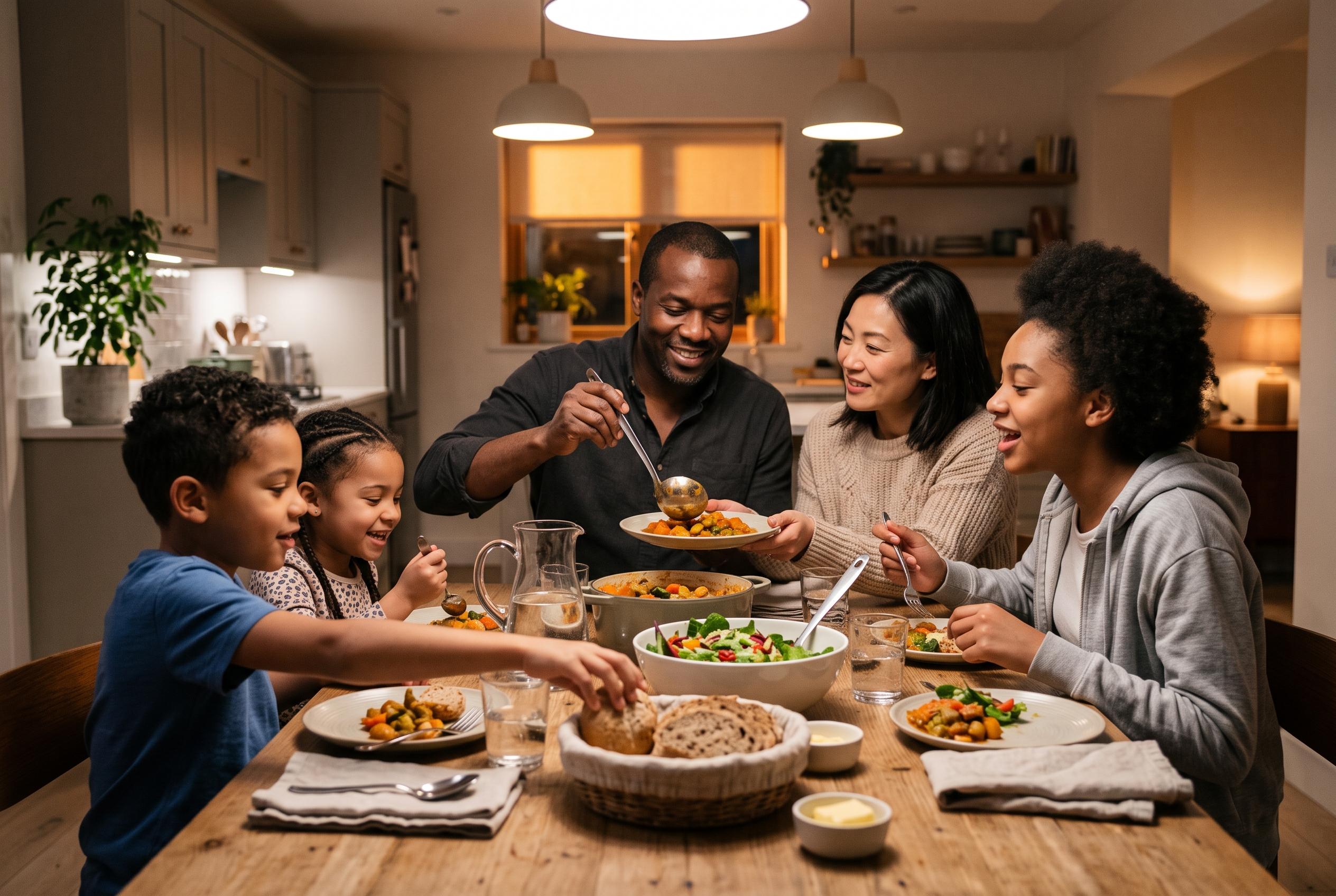

September’s National Family Meals Month underscores how shared meals boost physical, emotional, and social wellbeing for children and teenagers , with new insights into practical ways families can build this beneficial habit.
September’s National Family Meals Month is a reminder that the benefits of eating together go well beyond the food on the table. According to Utah State University Extension, the more often families share meals each week, the greater the potential gain for children and teenagers, from healthier eating habits to stronger social and emotional development. Research and guidance from Johns Hopkins Medicine and the American Academy of Pediatrics say family meals can support better nutrition, mental wellbeing and more positive routines at home.
One of the clearest advantages is dietary. Children who regularly join family mealtimes are often more willing to try a wider range of foods, including fruits, vegetables, whole grains, lean proteins and calcium-rich foods, according to Utah State University Extension. Johns Hopkins Medicine says keeping family meals regular can encourage healthier choices overall, while a systematic review published in Nutrients found that more frequent family meals are associated with improved nutrition in children and adolescents.
The benefits are not limited to physical health. Utah State University Extension says routine family meals can help young people manage emotions, improve their relationship with food and interact more positively with others. The American Academy of Pediatrics says shared meals can also strengthen social skills, while the systematic review in Nutrients found associations between family mealtimes and better mental health in children and teenagers.
There is also evidence that family meals can support learning and behaviour. Utah State University Extension says children who take part in conversations at the table are more likely to develop larger vocabularies and earn better grades. Its guidance also notes that regular family meals may help protect against risky behaviour, including substance use, sexual activity and violence. The Family Dinner Project and Johns Hopkins Medicine similarly link regular shared meals with stronger self-esteem and healthier habits.
For families trying to build the habit, experts say the key is to start small. Johns Hopkins Medicine and the American Academy of Pediatrics both recommend simple menus, advance planning and involving children in meal preparation. Utah State University Extension suggests beginning with one or two meals a week, whether that is breakfast, lunch, dinner or even a snack shared together. Turning off devices, keeping conversation light and making the routine enjoyable can help create a table where connection matters as much as nourishment.
Disclaimer: This content is for informational purposes only and is not intended to be a substitute for professional medical judgment, advice, diagnosis, or treatment.



