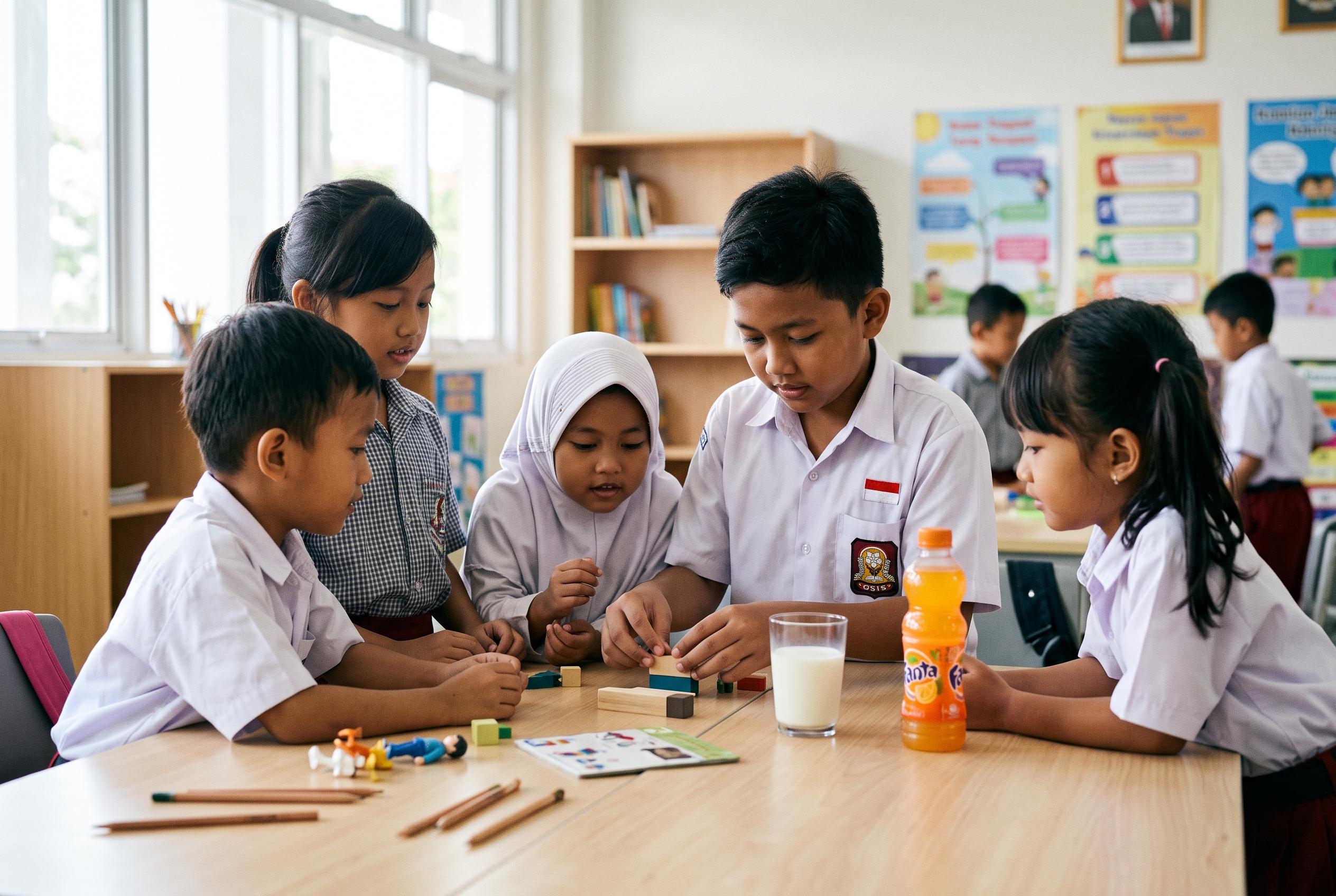

Recent research reveals that most Indonesian children aged 4 to 12 are not meeting recommended DHA levels, with a trend towards flavoured drinks over milk raising concerns about their brain development and concentration as they progress through school.
As children move into the 7-to-12 age group, school life begins to demand more from them: longer periods of concentration, better memory and steady performance in both classwork and after-school activities. Nutrition becomes more than a matter of growth alone; it also helps support how well children learn and cope day to day.
That is why food choices matter so much at this stage. Parents often discover that school-age children develop stronger likes and dislikes, making it harder to keep them on a balanced diet. Research cited by VIVA from Gadjah Mada University found that many pupils rejected plain milk, while a study by Surabaya State University showed chocolate flavour was far more appealing to primary school children in the sample it examined.
One nutrient that deserves particular attention is DHA, or docosahexaenoic acid, an omega-3 fatty acid found in the brain and retina. According to the British Journal of Nutrition, eight in 10 Indonesian children aged 4 to 12 were consuming EPA and DHA below the minimum level recommended by the FAO and WHO. Other reports in Indonesian media linked that shortfall to a common pattern: once children reach school age, many stop drinking milk and switch to flavoured drinks.
Health experts quoted in those reports said the concern is not only about physical growth but also about brain development, concentration, memory and emotional control. The practical message for parents is to keep looking for ways to include DHA-rich foods in a child’s daily diet, while also respecting taste preferences and aiming for a balanced overall menu rather than relying on a single food or drink.
Disclaimer: This content is for informational purposes only and is not intended to be a substitute for professional medical judgment, advice, diagnosis, or treatment.