

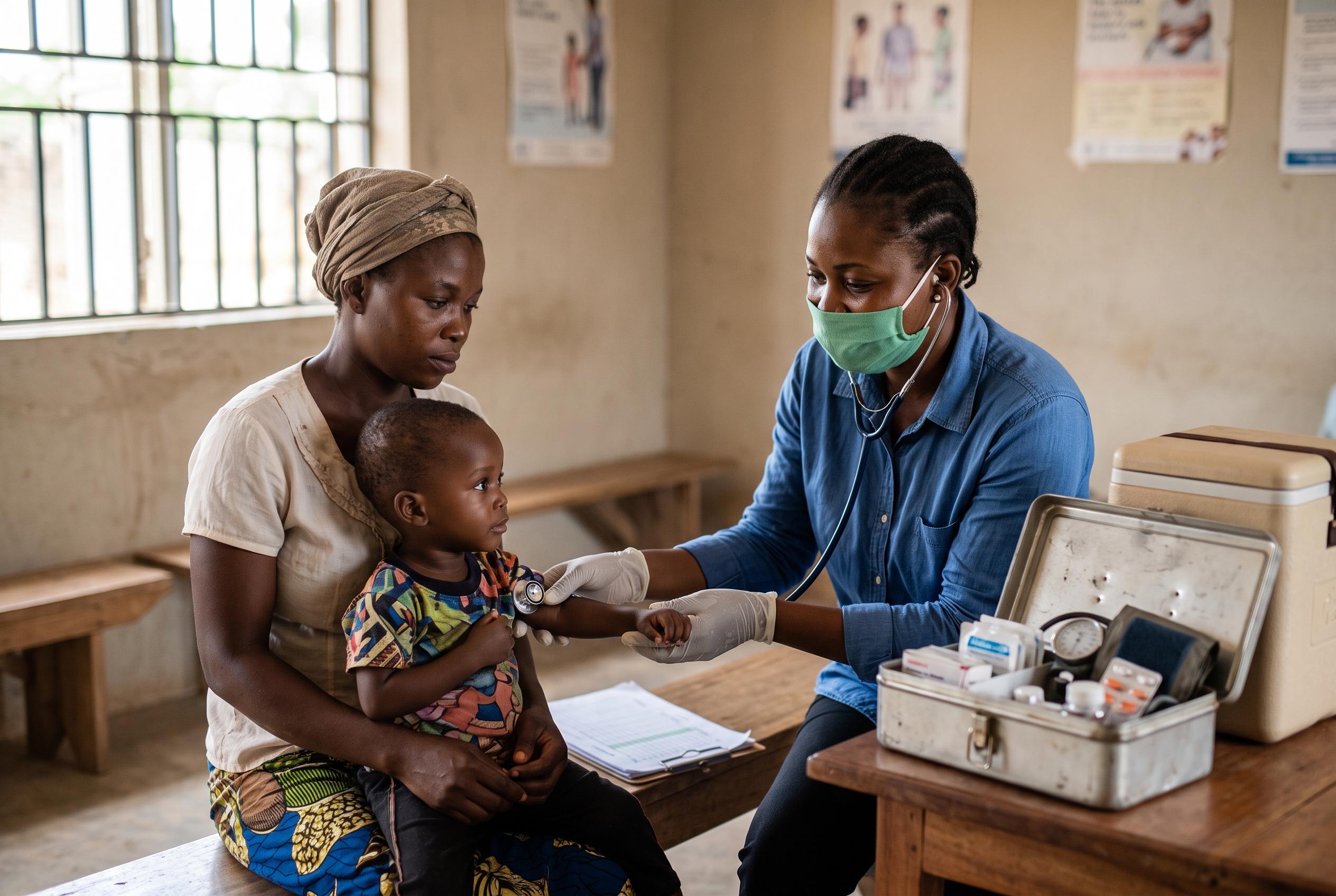

A recent study based on Nigeria’s 2024 Demographic and Health Survey reveals that socioeconomic and geographic factors influence childhood anaemia, but machine learning models struggle to reliably predict individual risk, underscoring gaps in current data and understanding.
Childhood anaemia remains a major public health problem in Nigeria, but a new analysis suggests the burden is unevenly shared. In a project based on the 2024 Demographic and Health Survey, Juliet Oghenekevwe Ehwebayire examined more than 11,000 children with available anaemia measurements and found that 47.7% were classified as anaemic. The pattern echoed earlier research, including a Wiley study that also found anaemia in Nigerian children was linked to household wealth, maternal education and geography.
The analysis found clear differences across socioeconomic groups. Children in the richest households had the lowest observed prevalence, while those in poorer households generally had higher rates. Similar geographic variation was also visible, with the South-East recording the highest observed prevalence among the zones examined. Rural children were slightly more likely to be anaemic than urban children, although the gap was not large.
Some commonly discussed malaria-related indicators were less informative in this dataset. Household bed-net ownership, a child’s reported use of a bed net and recent fever history did not show statistically significant links with anaemia. That does not rule out a connection with malaria or infection, but it does suggest those measures were too indirect to explain the pattern on their own. Research on childhood malaria in Nigeria has shown that risk is often clustered geographically and shaped by environmental and community factors, which may help explain why broad indicators do not always capture the full picture.
The most striking result came from the prediction models. Logistic regression and random forest both performed only slightly better than chance, with accuracy of about 54% and AUC values of roughly 0.56 to 0.57. In practical terms, that means the selected demographic, socioeconomic and behavioural variables were not enough to reliably identify which individual child was anaemic. The findings fit a wider body of work, including a more recent machine-learning study of childhood anaemia in Nigeria and separate research showing that malaria prediction improves when long-term climate and environmental data are added.
That distinction matters. A variable can be associated with anaemia across a population without being useful for predicting risk in a particular child. Ehwebayire said the analysis suggests wealth and geography matter, but also points to missing information, including nutritional and clinical factors that were not part of the model. The project was exploratory, used a single train-test split and did not apply full survey weights, so it should not be read as a national estimate. Even so, it reinforces a simple lesson: data can reveal patterns, but it does not always provide enough information to make reliable individual predictions.
Disclaimer: This content is for informational purposes only and is not intended to be a substitute for professional medical judgment, advice, diagnosis, or treatment.



