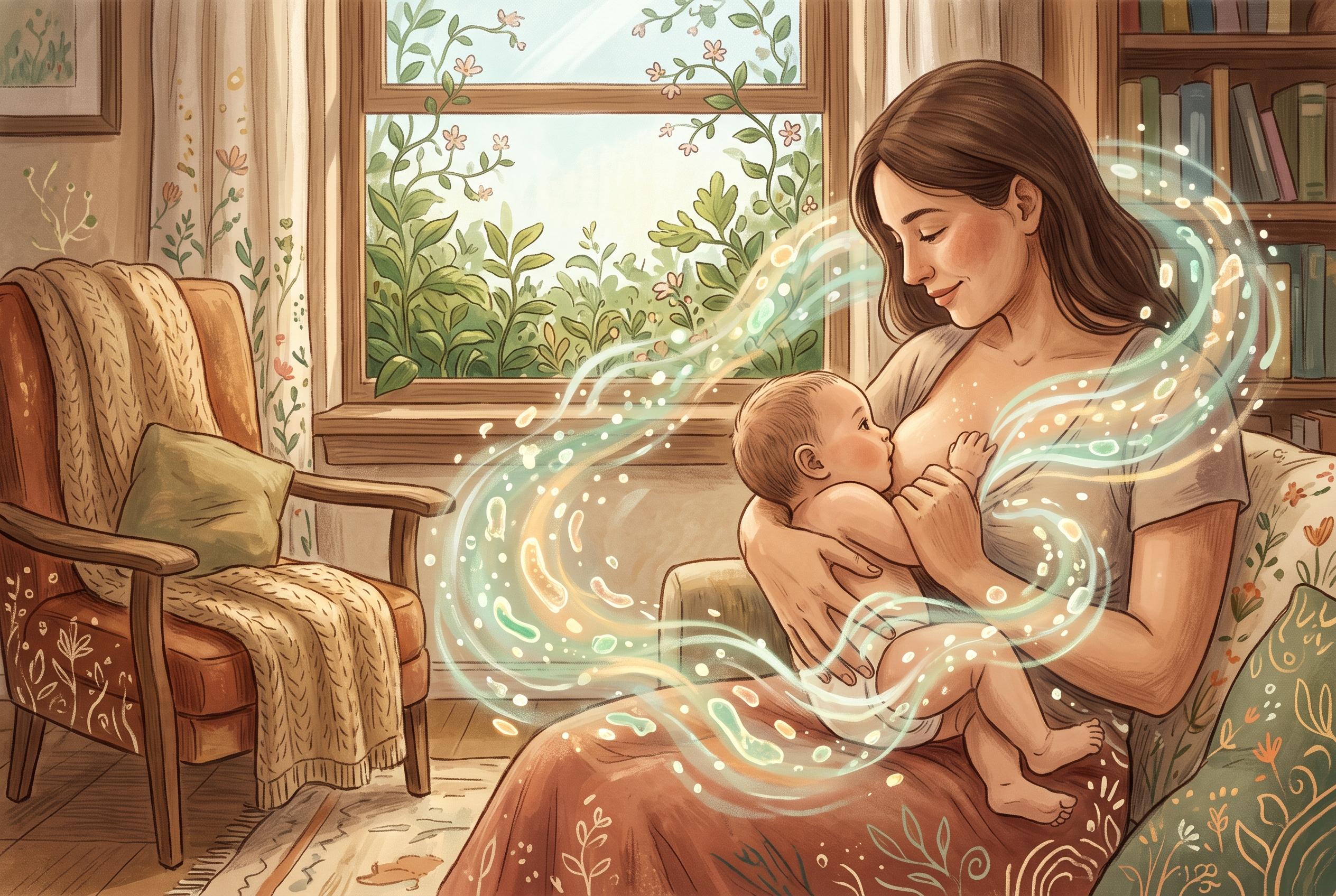

A recent study published in Nature reveals that a mother’s gut microbiome significantly influences an infant’s early microbial colonisation, challenging previous assumptions about transmission sources and highlighting the importance of prenatal microbial environments for long-term health.
A new study published in Nature suggests that a baby’s gut microbiome begins to take shape long before birth, with the mother playing a far larger role than previously understood. Researchers analysed 4,526 stool samples from 714 Dutch mother-and-infant pairs in the Lifelines NEXT cohort, tracking families from the 12th week of pregnancy through the child’s first year. Their findings indicate that the maternal gut microbiome is a major source of the strains that first colonise an infant’s intestines, while the vaginal microbiome appears to contribute only occasionally by comparison.
The research also shows that this transfer is not a single moment at delivery. Instead, it changes over time and becomes more likely when specific microbes are plentiful in the mother’s gut. According to Nature, the composition of the maternal gut microbiome may also help predict a child’s risk of eczema, though the study does not prove that any particular bacterium causes the condition. That caution matters: the results point to association, not certainty, and do not mean pregnant women should try to alter their microbiome without medical advice.
The study fits with earlier work showing that the infant microbiome is shaped by both prenatal and postnatal influences. Research in Nature Medicine has linked mode of delivery to the early microbiome’s structure and function, while another Nature Medicine paper found that breastfeeding, formula composition and maternal gestational weight gain affect how the infant gut matures metabolically. Other studies have also shown that maternal gut and breast milk microbes can pass antibiotic resistance genes to babies, and that maternal conditions during pregnancy can affect the first stool and early colonisation.
Taken together, the findings reinforce a broader picture of the first months of life as a period of rapid microbial inheritance and change. The mother contributes not just genes and nutrients, but also an ecosystem of microbes that helps shape the infant gut. Delivery method, feeding choices and environmental exposures then continue to guide how that ecosystem develops. For parents and caregivers, the practical message is not that the microbiome can be controlled perfectly, but that early-life health is deeply connected to the biological environment surrounding pregnancy, birth and feeding.
Disclaimer: This content is for informational purposes only and is not intended to be a substitute for professional medical judgment, advice, diagnosis, or treatment.