

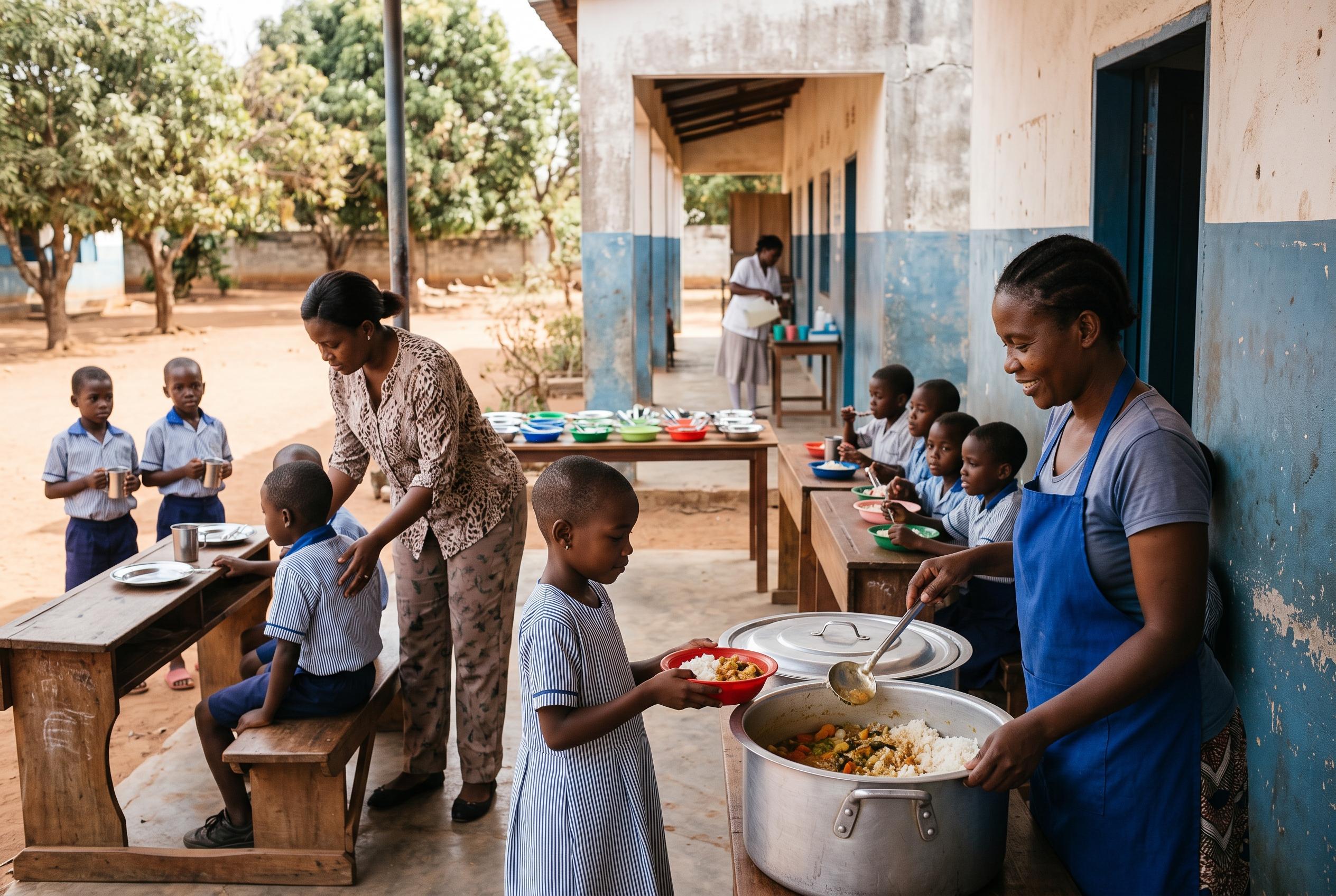

Maputo province launches a $40 million programme to provide 170,000 pupils with regular meals over six years, integrating nutrition, health, and education support with local and US funding.
Maputo province has launched a new school feeding drive aimed at giving 170,000 pupils regular meals over the next six years, in a programme officials say is designed to improve attendance, concentration and learning in some of the province’s most vulnerable districts.
According to the launch reported by Jornal Notícias, the “Nutrir para Aprender” initiative will cover 245 schools in Manhiça, Magude, Moamba and Matutuíne, with an estimated budget of $40 million. The plan calls for the delivery of about 75 million meals in total, reaching roughly 80,000 children a year.
Manuel Tule, the governor of Maputo province, said at the launch that school meals can help reduce the impact of food insecurity and malnutrition while giving children a better chance to focus in class. Save the Children’s country director, Ilaria Malunza, said the programme will go beyond food provision and include literacy, health, nutrition, water and sanitation activities, with schools and communities expected to play a central role in keeping the effort sustainable.
Abigail L. Dressel, the acting head of the US embassy in Mozambique, highlighted American funding for the project and said the meals would combine products supplied by the United States with food bought locally. A separate account of the launch said the project is being funded by the US Department of Agriculture and will run from October 2025 to September 2031, with implementation led by Save the Children alongside Mozambique’s national school feeding programme and provincial and district authorities.
The new initiative builds on a longer history of school feeding and related support in Maputo province. ADPP Mozambique said its Food for Knowledge project distributed more than 76 million meals between 2012 and 2020 in the same broad region, while also expanding access to books, water systems, latrines, kitchens and school storage facilities. The World Food Programme has said school health and nutrition programmes can deliver strong returns when they are paired with wider support such as water, sanitation and learning interventions, a model echoed in the new Maputo project through teacher training, health work in schools and support for children at risk of dropping out.
Disclaimer: This content is for informational purposes only and is not intended to be a substitute for professional medical judgment, advice, diagnosis, or treatment.



