

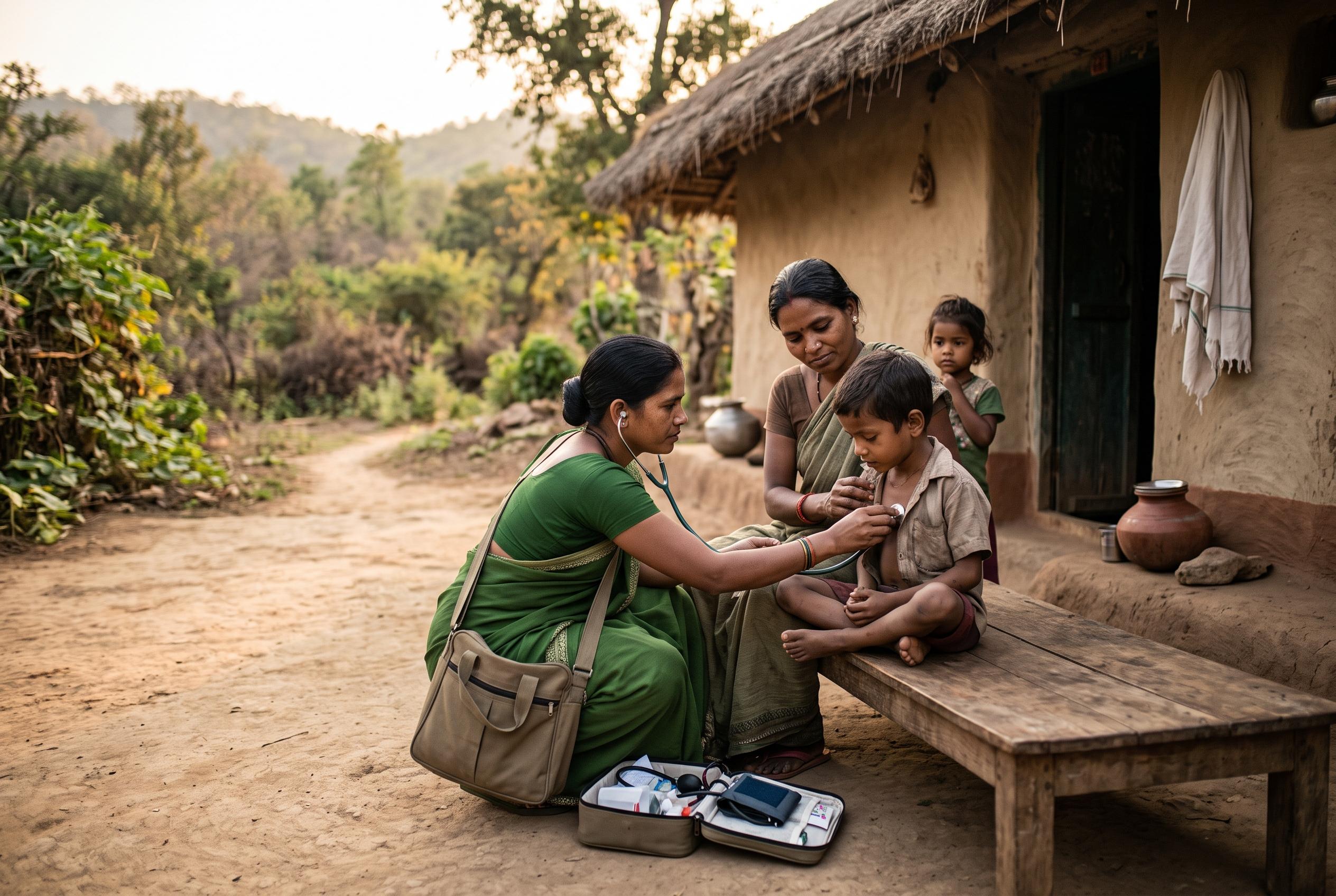

A devastating combination of malnutrition, infectious diseases, and systemic gaps in healthcare support has led to rising child mortality and undernutrition in Balaghat’s Baiga tribal belt, exposing urgent needs for effective intervention.
In Balaghat district’s Baiga-dominated tribal belt, a series of child deaths has brought long-running malnutrition and disease risks into sharper focus. According to local data cited by TV9 Hindi, the district’s women and child development department examined 121,892 children through August 2026 and found 27,839 to be malnourished, including 3,741 in the severe category. That means roughly one in four children screened was undernourished, a figure that underlines how fragile child health remains in parts of the district.
The crisis has been deepened by outbreaks of infection. Reports from several outlets say more than 30 children have died in Balaghat’s tribal villages in recent months, with malaria, measles and other illnesses identified as contributing factors. The New Indian Express reported that at least six children died between 26 June and 6 August in four tribal villages, while more than 100 others were treated at government facilities. Families have described symptoms including fever, vomiting, diarrhoea and skin rashes before deaths, pointing to a mix of infection, delayed treatment and poor nutrition.
One case has become emblematic of the scale of the problem. In Bondari village, three-year-old Preeti Dhurve died after officials said she had been severely undernourished and weighed only about 4.5kg. In the Baiga belt, the combination of low body weight, repeated illness and weak immunity appears to be especially dangerous, particularly when medical help arrives late or not at all. Health officials have also said that some families still rely on faith healers first, which can delay hospital treatment.
The district’s own figures show that the problem is not confined to isolated villages. TV9 Hindi reported that in the Baihar assembly area alone, 1,111 children were classed as severely malnourished, including 560 in Baihar block and 551 in Birsa block. At the same time, local lawmaker Sanjay Uike has pointed to a different set of July 2026 figures showing 34,976 children with stunted growth, 26,640 underweight children and 9,266 with wasting, a measure that compares weight with height. The differing numbers highlight both the scale of the challenge and the need for clearer, more consistent monitoring.
Questions are also being raised about the public nutrition system meant to support the poorest families. According to TV9 Hindi, Uike has cited the Comptroller and Auditor General in questioning the take-home ration scheme, saying it had been suspended since March and was previously not sufficiently nutritious. An anganwadi worker in Bondari, Pyari Yadav, said packets of porridge have been distributed through a self-help group since May. But doubts remain over official records, with the government’s Poshan Tracker reportedly showing 100% attendance and food distribution at some centres, even on public holidays. District officials say many parents take children to fields and forests rather than the anganwadi, yet the gap between digital records and ground reality suggests a system in need of closer scrutiny. The district programme officer, Devendra Kumar Sunderial, said teams are working village by village and sending children to nutrition rehabilitation centres when needed, but the recent deaths have sharpened calls for a fuller review of how effectively those schemes are reaching the Baiga community.
Disclaimer: This content is for informational purposes only and is not intended to be a substitute for professional medical judgment, advice, diagnosis, or treatment.



