

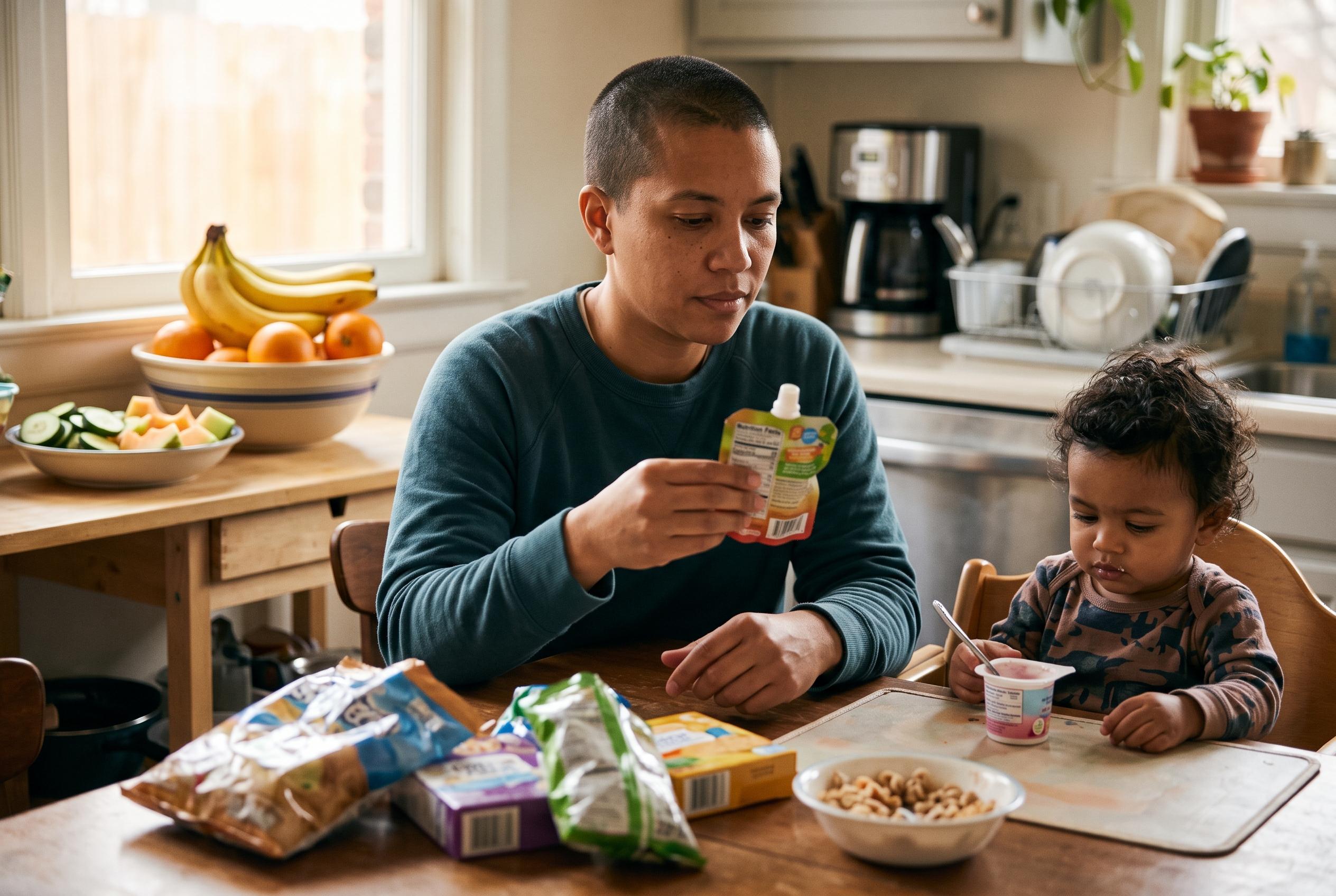

An audit of toddler foods in Austin reveals most products are highly processed and often fall short of WHO nutritional guidelines, raising concerns over early childhood diet quality.
A new audit of packaged toddler foods in Austin, Texas, suggests that the products lining the baby and toddler aisle are often far more processed, and less balanced, than many parents may expect. Researchers presenting findings at NUTRITION 2026 examined 2,783 foods marketed to children aged 6 to 36 months across 21 stores and found that 81% were ultra-processed, while 49% fell short of at least one World Health Organisation nutrition benchmark.
The findings separate two different concerns: how a food is made and how it measures up nutritionally. The team used the NOVA system to classify processing level, then checked products against the WHO’s Nutrient and Promotion Profile Model for commercial foods for young children. That distinction matters because some items that were less processed still ran high in fat or calories for a good reason, such as containing peanuts or beef, while other products that looked toddler-friendly on the shelf were high in sugar, sodium or energy density.
Among the products that failed WHO criteria, about a quarter were too high in sodium, 17% in sugar, 11% in fat and 12% in energy density, according to the report. Examples cited by the researchers included fruit pouches with high sugar content, oat bars with too much sugar and calories, macaroni and cheese with elevated sodium and fat, and some peanut butter puffs that exceeded limits for sodium, fat and calories. The study’s authors argue that front-of-pack warning labels could help parents identify products that do not meet the thresholds and might also encourage manufacturers to reformulate them.
The audit also lands in the middle of a broader policy debate over how much information parents should see at a glance. In January 2025, the US Food and Drug Administration proposed a mandatory Nutrition Info box for the front of most packaged foods, but the plan excludes products marketed to children under four. The agency has said that reflects the different nutritional needs of very young children and the lack of established Daily Values for that age group. As of 1 October 2026, the proposal is still not final, with a target for a final rule in December 2026.
Industry groups have also pushed back on the ultra-processed label itself, arguing that there is no single, universally accepted scientific definition. That debate does not erase the Austin findings, but it does show why the researchers used two separate measures: one for processing, one for nutrient quality. A separate peer-reviewed study published in 2026, drawing on 651 infant and toddler products from major US retailers, found that 71% were ultra-processed and that these items tended to have less favourable nutrition profiles, including more sugar and sodium. Taken together, the studies suggest that commercial foods aimed at very young children remain a live question for parents, manufacturers and regulators alike.
Disclaimer: This content is for informational purposes only and is not intended to be a substitute for professional medical judgment, advice, diagnosis, or treatment.



