

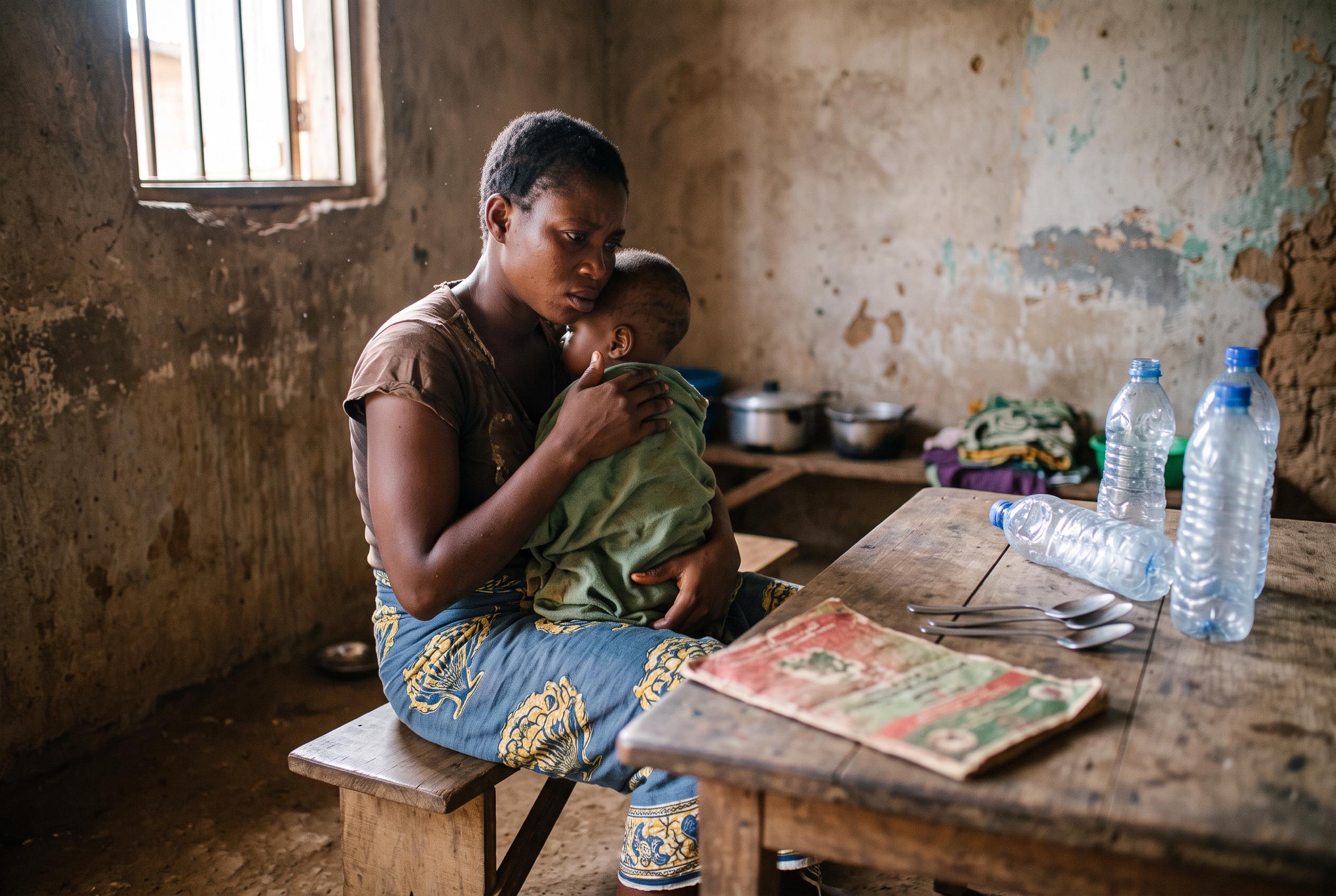

Rising malnutrition rates and declining exclusive breastfeeding in Liberia highlight a worsening infant health crisis driven by misinformation and deep aid reductions, straining an already fragile health system.
Liberia’s infant nutrition crisis is now visible in the country’s own data. In its 2025 annual report, the World Health Organization said findings from Liberia’s food security and nutrition survey showed exclusive breastfeeding had fallen from 55% to 41%, while global acute malnutrition rose from 5.4% to 8.5%. Stunting eased, but only to 26.3%, and 12 of Liberia’s 15 counties still remained above the national average. UNICEF and Liberia’s Ministry of Health have also warned that too many babies are being given water and food long before their bodies are ready, deepening the risks of diarrhoea, infection and wasting. (afro.who.int)
That warning has been consistent for years, but the message is still not reaching enough families. UNICEF has said that for the first six months babies should receive breast milk only, with no water, other liquids or food, even in a hot climate, because breast milk supplies all the nutrients an infant needs and 88% of the water. Yet a 2019 poll cited by the agency found that 56% of young people in Liberia wrongly believed babies need water in the first six months, while 46% thought they needed something besides breast milk to grow strong. UNICEF has warned that babies fed early liquids or solids are more likely to develop diarrhoea and respiratory infections and are almost three times more likely to die than those who are exclusively breastfed. As Laila O. Gad, UNICEF’s representative in Liberia, put it: “Breastmilk is a pure gift, it is a baby’s first vaccine and best source of nutrients.” (unicef.org)
What is new is that the misinformation is colliding with a health system that has fewer tools to rescue the children who fall ill. Reporting from The Associated Press in July followed Roseline Phay, a 32-year-old farmer in Bong County, who said she made four journeys looking for contraception after pills, implants and condoms ran out. She became pregnant, had to wean her daughter Pauline, and said the girl became so malnourished she “almost died”. AP said there was no therapeutic food left for the child, while clinics in the area had near-empty medicine shelves, a USAID-funded ambulance with no fuel, and community health workers who had not been paid for months. An AP photo gallery published by The Independent showed the same strain in pictures: depleted clinics, undernourished children and families trying to cope after the sudden loss of support. (apnews.com)
The scale of the funding shock helps explain why clinicians and officials are talking about a systemwide emergency, not a localised problem. According to AP, Liberia received an average of $527.6m in aid each year between 2014 and 2023. It had been due to receive $443m in 2025, but the estimated hit from the cuts was $290m, money that had not yet been disbursed. AP reported that US backing accounted for 48% of Liberia’s health budget and paid for malaria control, maternal health, HIV/AIDS treatment and community health programmes. Deputy Finance Minister Dehpue Y. Zuo told the news agency the cuts posed “a serious challenge” and would require “a dramatic switch” in the government’s spending priorities. (apnews.com)
Earlier in the year, El País reported just how narrow Liberia’s fallback options had become. Medicines financed mainly by the Global Fund still depended on USAID for distribution, the paper said, and when that chain broke the Liberian government could manage only a partial emergency restock for Monrovia’s J F Kennedy Medical Center, enough for roughly a month of vital supplies and not enough to replenish many other facilities. The report underlined the symbolism as well as the shortage: the hospital was designed in 1961 with $18m in US loans and grants and a further $1m from Liberia, making it a longstanding emblem of the countries’ health partnership. Ambulai Johnson, head of the Center for Advancing Health Systems Innovations, said USAID had invested more than $3bn in Liberia and warned that without that support supply chains and life-saving services would buckle. (elpais.com)
The damage is not measured only in the children who reach clinics visibly wasted. UNICEF says inadequate breastfeeding costs Liberia about $200,000 a year in treatment for diarrhoea, pneumonia and type II diabetes among mothers, and more than $14m a year in future cognitive losses. Its World Breastfeeding Week statement last year said 27% of Liberian children under five were moderately or severely stunted, a rate it described as “very high” by WHO standards, while 45% of infants under six months were not exclusively breastfed. Set beside WHO’s newer survey findings, the picture is of a country making limited progress against chronic malnutrition while sliding backwards on the feeding practices that protect babies in the earliest and most vulnerable months of life. (unicef.org)
Liberia’s health authorities and UNICEF argue that reversing that slide will require much more than telling mothers to try harder. They say breastfeeding should begin within an hour of birth, continue exclusively for six months, and then carry on with safe complementary foods up to two years or beyond. Health Minister Wilhelmina Jallah has called for a national strategy to protect, promote and support breastfeeding, while UNICEF has pressed for trained counselling, workplace protections and stronger community support around mothers. Those proposals amount to an admission that the crisis now confronting Liberian babies is being driven by two failures at once: dangerous advice in the home and vanishing support in the clinic. (unicef.org)
Disclaimer: This content is for informational purposes only and is not intended to be a substitute for professional medical judgment, advice, diagnosis, or treatment.



