

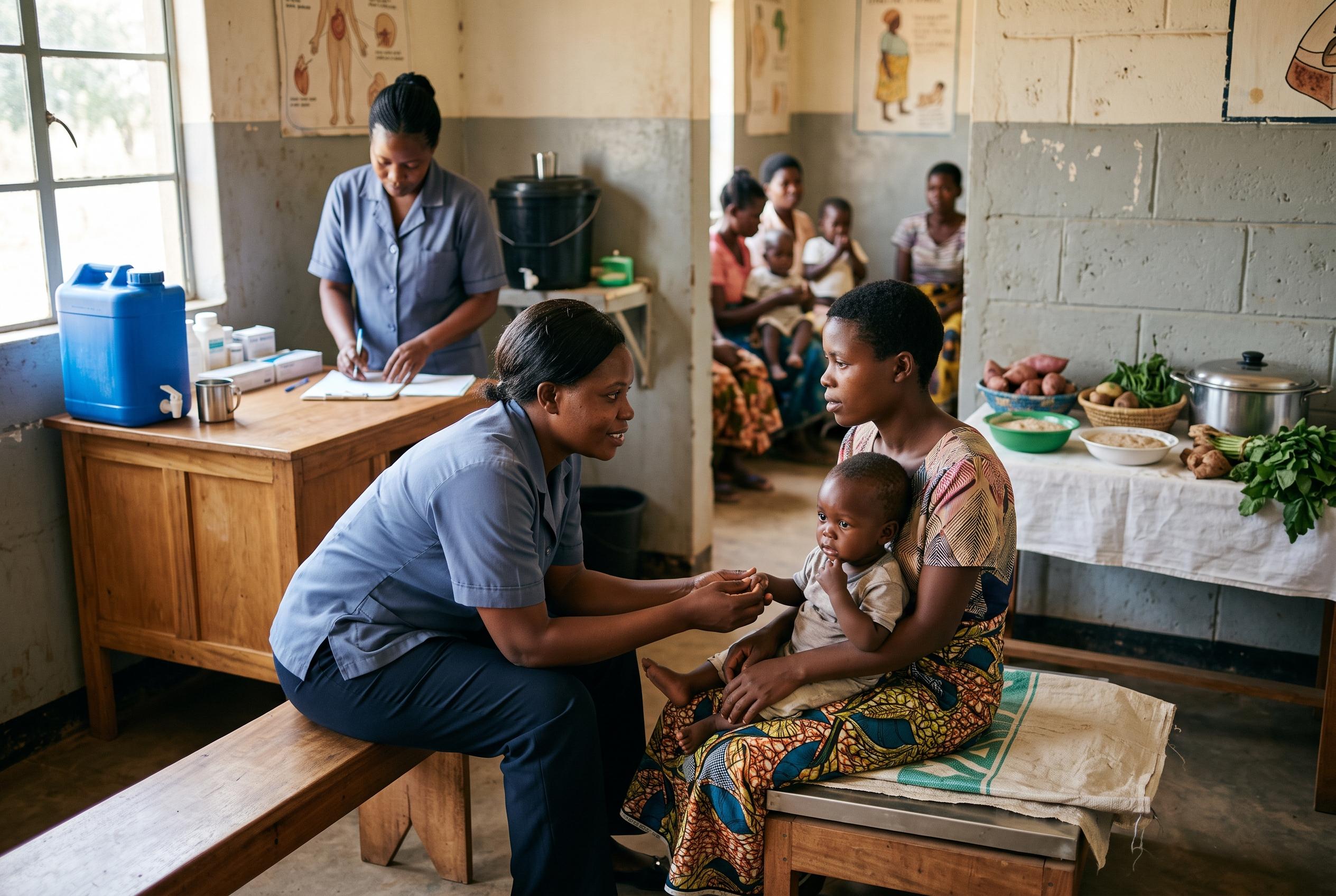

A comprehensive review highlights that addressing child malnutrition in sub-Saharan Africa requires multifaceted strategies encompassing nutrition support, healthcare, sanitation, and socioeconomic development to overcome persistent hunger, stunting, and emerging overweight concerns.
Child malnutrition remains one of sub-Saharan Africa’s most stubborn public health problems, and the evidence increasingly shows it cannot be solved by food aid alone. A review of 50 studies published between 2015 and 2025 found that poor nutrition in children under five is shaped by a web of pressures that includes disease, sanitation, climate stress, weak access to healthcare, limited caregiver knowledge and wider social and cultural factors. The findings echo earlier research in PubMed and other recent work showing that undernutrition, especially stunting, wasting and underweight, is still the dominant form of child malnutrition across the region.
Stunting emerged as the most common problem in the review, with more than a quarter of children under five affected in many African countries, including Tanzania, Uganda, Ethiopia, Liberia and the Central African Republic. That pattern is consistent with prior meta-analysis on demographic and health survey data, which found stunting to be the leading form of malnutrition in sub-Saharan Africa. Researchers say the first two years of life are especially critical, because children are most vulnerable when breastfeeding ends and the food that follows is too limited in quantity or quality to sustain growth.
The review also found that about one in five children under five in 12 countries were underweight, while wasting remained a serious concern. Wasting, which reflects rapid weight loss and acute hunger, is closely linked to food insecurity, poverty, poor sanitation and limited healthcare. At the same time, some countries are beginning to see a second problem emerge: childhood overweight. Although it appears less often in the studies, researchers say urbanisation and the spread of highly processed foods are making a double burden of malnutrition more visible, where undernutrition and excess weight coexist in the same population.
Evidence reviewed by the researchers suggests that direct nutrition programmes can work, particularly when they identify and treat acute malnutrition in communities before children become severely ill. But the studies also show the limits of narrow interventions. Home gardens, cash transfers, agricultural support, disease prevention, water and sanitation projects, and maternal education can all improve the wider conditions that shape a child’s diet and health. Yet the impact of these measures on physical growth has been mixed, underscoring a basic point: having more food does not automatically mean children are better nourished if feeding practices, immunisation, safe water and counselling are weak.
That is why the strongest results appear to come from integrated programmes that combine nutrition support with action on poverty, food security, healthcare and the environment. The review highlighted approaches that bring together breastfeeding promotion, nutrient supplements, agricultural assistance and caregiver education. Recent research on childhood undernutrition in the region supports that view, arguing that malnutrition is driven by more than hunger alone and is also linked to climate pressures, poor sanitation, disease and socio-economic disadvantage. A separate study published in 2026 adds that the first five years of life remain decisive for long-term health, making early surveillance and targeted intervention especially important.
The broader picture points to a policy challenge as much as a nutritional one. Rural communities, in particular, continue to face heavier burdens where access to healthcare, education and household resources is limited, according to earlier regional research on urban-rural differences in child malnutrition. In the Sahel, UNICEF has warned that millions of children are facing acute malnutrition amid climate stress, instability and supply disruptions, showing how quickly the crisis can deepen when aid and basic services fall short. The lesson from the latest evidence is clear: child malnutrition in sub-Saharan Africa will not be overcome by one programme or one sector alone.
Disclaimer: This content is for informational purposes only and is not intended to be a substitute for professional medical judgment, advice, diagnosis, or treatment.



