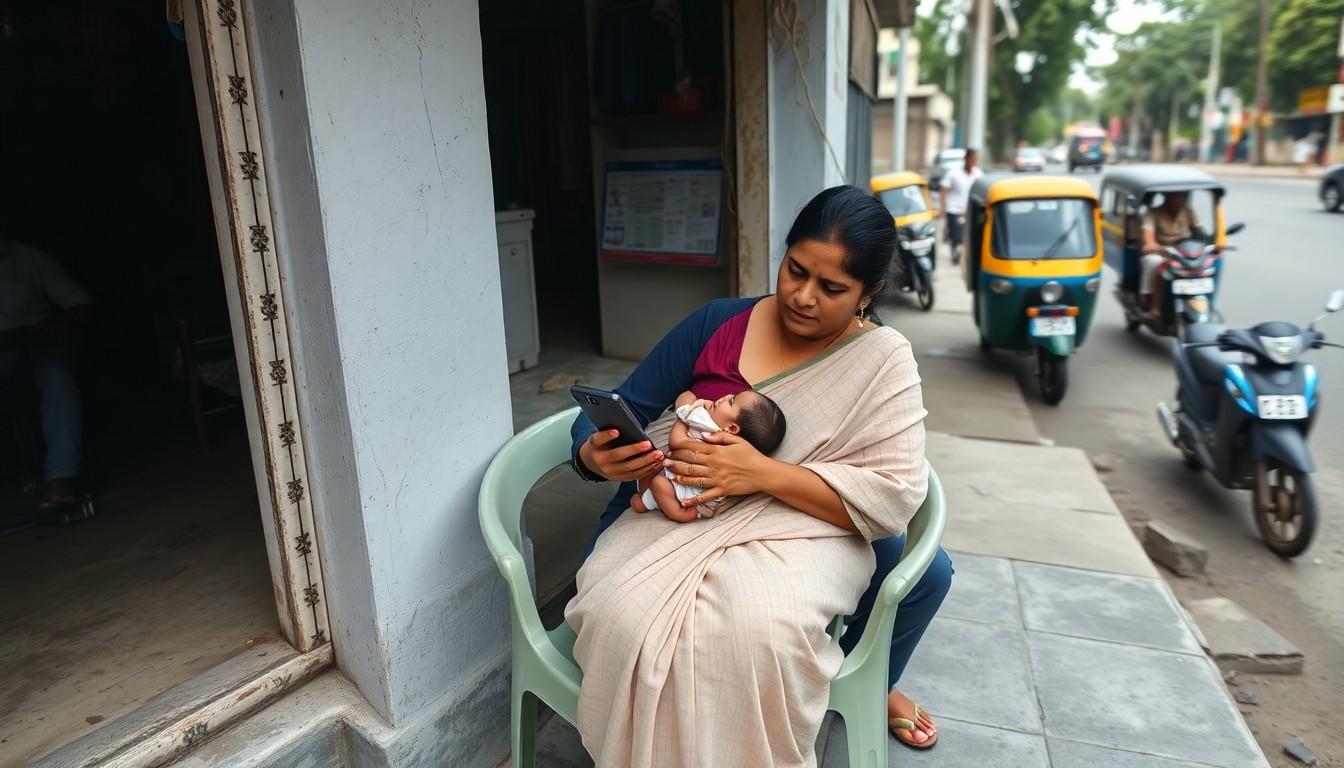

Despite improvements in early initiation of breastfeeding, India struggles to sustain exclusive breastfeeding practices in the first six months, with declining support post-discharge and increasing caesarean sections posing new challenges for maternal and child health.
India has made progress on getting newborns to the breast quickly after delivery, but it is struggling to keep that momentum alive through the first six months of life. The latest National Family Health Survey shows early initiation of breastfeeding has risen from 41.8% to 50.1%, yet exclusive breastfeeding for infants under six months has slipped from 63.7% to 55.8%. That split points to a familiar weakness in maternal and child health: support in the delivery room is improving, but follow-up after discharge remains patchy. Health experts say the pattern matters not only for infant survival, but also for the wider economy, with one study in PLOS ONE estimating annual losses of $14.5 billion from reduced productivity and healthcare costs.
Clinicians say the figures are consistent with what they see in practice. Dr Neelam Mohan, president of the Indian Academy of Paediatrics, told reporters that delivery-room practices appear to be getting better, but that many mothers lose support once they return home. Dr Naveen Thacker, executive director of the International Paediatric Association, said the period after leaving hospital is where many women encounter the biggest barriers, including inconsistent counselling, pressure to return to work and limited help for mothers of preterm or low-birth-weight babies. Research published in Indian and international journals has long shown that early initiation is strongly shaped by the quality of postnatal care, maternal education and access to health services, while caesarean births are often linked with slower breastfeeding starts.
The rise in caesarean sections adds another complication. NFHS-6 puts the share of deliveries by caesarean at 27.2%, up from 21.5% in the previous round, and studies have linked surgical birth to lower odds of breastfeeding within the first hour. That is especially relevant in a country where more than 90% of working women are in the informal sector and therefore fall outside the protection of formal maternity benefits. Experts say that leaves many mothers to manage without reliable leave, workplace facilities or structured lactation advice at the very point when breastfeeding habits are being formed.
The picture also varies sharply by state. Kerala recorded the strongest improvement, with exclusive breastfeeding rising 17.2 percentage points to 72.7%, while Sikkim posted the largest jump in the survey, up 21.3 points to 49.6%. Gujarat, West Bengal and Bihar also improved. But the reverse was true in several northern states: Haryana fell by 28.3 points to 41.2%, Uttar Pradesh dropped 25.1 points to 34.6% and Madhya Pradesh also declined. Analysts say gains tend to follow deliberate investment in community counselling, peer support and the involvement of fathers and grandmothers, rather than leaving new mothers to cope alone.
Breastfeeding is only part of the wider nutrition challenge. The survey shows that complementary feeding is starting earlier, with the share of babies aged six to eight months receiving solid or semi-solid food alongside breast milk rising from 45.9% to 59.5%. But quality remains poor: only 15.3% of children aged six to 23 months receive a minimum acceptable diet, up only slightly from 11.0%. Arun Gupta of the Breastfeeding Promotion Network of India has argued that hospitals should ensure breastfeeding begins within an hour for nearly all births, while stronger lactation counselling, tighter enforcement of rules on infant formula marketing and better maternity protection are needed after discharge. For experts such as Dr Mohan, the answer is to stop treating the first 1,000 days as the end of the story and instead build a continuous nutrition strategy that runs through the first 2,000 days, linking maternal care, breastfeeding support, complementary feeding, infection prevention and growth monitoring.
Disclaimer: This content is for informational purposes only and is not intended to be a substitute for professional medical judgment, advice, diagnosis, or treatment.