

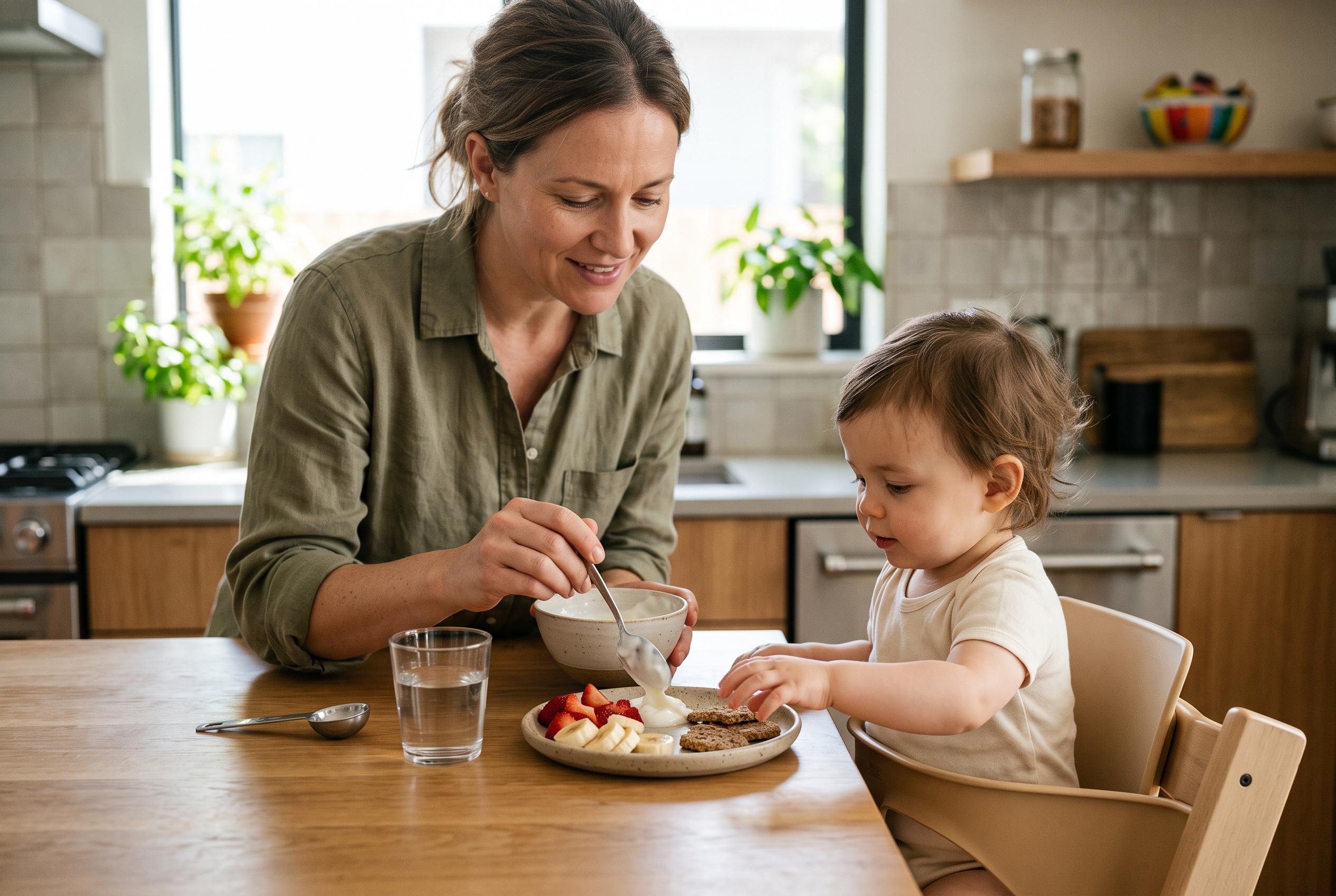

Experts emphasise that establishing healthy eating patterns in children under two, focusing on nutrient-dense foods over added sugars, can foster better long-term health and a relaxed relationship with food, avoiding daily conflicts over treats.
A toddler staring at a biscuit in a sibling’s hand can turn snack time into a miniature standoff. For many parents, the bigger question is not the biscuit itself but how to handle sweets without creating drama, guilt or a daily power struggle. The answer, according to paediatric nutrition guidance, is less about banning treats forever and more about setting patterns early, especially in the first two years of life.
The Centres for Disease Control and Prevention says added sugar should be avoided for children under 2, and that nutrient-dense foods should take priority during the years when eating habits are taking shape. The American Academy of Paediatrics gives similar advice, recommending that children younger than 2 have no added sugars at all and that older children keep them to a minimum. That matters because early food experiences can shape what children come to expect, crave and accept later on.
Health experts also draw a clear distinction between added sugars and the natural sugars found in whole fruit. Fruit brings fibre, vitamins and water along with sweetness, while cakes, biscuits, sweetened yoghurts and sugary drinks can add calories without the same nutritional value. The American Academy of Paediatrics says sugary drinks are a major source of excess sugar in children’s diets, while the Cleveland Clinic warns that too much sugar can contribute not only to tooth decay and weight gain but also to broader health risks over time, including high blood pressure and type 2 diabetes.
That does not mean every sweet food is off-limits for life. Paediatric guidance from HealthyChildren.org, which is run by the American Academy of Paediatrics, suggests building snacks around fruit and vegetables, then adding foods such as dairy, lean protein or whole grains to make them more filling and more nourishing. In practice, that might mean a snack of apple slices with yoghurt, banana with oats, or toast with egg, rather than defaulting to packaged biscuits or sugary bars. The idea is not to eliminate pleasure from eating, but to make the everyday pattern one that supports health.
Experts also stress that children learn by repetition. A food refused today may be accepted later if it is offered again calmly and without pressure. Likewise, sweets should not become the reward for good behaviour or the cure for boredom or upset, because that can make them seem more valuable than they are. Parents set the tone too: when adults model a varied diet, keep sugary drinks out of routine use and treat dessert as occasional rather than automatic, children are more likely to develop a relaxed relationship with food. In that sense, the real challenge is not whether a child may have a biscuit, but how often sweets shape the rhythm of family eating.
Disclaimer: This content is for informational purposes only and is not intended to be a substitute for professional medical judgment, advice, diagnosis, or treatment.



