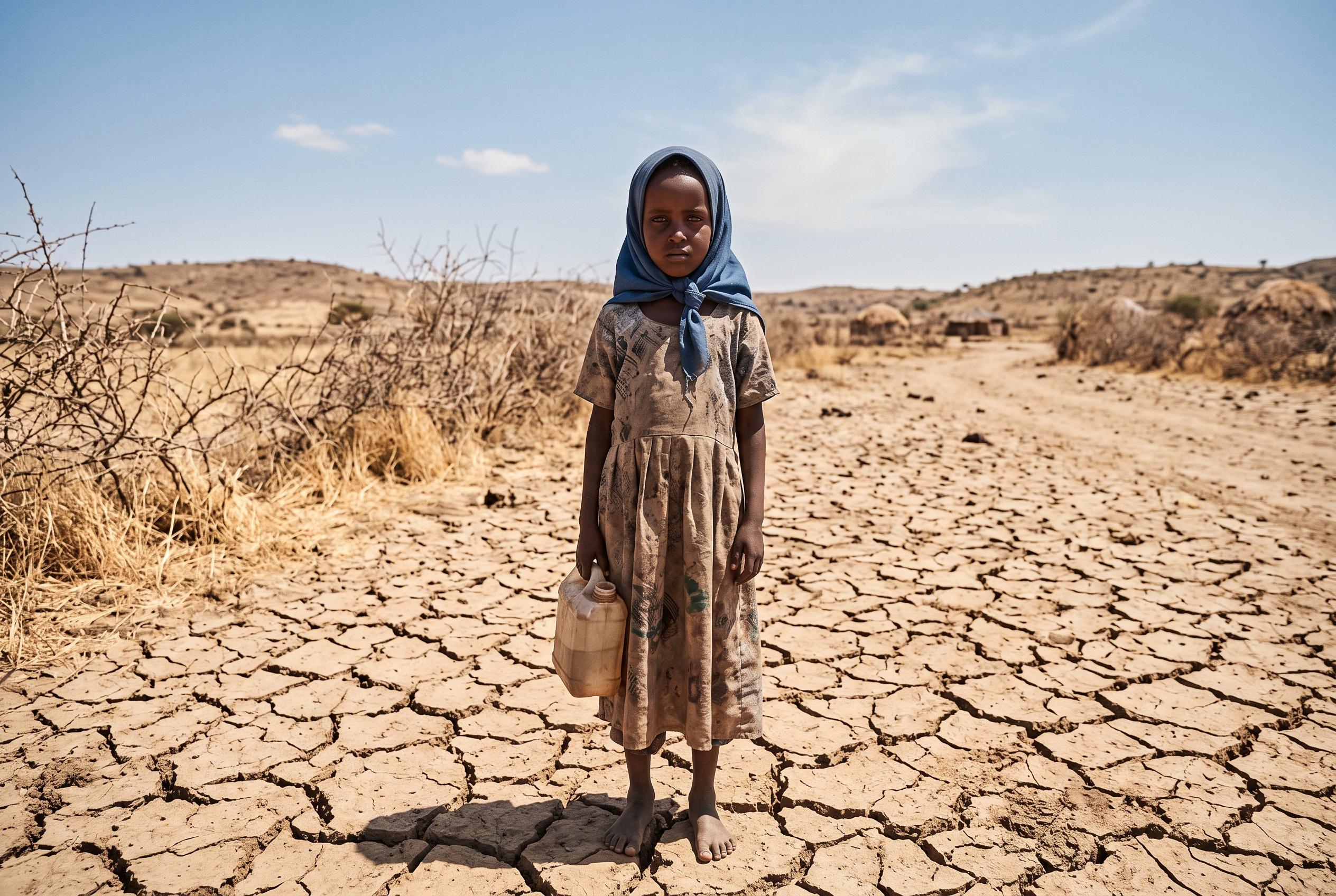

As a devastating drought persists in Ethiopia, Somalia, and Kenya, over 1.7 million children face acute malnutrition, with aid agencies warning that urgent funding shortfalls threaten to worsen an already dire humanitarian emergency.
Amina was 7 when the rains failed in Ethiopia’s Somali region. In a village where farming was the only way to survive, three straight weak rainy seasons between 2020 and 2022 ruined the sorghum harvest and left her family with little to eat. By the time aid workers arrived in late 2022, she weighed 11 kilograms, about the size of a 2-year-old child.
Her case is deeply personal, but it sits inside a wider emergency. UNICEF says the Horn of Africa drought from 2021 to 2023 pushed more than 1.7 million children in Ethiopia, Somalia and Kenya into acute malnutrition, with more than 650,000 severely acutely malnourished. The agency has also warned that more than 7 million children under 5 remain malnourished across the three countries, and that at least 1.9 million children are at risk of dying without urgent treatment. The crisis has been driven by repeated failed rains, the loss of livestock and crops, displacement and insecurity.
The World Food Programme says the region’s drought response now involves 22 million acutely food-insecure people and 5.1 million malnourished children, with a need for $2.4 billion to prevent a wider humanitarian disaster. UNICEF has separately said its emergency appeal for the Horn of Africa rose from $119 million to nearly $250 million after the number of children facing hunger, thirst and malnutrition increased by more than 40% in a matter of months, with only about a fifth of that appeal funded. The scale of the shortfall has left aid agencies warning that need is rising faster than assistance.
Climate change has made the crisis harsher, but aid groups say the drought also reflects conflict, inflation and fragile food systems that leave families exposed long before the rains fail. In the Horn of Africa, where livelihoods depend heavily on rainfall, repeated shocks can quickly turn hunger into a life-threatening emergency. Amina’s story, as described in the lead article, is not an exception so much as a warning of what happens when those systems break.
Disclaimer: This content is for informational purposes only and is not intended to be a substitute for professional medical judgment, advice, diagnosis, or treatment.