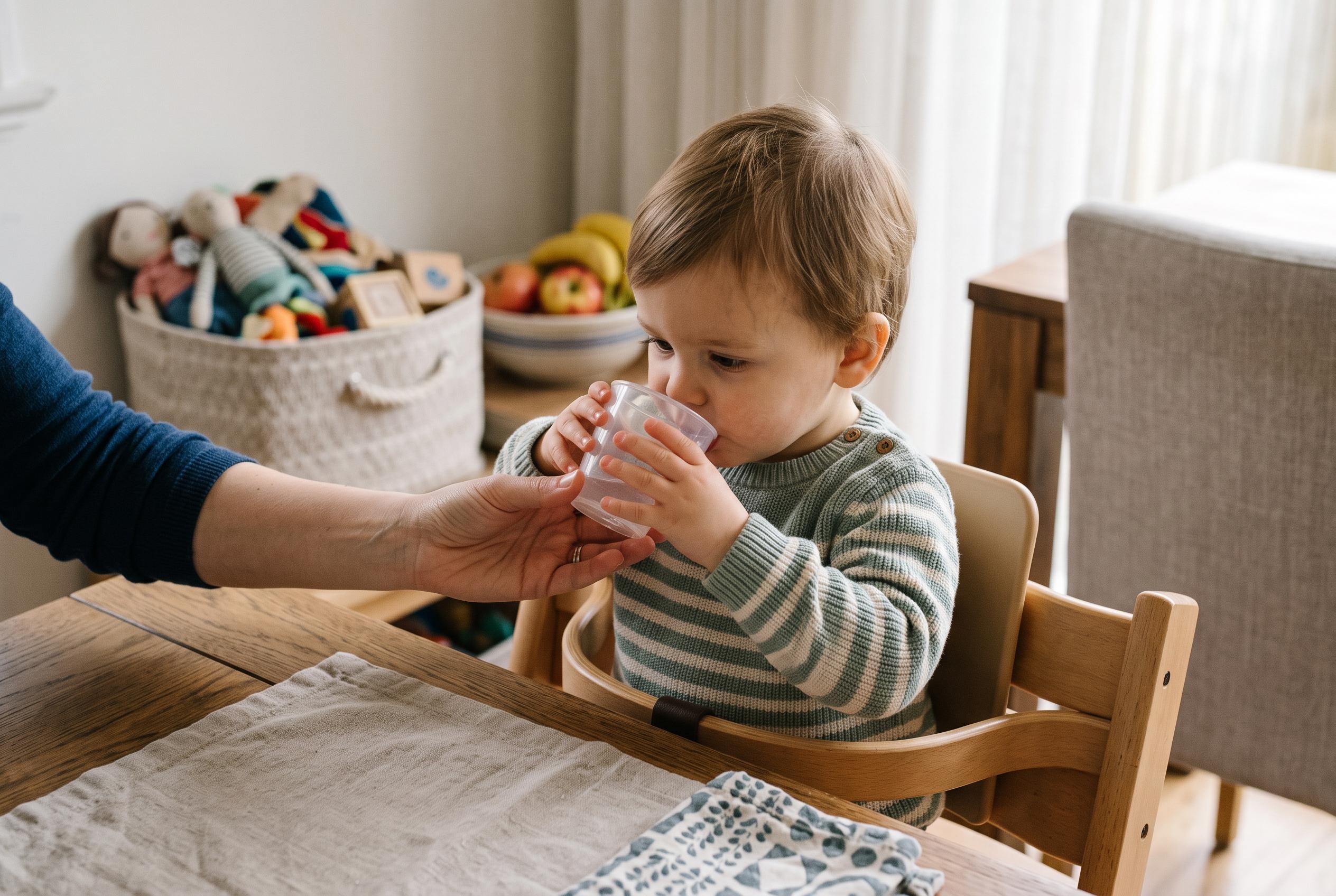

As children approach their second birthday, transitioning from bottles to open cups enhances oral-motor control, independence, and proper posture , essentielles for healthy growth and speech development.
Around a child’s first birthday, feeding begins to change in important ways. They are learning to move, communicate and feed themselves, and one small milestone that often deserves more attention is drinking from an open cup. According to London Speech and Feeding, this is not just a matter of swapping containers: it is part of how toddlers build oral-motor control, independence and confidence at mealtimes.
The move away from bottles matters because cup drinking asks the mouth and body to work differently. HealthyChildren.org, the American Academy of Pediatrics’ parenting site, says children should be offered a cup when solid foods begin, usually at about six months, and should be drinking from an open cup by age two. It also warns that keeping bottles in regular use for too long can affect tooth alignment and slow the development of oral-motor skills that later support clear speech. Other paediatric guidance says a bottle is fine as an occasional comfort, but not as the main way a toddler drinks for long periods.
Practising with an open cup helps toddlers learn how to control liquid, coordinate breathing and swallowing, and use their lips, tongue and jaw in more mature ways. Cradle & Care notes that open cups and straw cups support better oral-muscle development than sippy cups, while ScienceInsights says open cups avoid placing a barrier between the tongue and palate and can help build lip and jaw coordination. The learning process takes time, and spills are part of it. Most guidance suggests starting with small amounts of water and building up through regular practice at meals.
Posture is the other half of the story. Betsi Cadwaladr University Health Board says children need a stable base to complete seated tasks well, with hips, knees and feet supported so they can stay balanced and attentive. London Speech and Feeding makes the same point for mealtimes, arguing that a child who is securely positioned has more energy left for chewing, swallowing, reaching and drinking. In practical terms, that means a well-adjusted highchair, feet supported on a footrest and the table or tray set at the right height can all make a difference.
For parents, the main message is simple: build the skill gradually and make it routine. Offer a small open cup with meals, expect some mess and allow your toddler to practise without pressure. If a child is still heavily dependent on a bottle, refuses cups altogether, coughs or chokes while drinking, or seems to struggle with chewing, professional advice from a speech and language therapist or paediatrician can help. The broader goal is not perfection at every sip, but giving children the posture, practice and support they need to feed well as they grow.
Disclaimer: This content is for informational purposes only and is not intended to be a substitute for professional medical judgment, advice, diagnosis, or treatment.