

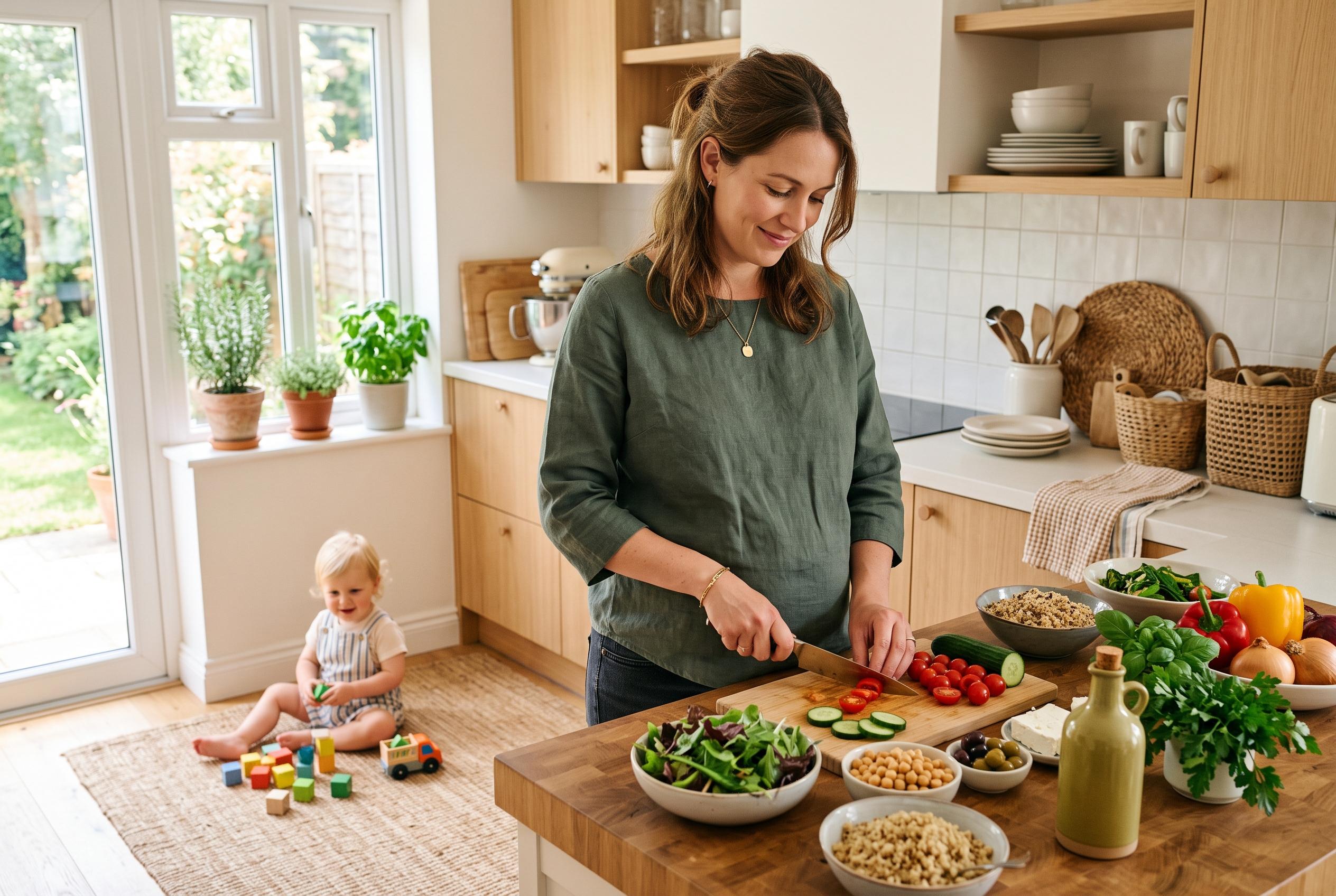

A prospective cohort study suggests that Mediterranean-style, less inflammatory diets during pregnancy may reduce the likelihood of infants developing colic and eczema together, although the findings do not prove cause and effect.
A poorer-quality diet during pregnancy appears to be linked with a higher chance of infants developing both colic and eczema, according to research published in JAMA Network Open. The findings add to a growing body of evidence suggesting that what pregnant women eat may have implications beyond birth weight and delivery outcomes, reaching into early infant comfort and skin health.
Emily Oken of Harvard Medical School and Harvard Pilgrim Health Care Institute in Boston and colleagues looked at data from a prospective cohort of 2,128 mother-child pairs that was not selected for known allergy risk. The team assessed mothers’ diets in early and mid-pregnancy using food frequency questionnaires, then calculated two standard measures of overall diet quality: the Mediterranean Diet Score, which reflects closer adherence to a Mediterranean-style eating pattern, and the Dietary Inflammatory Index, a measure of how likely a diet is to promote inflammation.
Among the 1,324 pairs with complete exposure and outcome data, 40.2% of mothers reported a history of atopy, a tendency to develop allergic conditions. The researchers found that infants were reported to have eczema alone in 11.5% of cases, colic alone in 20.6%, and both conditions in 4.6%. After adjusting for maternal age, race, ethnicity, education, parity, smoking and atopy, a higher Mediterranean Diet Score was associated with lower odds of colic and eczema together, while a higher Dietary Inflammatory Index was associated with higher odds. The study did not find a clear link between either diet score and colic or eczema on their own.
The researchers also examined individual foods and found that seafood intake was associated with lower odds of the combined outcome, whereas nut intake was linked to higher odds of colic alone. In a statement reported by HealthDay, Oken said the results offer “yet another reason” for pregnant women to aim for a healthy, balanced diet, with a particular emphasis on seafood.
The new findings fit with earlier, smaller studies that have suggested maternal diet may influence infant colic. A 2015 study in The Journal of Maternal-Fetal & Neonatal Medicine reported differences in fruit intake between mothers of colicky and non-colicky infants, while a 2018 proof-of-concept study in the Journal of Human Nutrition and Dietetics found that cutting back on certain hard-to-digest carbohydrates was associated with improved colic symptoms. A much earlier randomised trial in the Journal of Allergy and Clinical Immunology also suggested that low-allergen diets could ease colic in some breast-fed and bottle-fed infants. While the latest work does not prove cause and effect, it strengthens the idea that prenatal nutrition may matter in ways that are only beginning to be understood.
Disclaimer: This content is for informational purposes only and is not intended to be a substitute for professional medical judgment, advice, diagnosis, or treatment.



