

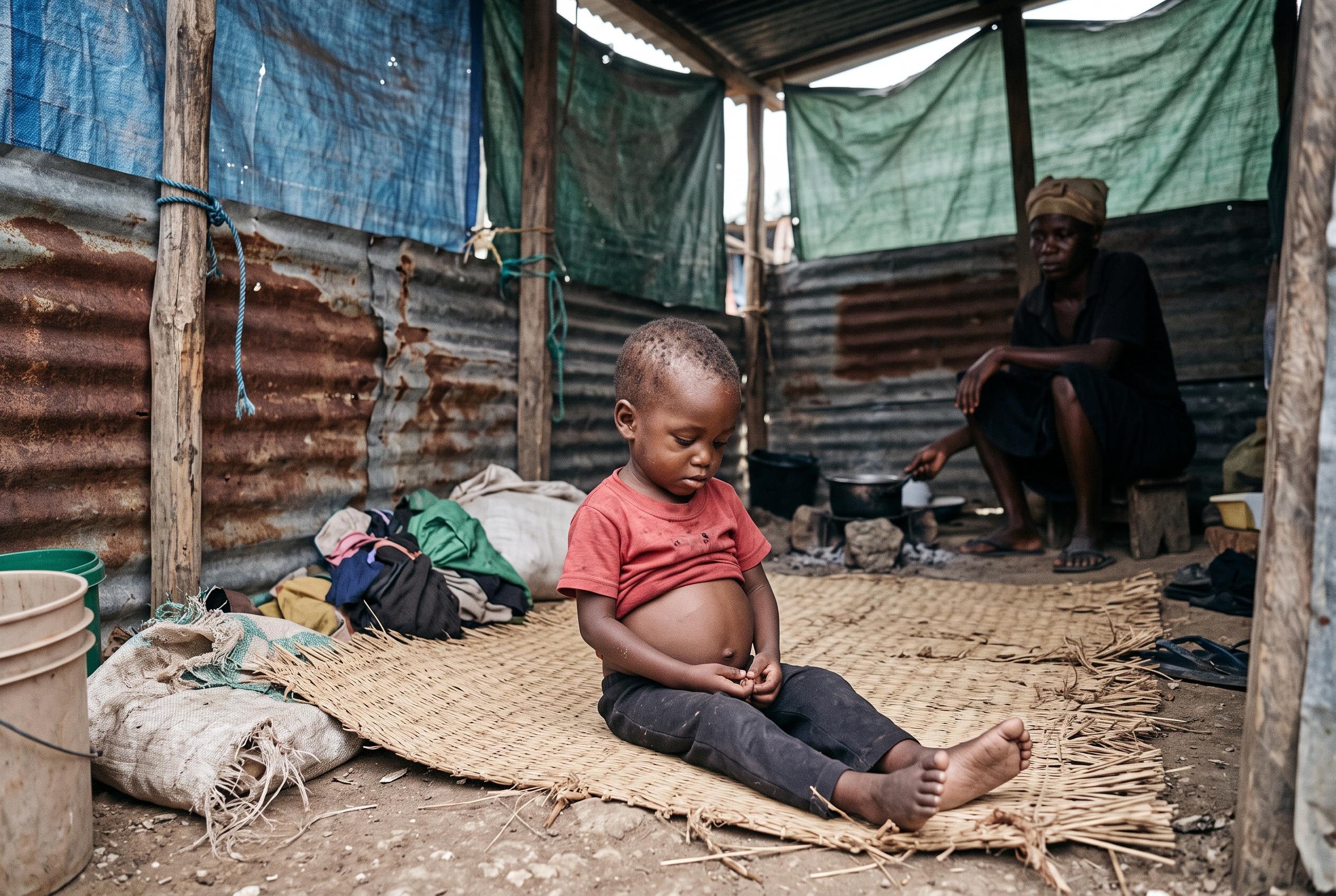

A new UN-backed assessment warns that nearly a quarter of a million Haitian children under five are at risk of acute malnutrition amid ongoing violence, displacement, and economic hardship, with the crisis set to worsen in the coming months.
Haiti’s child malnutrition crisis is worsening as armed violence, displacement and economic strain continue to cut families off from food and care, according to a new UN-backed assessment. The study, led by Haiti’s Ministry of Public Health and Population with support from UNICEF, the UN Food and Agriculture Organisation and the World Food Programme, estimates that 253,725 children aged six to 59 months will suffer acute malnutrition between June 2026 and May 2027. Nearly 94,000 are expected to face the most dangerous form, severe acute malnutrition, while 159,852 are projected to experience moderate acute malnutrition. The report also says 25,750 pregnant and breastfeeding women will need nutritional support.
UNICEF said the outlook reflects a broader deterioration in the country’s humanitarian situation. Geetanjali Narayan, UNICEF’s representative in Haiti, said children’s needs are not abstract statistics but urgent cases requiring faster intervention, and called for action to reach them earlier and prevent their condition from worsening. A separate UNICEF nutrition survey released this year found that nearly one in 13 children aged six months to five years in Haiti is affected by acute malnutrition, up from 5.1% in 2023 to 7.4% in 2026.
The report says the problem is likely to intensify between December 2026 and May 2027, when 29 of Haiti’s 140 municipalities are projected to reach IPC Acute Malnutrition Phase 3, a serious level on the international scale used to classify hunger and nutrition crises. Cité Soleil and Cabaret are expected to reach Phase 4, which is considered critical. The assessment also says about 1.47 million people were internally displaced in Haiti by mid-May 2026, underscoring how insecurity is pushing families from their homes and making food, healthcare and treatment far harder to access.
The UN agencies are urging Haiti’s government, donors, civil society groups and international partners to expand community screening and treatment, ensure supplies of therapeutic food, improve access to safe water and sanitation, and protect household food production and livelihoods. Pierre Vauthier, the FAO’s representative in Haiti, said tackling malnutrition also means addressing the lack of diverse, nutritious food, while Lauren Landis, the WFP’s representative and country director, said investment in prevention, nutrition, healthcare, school meals and support for vulnerable households is urgently needed. The World Food Programme says more than half of Haitians are already facing acute hunger, making the nutrition crisis part of a wider emergency that aid groups warn could deepen without faster and more flexible support.
Disclaimer: This content is for informational purposes only and is not intended to be a substitute for professional medical judgment, advice, diagnosis, or treatment.



