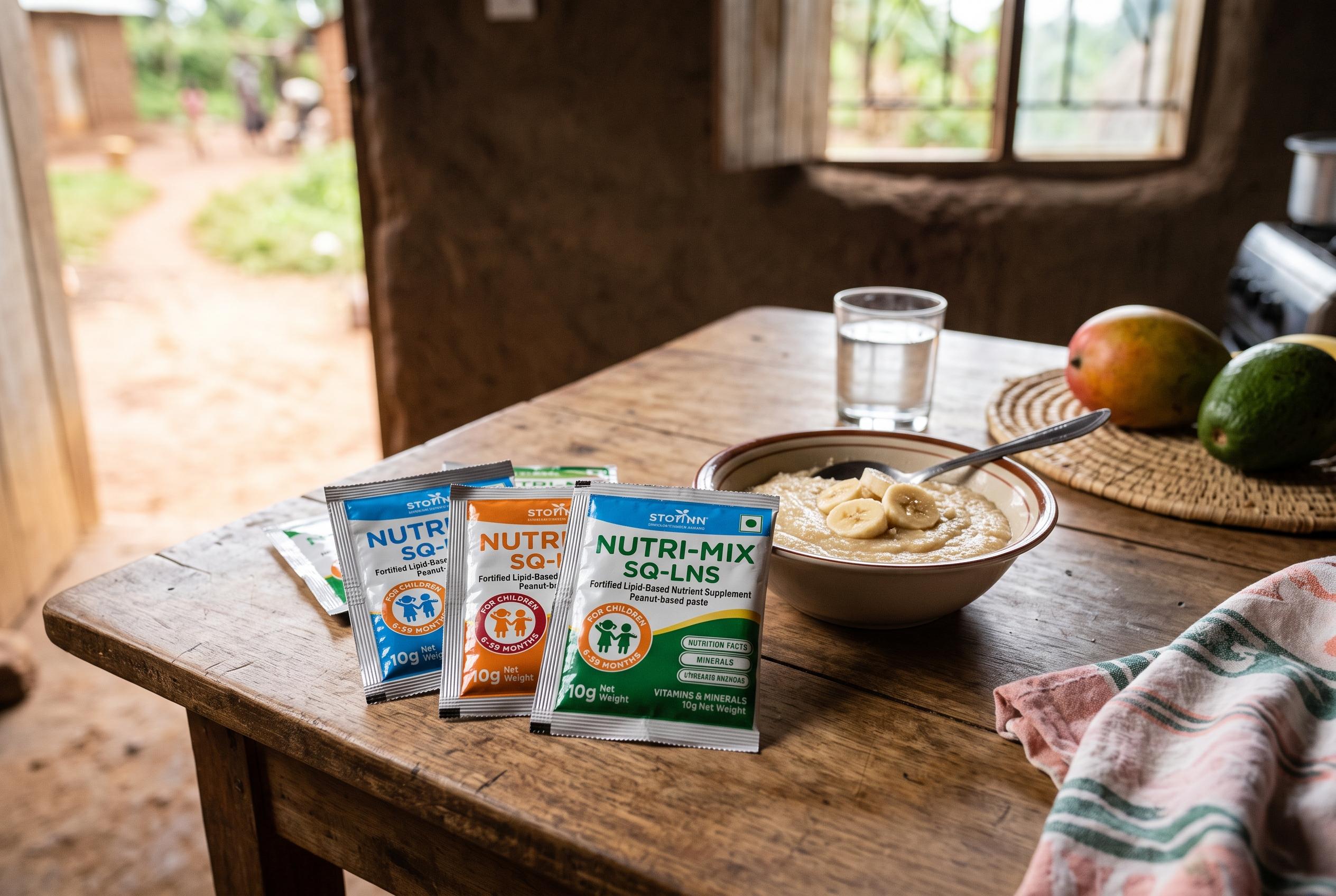

Aid agencies are increasingly adopting small-quantity lipid-based nutrient supplements (SQ-LNS) to combat early childhood malnutrition, supported by scientific evidence and WHO policy, but emphasising the importance of comprehensive food and health programs to ensure effectiveness.
Aid agencies are stepping up use of small-quantity lipid-based nutrient supplements, or SQ-LNS, as a practical tool against early childhood malnutrition. The paste comes in 20-gram sachets and is designed for children aged six to 23 months, providing a concentrated mix of vitamins, minerals, fats and protein that can be eaten straight from the packet or stirred into local foods. World Hunger’s August 17, 2026 report says the approach is aimed at preventing stunting, severe wasting, anaemia and child deaths, but only when it is used alongside broader food and health support.
That distinction matters. SQ-LNS is meant to fill nutrient gaps, not replace a full diet. The World Hunger report says evidence from refugee settings in Kenya and Djibouti showed gains when children received the supplement on top of adequate household rations, including sizeable reductions in anaemia. But in eastern Chad, where family food allocations were cut, the child growth picture worsened despite the supplement. The lesson, researchers say, is that lipid-based pastes cannot compensate for an overall calorie shortage.
The scientific case for SQ-LNS is now strong. An individual participant data meta-analysis covering 14 randomised trials and more than 37,000 children found that the supplements cut stunting, wasting and underweight by about 12% to 14%, while also reducing anaemia and iron-deficiency anaemia. The same evidence base suggested developmental benefits, with fewer children falling into the lowest range for language, social-emotional and motor scores. Separate analyses found particularly large reductions in severe wasting and severe stunting, reinforcing its role as a prevention tool rather than a treatment for acute starvation.
The World Health Organisation has moved that evidence into policy, including SQ-LNS in its 2023 guidance on complementary feeding and child wasting. Economic studies also make the case for broader adoption. A World Bank event in 2022 highlighted modelling that linked SQ-LNS to better child survival and development, while a later cost-effectiveness analysis in Uganda found it to be far more efficient than multiple micronutrient powders for preventing severe undernutrition and death. World Hunger says global benefit-cost work suggests every dollar spent can return nearly $14 in long-term gains.
The main challenge now is delivery. UNICEF and the World Food Programme buy much of the global supply, which has traditionally been dominated by a small number of manufacturers. That concentration can help with quality control, but it also leaves programmes exposed when demand jumps or supply chains break down. The report says local production in countries including Bangladesh, Kenya, Malawi and India could reduce delays and support regional agriculture, though producers still face import duties, financing costs and limited laboratory capacity for testing. As nutrition agencies scale up, the central task is to pair SQ-LNS with food aid, cash support, breastfeeding counselling and primary care, so that a small sachet becomes part of a larger system rather than a false substitute for one.
Disclaimer: This content is for informational purposes only and is not intended to be a substitute for professional medical judgment, advice, diagnosis, or treatment.