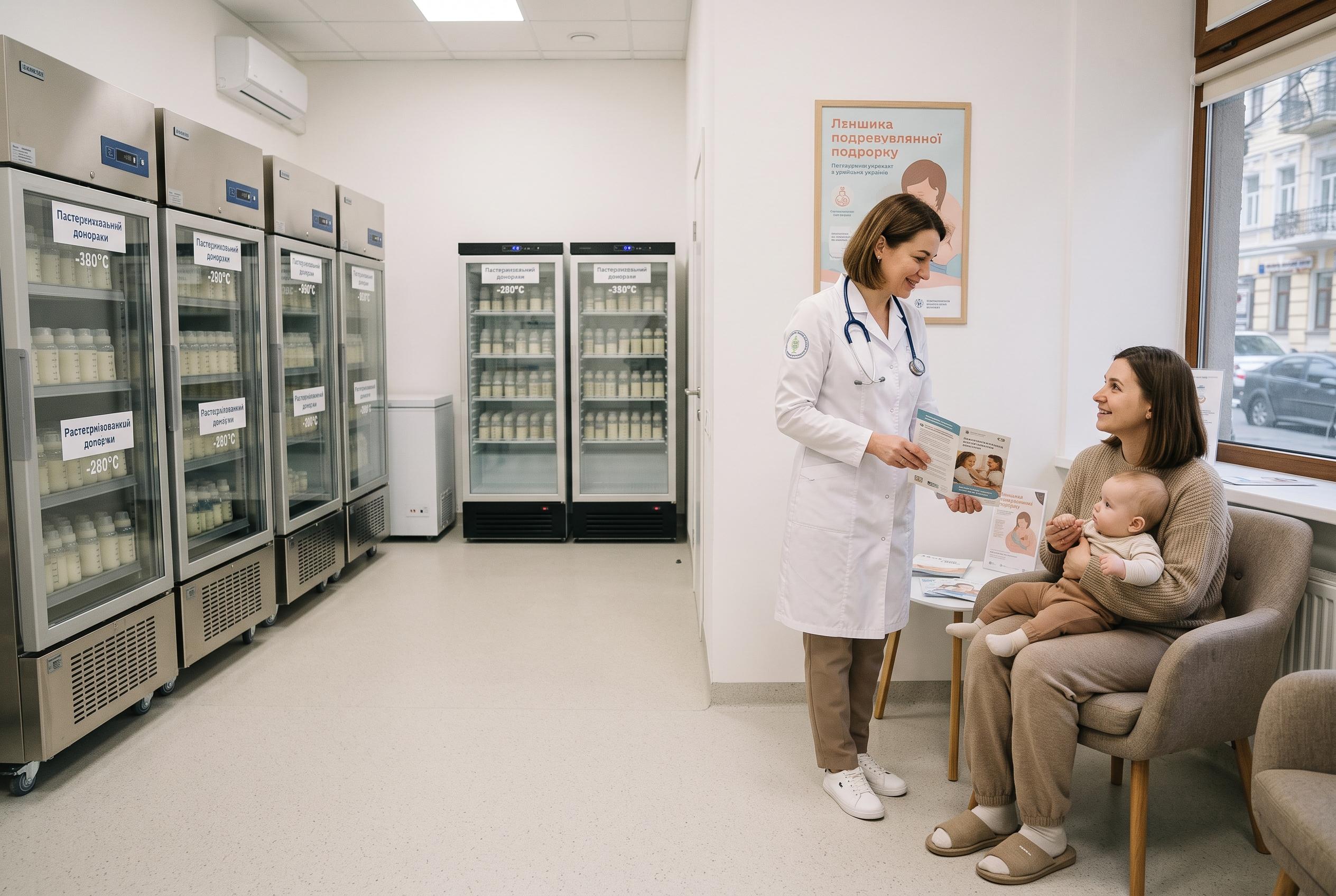

Only 43% of infants are exclusively breastfed in the first six months, but innovative programmes such as Kyiv’s donor milk bank show promising progress amid international efforts to improve early childhood health.
Only 43% of infants are exclusively breastfed in the first six months of life, according to the article marking World Breastfeeding Week. Health experts say that matters because breast milk does far more than feed a baby: it also provides protection that helps shape healthy growth in the earliest weeks and months.
The first hour after birth is often described as a “golden hour”, and the World Health Organisation recommends that breastfeeding begin within that window, ideally alongside uninterrupted skin-to-skin contact if the mother and baby are well enough. Public health guidance says that contact helps newborns adjust to life outside the womb, keep their body temperature stable, breathe more steadily and find the breast for the first feed. It also supports milk production and early bonding.
In the first days after delivery, the body produces colostrum, a thick early milk that may come in small amounts but is specially suited to a newborn’s needs. UNICEF says it is rich in antibodies and other protective factors, which is why it is often described as a baby’s first natural defence against infection.
The World Health Organisation and UNICEF recommend exclusive breastfeeding for the first 6 months of life, meaning no water, tea, juice or other foods, apart from medicines when prescribed by a doctor. They advise continuing breastfeeding after that point, while introducing safe and adequate complementary foods from around 6 months onwards and carrying on for up to 2 years or beyond.
Research cited by health agencies links breastfeeding with a lower risk of diarrhoea, respiratory infections and other common early-childhood illnesses. In the longer term, it is associated with a reduced risk of overweight, obesity and type 2 diabetes and may also support cognitive development. WHO says the global target is to raise exclusive breastfeeding rates in the first 6 months to at least 50% by 2025.
When breast milk is unavailable or insufficient, donor milk can play a critical role, particularly for premature babies and infants with very low birth weight. Kyiv’s milk bank at the city’s perinatal centre has become one example of that approach in Ukraine. Its head, paediatric neonatologist Anna Osipova, said preterm infants are especially vulnerable because their digestive and immune systems are still immature, making formula more difficult to tolerate and increasing the risk of severe gut complications such as necrotising enterocolitis.
According to Osipova, donor milk can improve tolerance of enteral feeding, help babies reach full feeds sooner, reduce infections and shorten time in intensive care for some infants. The milk bank provides donor milk free of charge for babies who need it and, in a typical month, supports feeding for up to 80 infants. Each batch is screened, pasteurised and tested for bacterial contamination and nutrient composition before use.
Disclaimer: This content is for informational purposes only and is not intended to be a substitute for professional medical judgment, advice, diagnosis, or treatment.