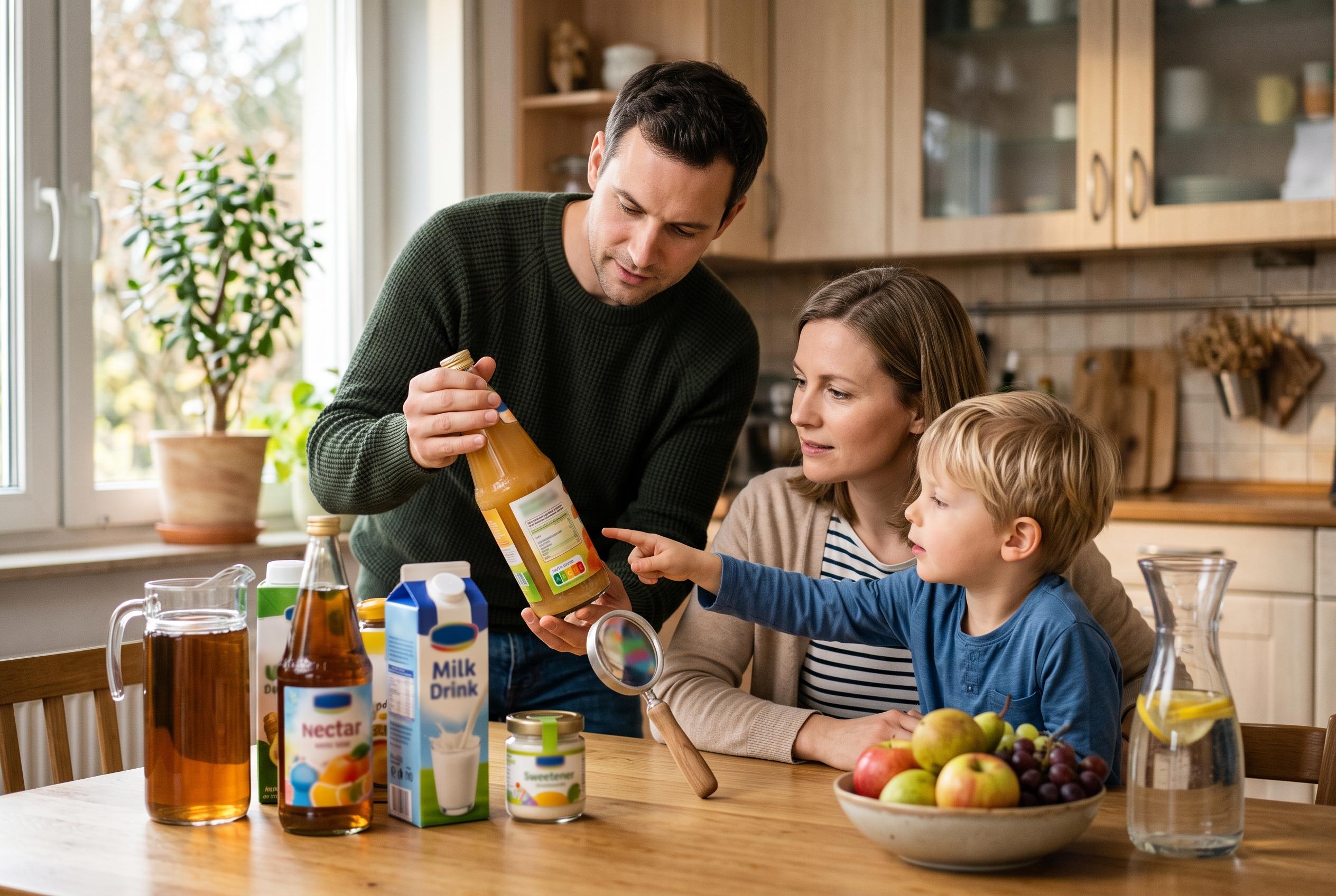

Germany is contemplating expanding its proposed sugar levy beyond soft drinks to include fruit nectars, iced teas, milk drinks, and sweetener-laden beverages, raising questions about label transparency and consumer awareness.
Germany is weighing a tax on sugary drinks, and if ministers press ahead, the levy could reach further than soft drinks alone. Fruit nectars, iced teas, milk drinks, oat drinks and ready-made coffees are all being discussed, and drinks containing sweeteners could also be drawn in. For now, though, there is no final rule, which makes label-reading more important for shoppers trying to judge what is really in a bottle or carton.
The first place to look is the nutrition table. As the Bavarian consumer portal explains, the figures are usually given per 100 millilitres or 100 grams, and that is the most useful way to compare products. A portion figure can be misleading if it hides the fact that a larger bottle contains far more sugar overall. The line marked “of which sugars” covers both added sugar and naturally occurring sugars from ingredients such as fruit, milk, honey or whey products.
The ingredients list can reveal more, but only if consumers know the common disguises sugar uses. Consumer groups in North Rhine-Westphalia say sugar may appear as saccharose, glucose, dextrose, fructose, maltose, glucose syrup, glucose-fructose syrup or invert sugar syrup, among other names. Ingredients are listed in descending order by weight, so a sweetener high up the list usually means there is a lot of it. Even so, manufacturers can spread sweetness across several ingredients, which is why the nutrition table remains the better guide to total sugar content.
It is also worth checking whether a drink is sweetened rather than sugared. According to the North Rhine-Westphalia consumer centre, sweeteners such as acesulfame-K, aspartame, cyclamate and saccharin do not add sugar or energy, while sugar alcohols such as sorbitol, xylitol, maltitol and isomalt can contribute to energy intake and may have a laxative effect in larger amounts. Consumer advocates also warn against taking claims such as “zuckerfrei” or “less sweet” at face value, because marketing language can be less precise than the figures on the label. The safest approach is still to combine the nutrition table with the ingredients list before assuming a drink is low in sugar.
Disclaimer: This content is for informational purposes only and is not intended to be a substitute for professional medical judgment, advice, diagnosis, or treatment.