

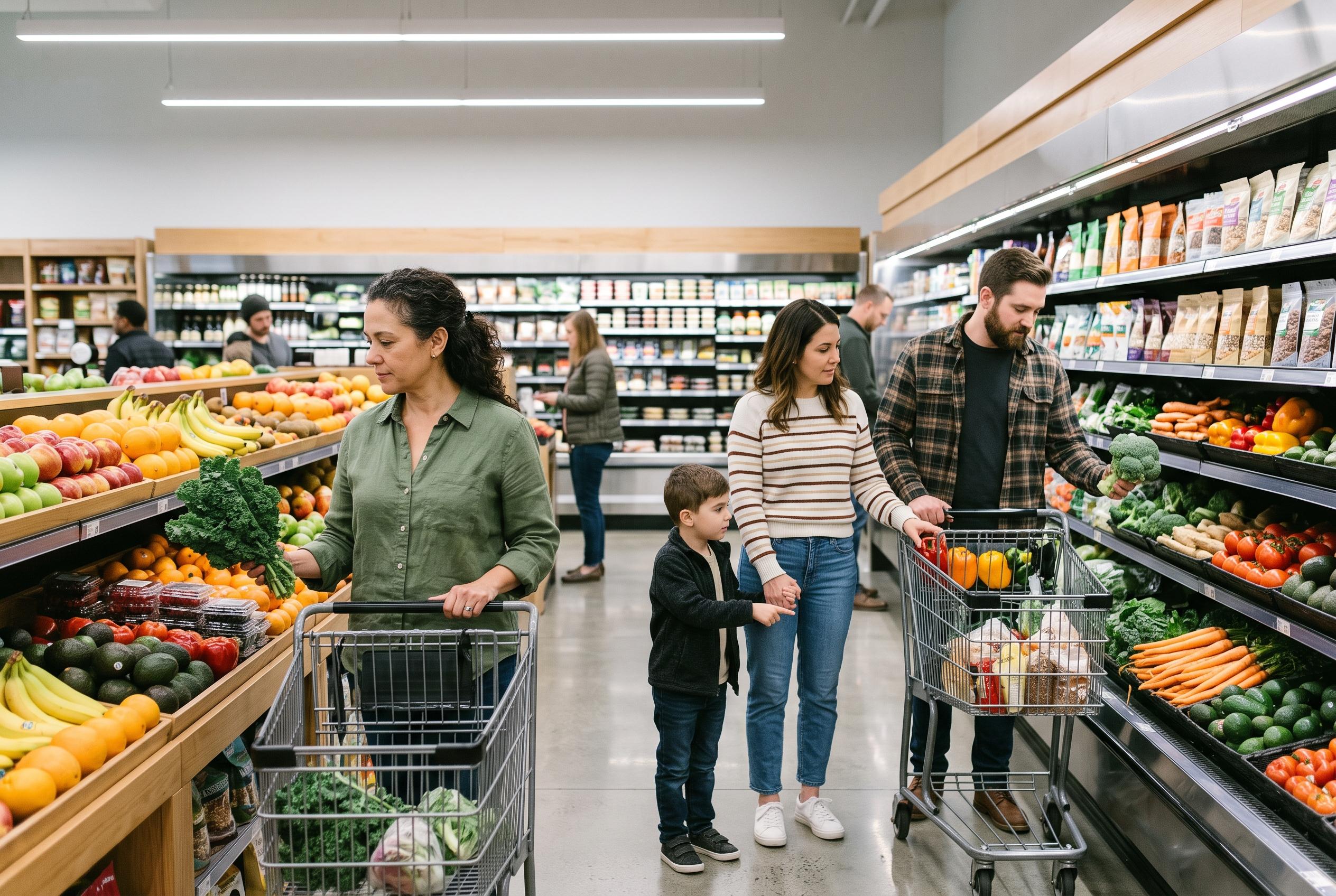

Antoinette Guhl’s proposal to make major supermarkets sell 80 nutritious products at cost price is facing opposition in the Senate over enforcement, commercial freedom and its impact on local trade.
Antoinette Guhl’s plan to force large supermarkets to sell a basket of healthy food at cost price is heading into a difficult Senate debate, even as supporters argue it could help families cope with inflation without undermining farmers or the public purse. The proposal, examined in the upper house on Thursday, is designed to make nutritious food more affordable in major retailers by requiring them to offer a set range of products without adding a margin on top of their purchase price.
The text would oblige supermarkets to stock at least 80 items each year, selected in line with France’s National Nutrition and Health Programme, or PNNS. The idea has its roots in a coalition of 42 consumer, health, student and environmental groups, including Foodwatch, Secours catholique and France Assos Santé, which had originally pushed for 100 healthy products sold at cost price. Guhl and her allies later scaled that back to 80 items in what they present as a more workable compromise.
The senator, an ecologist, argues that the measure would not amount to selling at a loss. In her view, retailers could still pass on commercial costs but would be barred from adding extra profit on top. She says that distinction matters because, according to the findings of the Senate inquiry into the margins earned by food manufacturers and retailers, fresh and healthy produce often generates the strongest mark-ups. Her report pointed to sharp rises in the prices of fruit and vegetables over the past decade, outpacing general inflation, while ultra-processed branded products such as soft drinks, crisps and chocolate spreads are kept cheap because they are used as loss leaders to draw customers in.
But the Senate’s own committee has already signalled resistance. In rejecting the bill last week, rapporteur Marc Séné of The Republicans said it would be hard to calculate and police, and warned that it could interfere disproportionately with commercial freedom. The Senate report also raises concerns about possible knock-on effects for local commerce and the freedom to set prices, suggesting that the practical and legal hurdles may be enough to sink the initiative in a chamber where the right holds a majority.
Guhl is trying to keep the bill alive by stressing that it would not cost the state money and, in her telling, would not squeeze farmers, industrial suppliers or supermarket chains. She says it is reasonable to expect 80 cost-price products in a store carrying tens of thousands of items. The same proposal has also been lodged in the National Assembly by Boris Tavernier, another Green lawmaker, and backers hope the lower house may yet prove more receptive when the text reaches it again on 3 December during the Greens’ parliamentary slot. The 42 associations behind the campaign are urging senators to treat it as an urgent, proportionate response to both living costs and diet-related health concerns.
Disclaimer: This content is for informational purposes only and is not intended to be a substitute for professional medical judgment, advice, diagnosis, or treatment.



