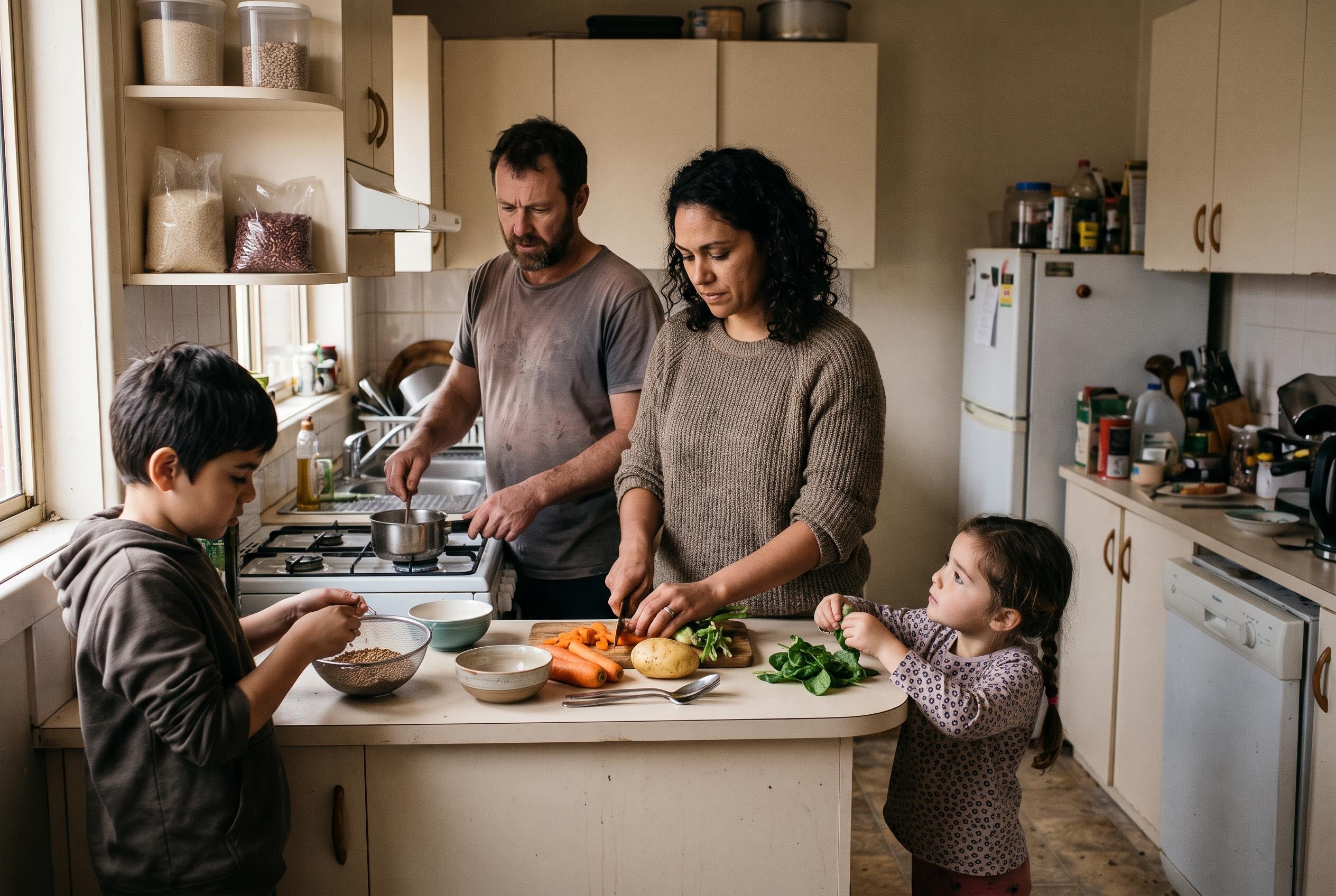

Foodbank Australia says 33% of Australian households faced food insecurity in the past year, with families with children and renters bearing the heaviest burden.
Food insecurity affected one in three Australian households over the past year, according to Foodbank Australia’s latest Hunger Report, underscoring how sharply the cost-of-living crisis is cutting into family budgets. The charity said 33% of households experienced some level of food insecurity, a marginal rise from the previous year, as pressure from housing, bills and everyday essentials continued to push more people towards food relief. ABC News reported that the number of affected households was about 100,000 higher than in the prior year.
The burden was especially heavy on families with children. Foodbank said 45% of households with children struggled to obtain enough food, and a quarter were classified as severely food insecure, meaning they were skipping meals or going without food for entire days. The report also found that 85% of food-insecure households could not afford balanced meals, while 69% said the problem had hit them for the first time in the past 12 months.
The findings also showed that food insecurity is no longer limited to the lowest-income groups. Foodbank reported that 37% of middle-income households and 53% of low-income households were affected. Among renting households, more than half experienced food insecurity, compared with just 12% of households that owned their homes outright. ABC said the report pointed to rising living costs and interest rates as key drivers, while Foodbank chief executive Kylea Tink said the issue had spread well beyond the margins of society.
Foodbank is urging governments to respond with a national school breakfast programme in every school by 2030, alongside greater support for food relief organisations. The charity said families should not be forced to choose between housing and groceries, and the report framed hunger as a mainstream cost-of-living emergency rather than a problem affecting only the most disadvantaged Australians.
Disclaimer: This content is for informational purposes only and is not intended to be a substitute for professional medical judgment, advice, diagnosis, or treatment.