

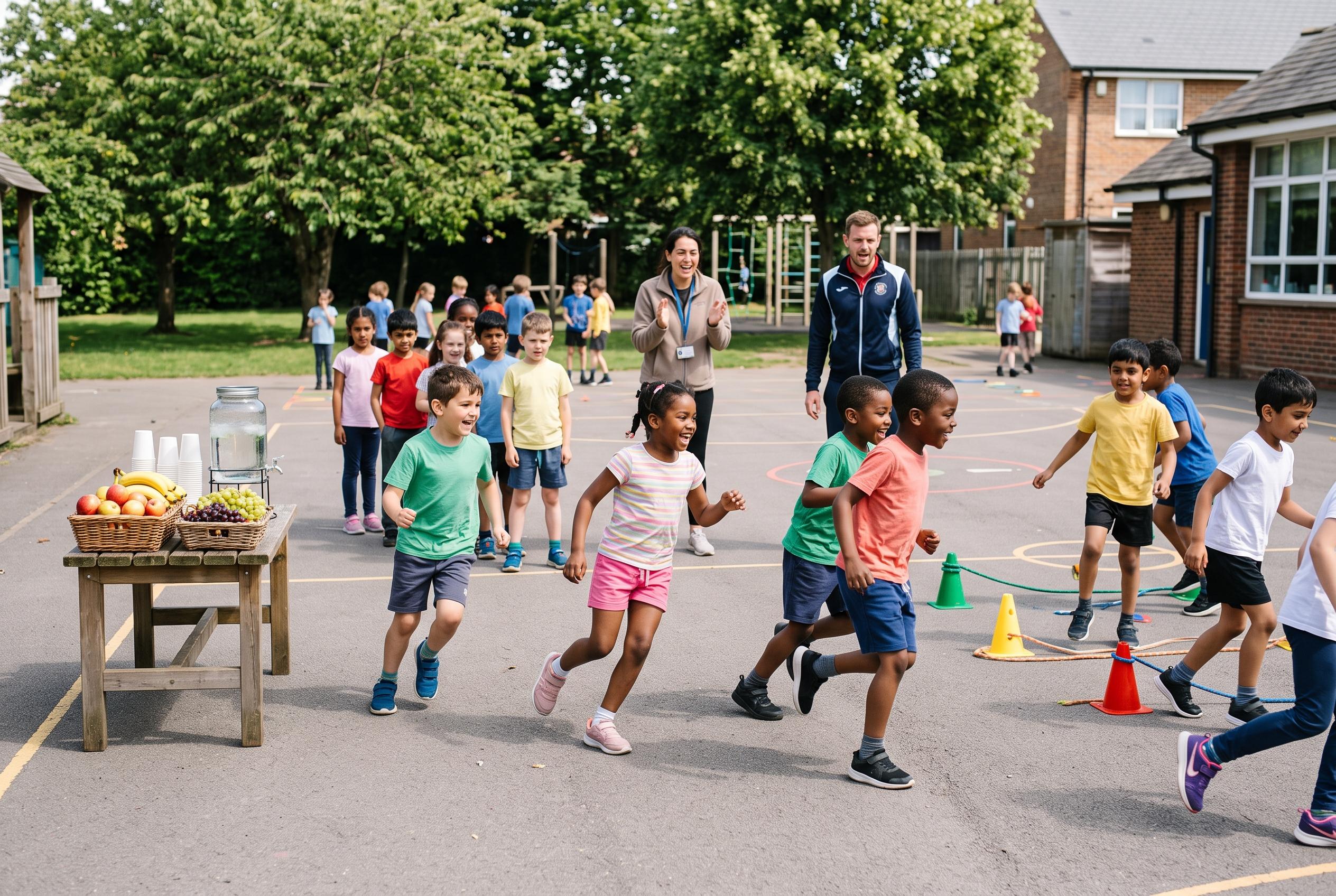

A Technical University of Munich evaluation suggests Fit4future is leaving behind lasting health structures, while children’s activity levels and fruit consumption improve.
A decade-long health programme aimed at children in Germany is showing signs of lasting impact, according to a new evaluation by the Technical University of Munich. Fit4future, backed by DAK-Gesundheit and the Fit4future Foundation, has now reached roughly 6,950 nurseries and schools and more than 2 million children and young people since it began in 2016. The current phase, which runs from 2022 to 2027, is designed not just to offer short-term activities but to embed healthier habits into everyday school and nursery life.
The programme works across several areas that matter to parents and educators alike: physical activity, nutrition, mental wellbeing and responsible use of digital media. It also involves parents and teaching staff, with the stated aim of creating environments that make healthy choices easier to sustain. The foundation says the model is built on scientific evidence and is intended to strengthen children in the settings where they spend most of their time.
The latest TUM analysis suggests that approach is paying off. Many of the participating institutions have built their own coordination teams to oversee health work, and those structures often outlive the programme’s direct support. According to the evaluation, 78% of nurseries and schools have set up such teams, and in 53% of establishments they were still active two years later. Almost half of the nurseries involved, 48%, and a third of the schools, 33%, have also drawn up their own health plans to keep movement, food and other wellbeing topics on the agenda.
Behavioural changes among children were also recorded. At the start of the programme, children and teenagers were active for at least 60 minutes on 4.6 days a week on average. After the first year, that rose to 5.2 days and remained at that level in the second year, bringing participants closer to World Health Organisation advice that five- to 17-year-olds should average at least an hour of moderate to vigorous physical activity each day. The study also found improvements in diet: the share of children and young people eating the recommended two portions of fruit a day rose by about 24% to 51%, while among nursery children the figure reached 61.6% after one year.
Researchers said the programme appears to work especially well in nurseries, where flexible schedules and greater room for educational planning make it easier to weave health promotion into the day. Filip Mess, a professor of sport and health education at TUM, said the findings suggest that a long-term, self-help approach is producing results. The study also pointed to the influence of the home environment, with children’s movement, diet and screen habits linked to parental attitudes, family climate and media literacy. In practical terms, that means the programme’s effects may depend not only on what happens in school, but also on whether healthy routines are reinforced at home.
Disclaimer: This content is for informational purposes only and is not intended to be a substitute for professional medical judgment, advice, diagnosis, or treatment.



