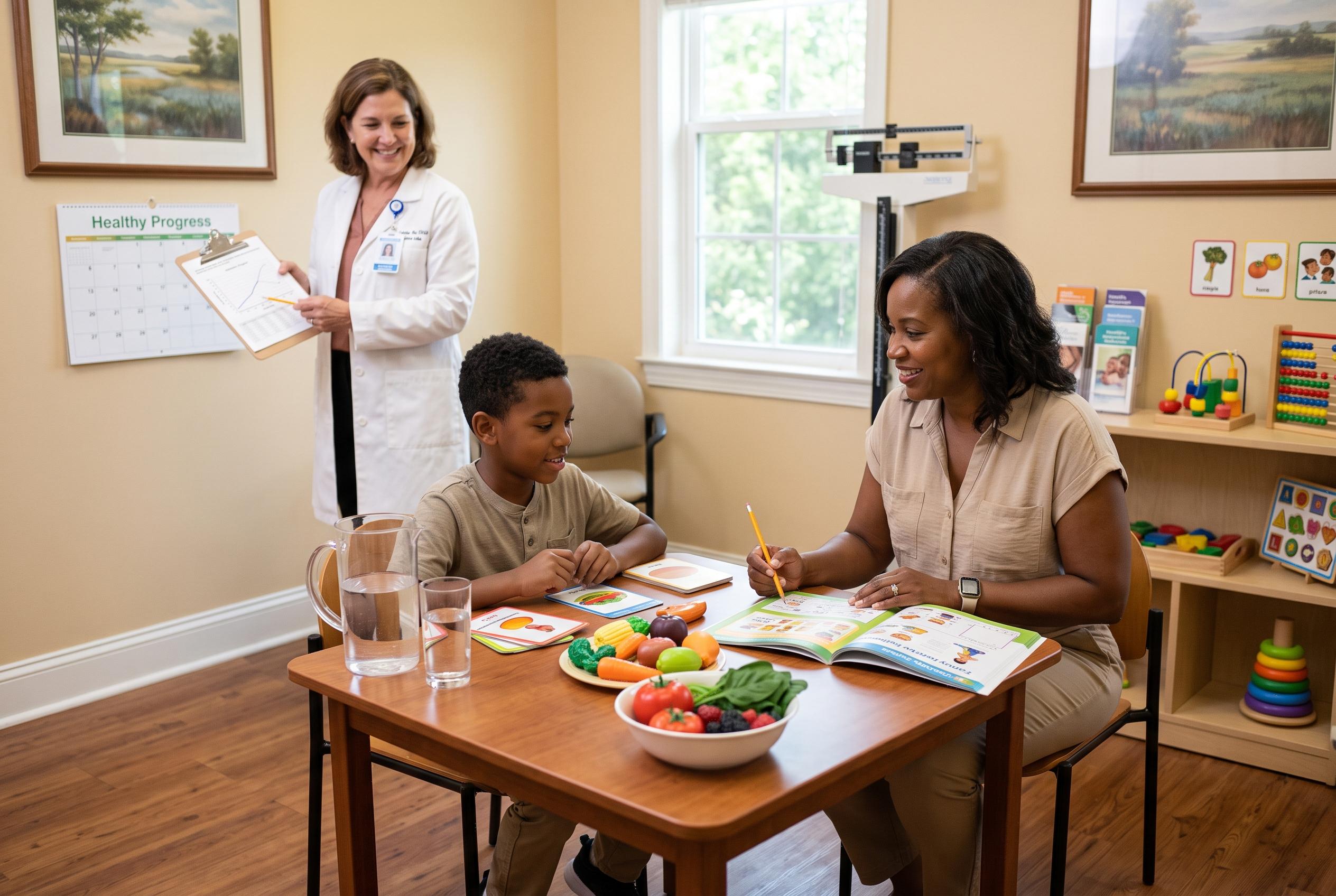

A groundbreaking study led by Pennington Biomedical Research Center demonstrates that delivering family-based behavioural treatment through local doctors can effectively reduce childhood obesity, offering a practical solution for communities facing structural health disparities.
A long-running child obesity trial led in part by Pennington Biomedical Research Center in Baton Rouge is pointing to a practical way to bring treatment into the doctors’ office, where many families already seek help. The study, known as TEAM UP, tested whether family-based behavioural treatment could be delivered through local paediatricians and primary care practices rather than relying on specialist clinics alone.
The approach matters in Louisiana, where America’s Health Rankings says 35.8% of children aged 6 to 17 are classed as overweight or obese, putting the state 47th of 50. That makes the challenge not only medical but also structural, especially in communities facing food insecurity and limited access to sustained support.
According to Pennington Biomedical and the University of Rochester, the trial followed 730 children aged 6 to 15 across the country, including 270 in Louisiana. About half the families were covered by Medicaid and one in five reported food insecurity. The study also included children dealing with attention deficit hyperactivity disorder, anxiety or depression, reflecting the complexity of treating obesity in real-world settings.
Amanda Staiano, a Pennington Biomedical professor, said the research showed that methods already known to be safe and effective can work when they are placed where families are most likely to use them. She said about half the children achieved what the researchers considered a meaningful reduction in weight, with accompanying improvements in blood pressure and metabolic health. The study team is now tracking the children through electronic records for 10 years, while Pennington says the programmes are available through local doctors’ offices and are often covered by insurance. Researchers also say the family-based model may help children using GLP-1 medicines or recovering from weight-loss surgery maintain results.
Disclaimer: This content is for informational purposes only and is not intended to be a substitute for professional medical judgment, advice, diagnosis, or treatment.