

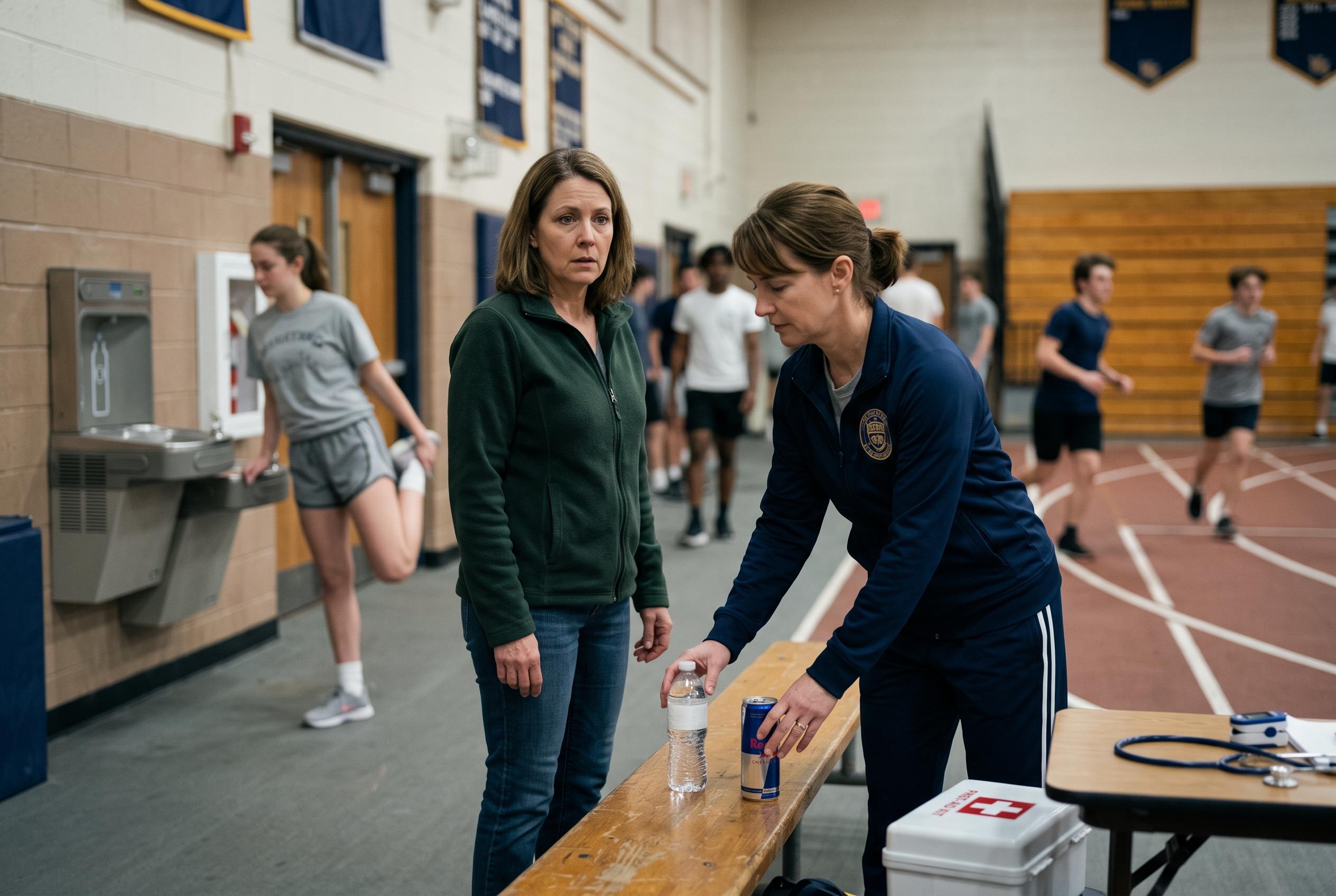

Doctors and health advocacy groups caution against the casual promotion of energy drinks through sports sponsorships, highlighting risks of heart issues and increased consumption among teenagers following a high-profile death and new college partnerships.
Parents, coaches and school leaders are being urged to take a harder look at energy drinks after doctors raised concerns that a new sponsorship deal between Monster Energy and the Big 12 Conference could blur the line between a commercial sports partnership and a public-health message. The warning has been sharpened by the death of Davis Cripe, a South Carolina teenager whose collapse after drinking caffeine-heavy beverages became one of the most cited examples of the risks. His father, Sean Cripe, said his son chugged an energy drink “just trying to be cool”, a decision that soon led to a fatal heart rhythm disturbance. According to AP, doctors say the episode is a reminder that these products are not harmless refreshments for young people.
Medical groups have long advised that children and teenagers avoid energy drinks, and the American Academy of Pediatrics says those aged 12 to 18 should keep caffeine below 100 mg a day, while younger children should not consume it at all. The dangers are not limited to one brand or one athlete partnership. Energy drinks can contain roughly 80 mg to 300 mg of caffeine per serving, and the combination of caffeine and other stimulants can raise heart rate, blood pressure and nervous-system activity, while also contributing to sleep problems, agitation and, in severe cases, seizures. AP reported that the 2017 death of Davis Cripe followed a day in which he had already consumed other caffeinated drinks, illustrating how total intake can add up quickly.
The concern is not only medical but also cultural. Doctors involved in the effort against the Big 12-Monster agreement say a university logo next to an energy drink can make the product seem more suitable for children and student-athletes, especially when young fans see it alongside the teams they admire. The CDC says energy drinks are not the same as sports drinks: the latter are meant to replace fluids and electrolytes lost through sweat, while the former are built around stimulants. The agency also says 1,499 adolescents aged 12 to 17 went to emergency rooms for energy-drink-related incidents in 2011, underscoring that the problem is not theoretical.
The industry argues that it already takes precautions. The American Beverage Association says member companies disclose caffeine levels on labels and carry warnings that the products are not intended for children, pregnant or nursing women, or people sensitive to caffeine. Monster Energy says its drinks have been sold and consumed worldwide for decades and that energy-drink ingredients also appear in other foods and beverages. The Big 12 has said beverage companies regularly seek to reach sports audiences, while the NCAA says it cannot police conference sponsorships directly, though it offers educational resources and has examined caffeine through medical advisers. Health experts counter that labels alone are not enough, and they urge parents, teachers and doctors to talk plainly with children about what is in the drinks they consume. The CDC recommends that adults model the behaviour they want to see and help children distinguish between a sports drink and a product designed to deliver a stimulant.
Disclaimer: This content is for informational purposes only and is not intended to be a substitute for professional medical judgment, advice, diagnosis, or treatment.



