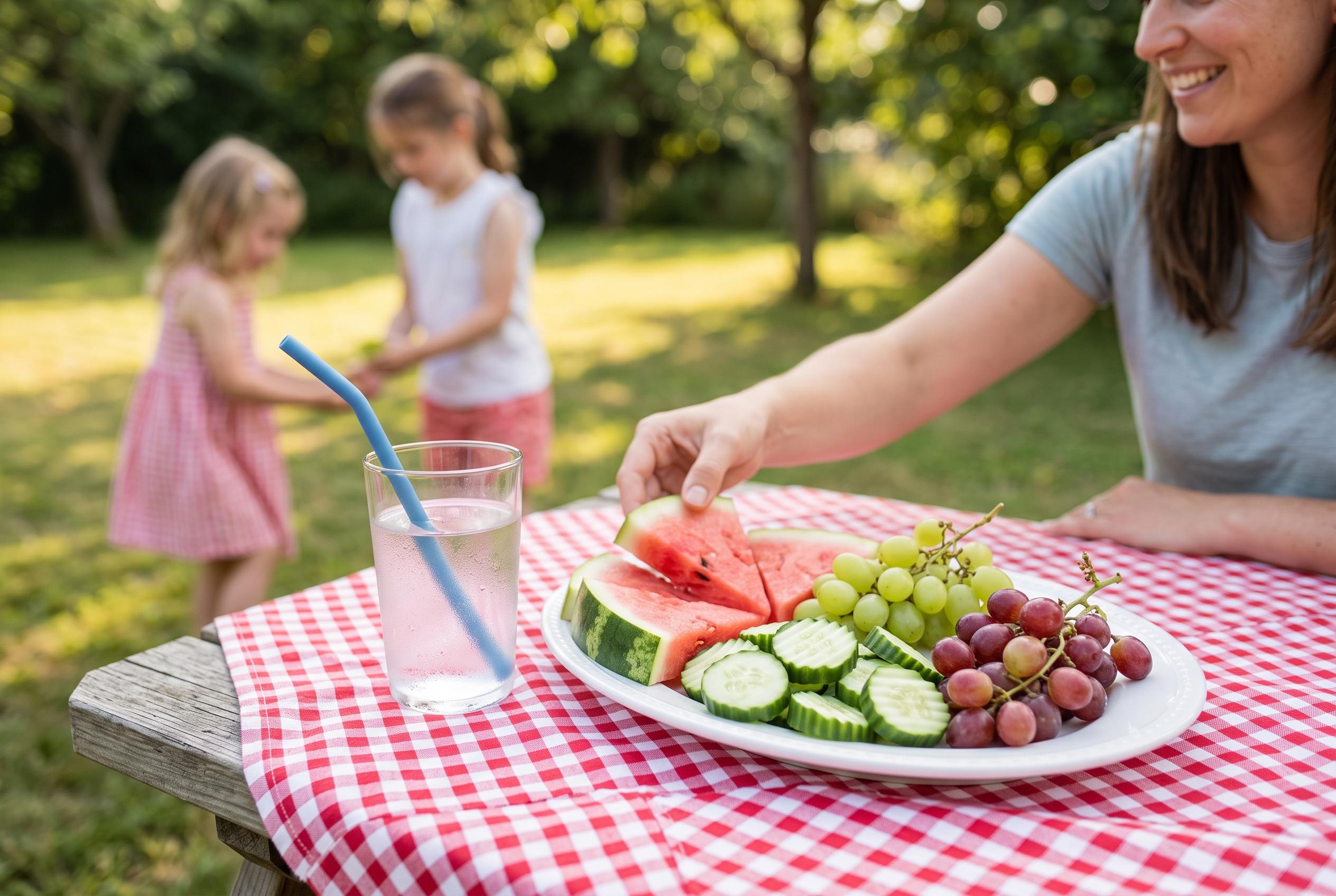

Experts suggest that incorporating water-rich fruits and vegetables into children’s diets can support hydration during heatwaves, alongside regular drinking of water, with special attention to warning signs of dehydration.
Hot weather makes hydration a greater concern for children because they lose more water through sweating, and health guidance from Australia and the US says parents should not wait for children to feel thirsty before offering drinks. But experts also note that fluid intake does not come only from a glass: water-rich foods can make a meaningful contribution, particularly when children are reluctant to drink enough plain water.
An Australian analysis found that food accounted for about 29% of total water intake among children and teenagers, while research involving children aged 4 to 10 suggested those who ate more fruit and vegetables showed better hydration markers. Healthdirect and Queensland Health both advise that young children are more vulnerable to dehydration and heat-related illness, and recommend easy access to plain water throughout the day.
Fruit is one of the simplest ways to add fluid through food. Watermelon, strawberries, oranges, peaches and melon all have a high water content, and one study of 442 children aged 4 to 10 found that solid fruit and vegetables contributed about 12% of total water intake. Children who ate more of these foods also tended to be better hydrated, according to the research cited in the Romanian report.
Vegetables can help too. Cucumbers, tomatoes and peppers are all water-rich and can be served on their own or paired with familiar foods such as hummus or soft cheese. That makes them practical for lunch boxes or after-school snacks, especially when children prefer something cool and light in hot weather.
Dairy foods can also support fluid intake. Yogurt may be eaten chilled, blended into a smoothie or frozen at home, while milk contributes directly to hydration as well as nutrition. The Australian guidance also notes that fortified non-dairy alternatives can be used, although their nutritional content varies from product to product.
Taken together, the advice is straightforward: keep encouraging children to drink, but use food to support hydration rather than replace it. On very hot days, a plate with fruit, chopped vegetables, yogurt, cheese, hummus and crackers may be easier for children to accept than a hot meal, but warning signs of dehydration still need attention. Health guidance says no single symptom is enough on its own, so parents should look at behaviour, appearance and fluid intake together.
Disclaimer: This content is for informational purposes only and is not intended to be a substitute for professional medical judgment, advice, diagnosis, or treatment.