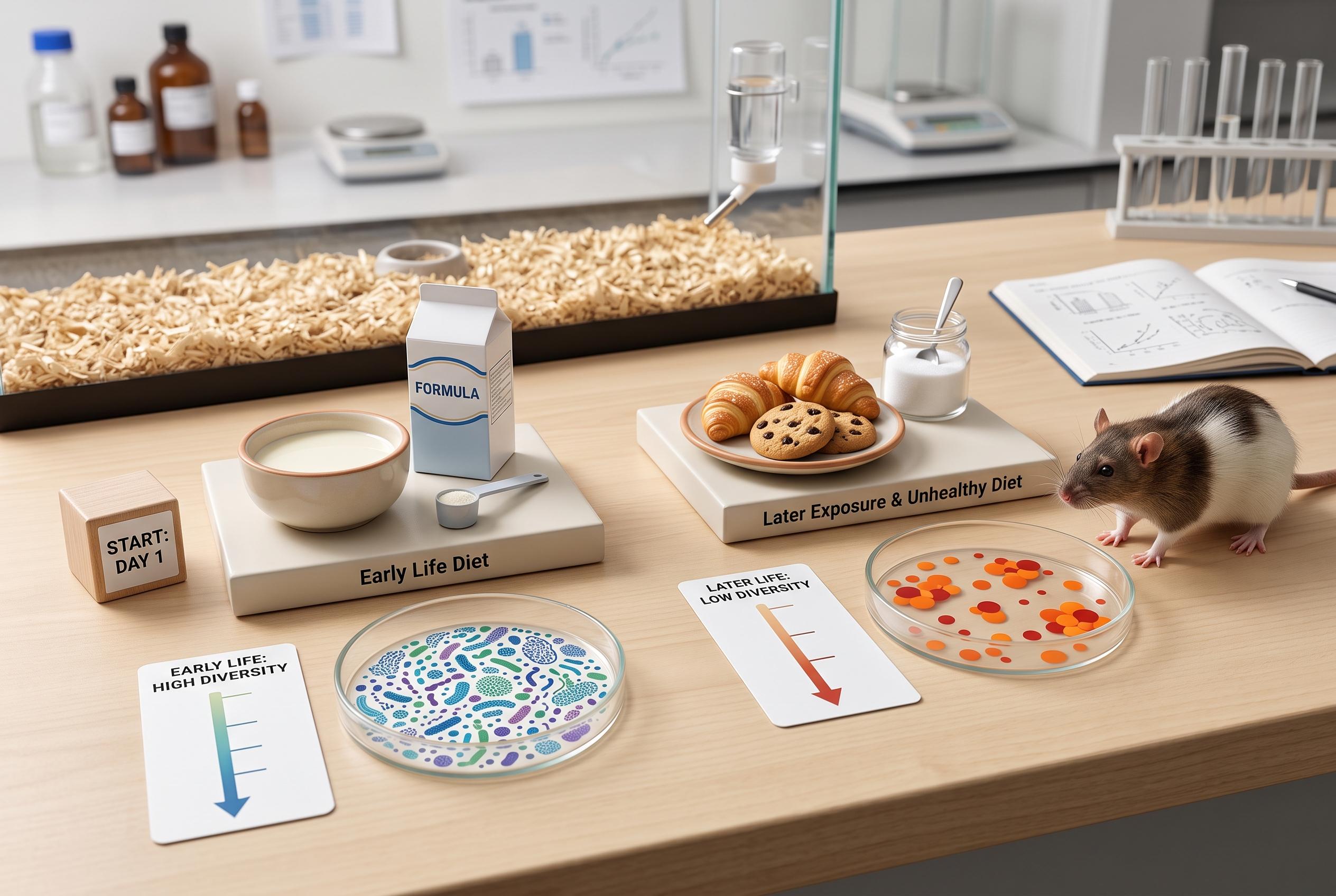

A recent study on young rats reveals that early exposure to dairy proteins influences gut bacterial diversity and body composition, yet offers limited protection against the metabolic impacts of a high-fat, high-sugar diet, highlighting the complex interplay between diet, microbiome, and development.
A study in young rats suggests that the kind of protein eaten early in life may leave a lasting imprint on the gut microbiota and body composition, but those effects do not appear strong enough to overpower the metabolic strain of a later high-fat, high-sugar diet. The research, published in Obesity, found that skim milk powder produced the most consistent changes in fat mass and microbial composition, although the benefits were more noticeable in female animals than males.
In the experiment, rats were weaned onto one of four isocaloric diets based on casein, whey, complete dairy or soy before being challenged with a high-fat, high-sugar feeding period. During the early feeding phase, dairy-fed animals generally gained more weight than some of the other groups, yet they often carried less fat and, in females, relatively more lean mass. The study also found sex-specific effects on glucose handling: whey improved insulin response in males, while dairy was linked to milder changes in insulin sensitivity, particularly in male rats.
The strongest signal came from the microbiome. Early exposure to dairy altered gut bacterial diversity and shifted the balance of major bacterial groups in both sexes. The researchers reported enrichment of taxa such as Akkermansia muciniphila in dairy-fed females and Lactobacillus-related species in some groups, while whey and soy produced their own distinct bacterial patterns. After the animals were switched to the high-fat, high-sugar diet, many of those protein-specific microbial signatures persisted, but they did not prevent weight gain or metabolic dysfunction.
That broader pattern fits with human research showing that dairy can influence the gut ecosystem, although the health meaning of those shifts remains unsettled. A systematic review in 2020 found that milk, yoghurt and kefir often increased beneficial genera such as Lactobacillus and Bifidobacterium, but the clinical significance was unclear. More recent work has also linked dairy intake with changes in colonic mucosa-associated bacteria in humans, while a separate crossover study found that a high-dairy diet altered the microbiome in overweight adults and was associated with constipation in some participants.
The new animal findings add to earlier preclinical work suggesting that dairy proteins are not interchangeable. Other mouse studies have found that milk, fermented milk, yoghurt and other dairy-derived proteins can produce different microbiome and cardiometabolic effects, while studies of whole milk intake have suggested that gut enterotype may shape who responds best. Taken together, the evidence points to a more complicated picture than a simple dairy-versus-nondairy divide: protein source, sex, developmental timing and the rest of the diet all appear to matter. The authors say early-life dairy may help steer gut development towards a more favourable metabolic profile, but it is not a shield against a poor diet later on.
Disclaimer: This content is for informational purposes only and is not intended to be a substitute for professional medical judgment, advice, diagnosis, or treatment.