

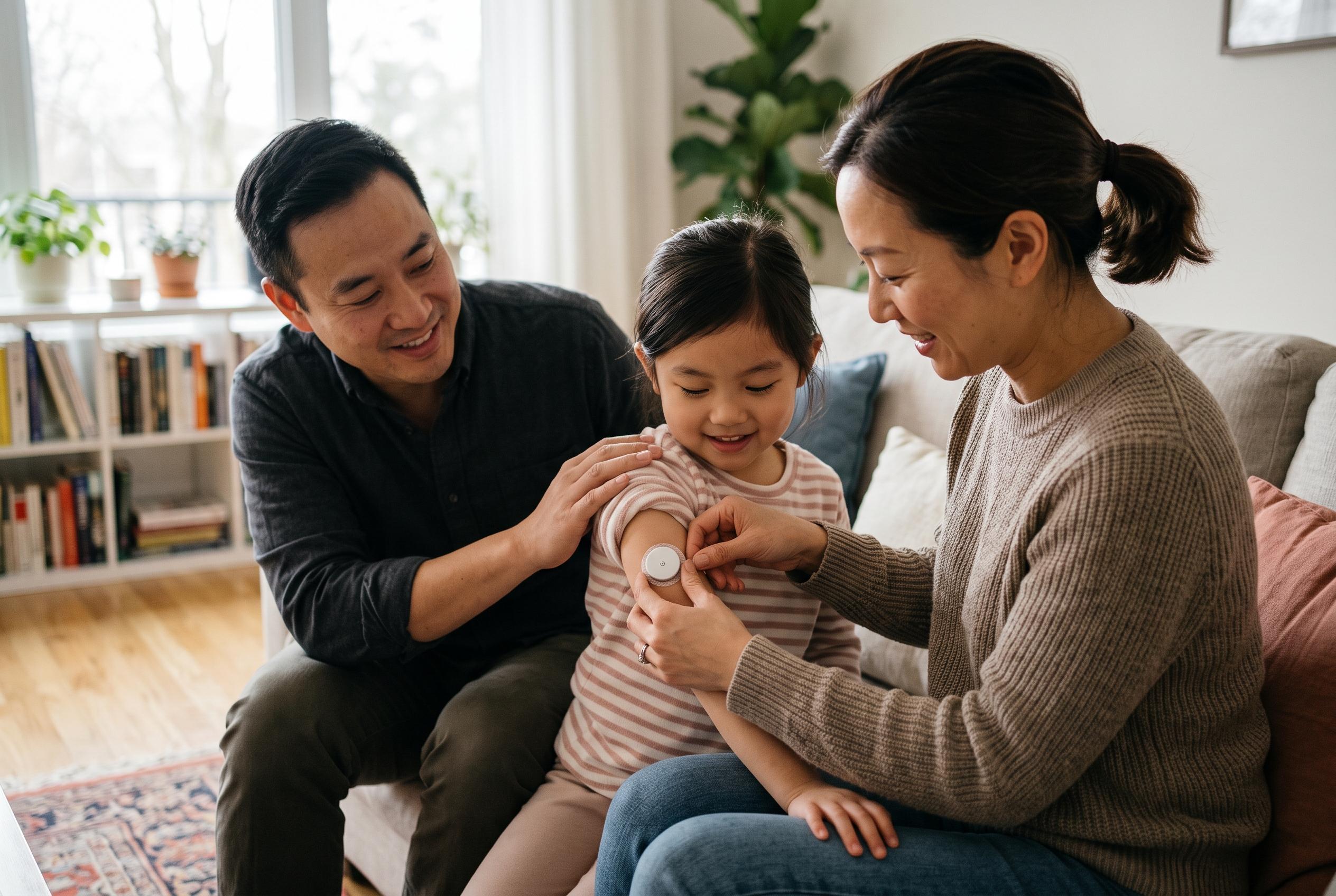

A pilot study from China reveals that parents of children with type 1 diabetes prefer real-time remote glucose monitoring with 14-day sensors, highlighting the importance of reliability and family-centred care over longer device duration.
Chinese parents weighing up glucose sensors for a child with type 1 diabetes appear to care most about one thing the technology can do for them rather than to them: keep them connected when the child is asleep, at school or out of sight. A pilot study from West China Second University Hospital found the strongest and most consistent preference signal for real-time remote monitoring with automatic push notifications, ahead of longer wear time, fewer finger-prick checks or extra alert functions. That fits the latest American Diabetes Association standards, which say device choice should be tailored to individual circumstances and that, when a young child’s diabetes is managed partly or wholly by an adult, the caregiver’s skills and preferences are central to the decision. (doi.org)
The Chinese team used an online discrete-choice experiment in March and April 2026, asking parents or guardians to choose between hypothetical devices that varied by calibration burden, low-glucose alerts, remote viewing, sensor replacement frequency and monthly out-of-pocket cost. Of 79 responses collected, 75 were kept in the main analysis after excluding only very short or unusually long completion times. The study’s other notable signal was that parents did not simply prefer the longest possible sensor wear: a 14-day replacement schedule performed better than 7 days, but 30 days did not show a clear extra advantage. That pattern makes practical sense when set against earlier qualitative work from Australia, where parents of children aged 2 to 12 described remote monitoring in terms of sleep, peace of mind, anxiety, freedom and relationships. In that study, the experience was described as “mostly beneficial”, but not uncomplicated. (pubmed.ncbi.nlm.nih.gov)
The attraction of remote monitoring also sits alongside a harder truth: better data do not automatically erase parental strain. A Swiss cross-sectional study of 59 children and adolescents and 49 parents found parents reported higher fear-of-hypoglycaemia scores than their children, with total scores of 37.9 versus 32.2 and worry subscores of 17.8 versus 12.8. Parents also reported lower diabetes-specific quality-of-life scores. Yet the same study found no clear difference in fear or quality of life between real-time CGM and intermittently scanned devices, or between devices with and without alerts. Among scanned-monitor users, more frequent checking was actually linked to higher parental fear and poorer parent-rated quality of life, suggesting that vigilance can itself become part of the burden. (frontiersin.org)
Real-world use also helps explain why Chinese parents were cautious about trading on paper specifications alone. In a French survey of 114 children under six treated with insulin pumps, 109 were using a glucose monitor and 95% of parents said they were satisfied or very satisfied with the device, whether it was flash or continuous monitoring. But satisfaction was most strongly linked to confidence in reliability, not simply to the monitoring category, and parents also reported messy day-to-day drawbacks: 83% used extra adhesives, 28% reported mild skin reactions, 39% severe skin reactions and 16 mentioned device malfunctions. A separate evaluation of 114 families with very young children found the average child was four years old and just over half were using real-time CGM, while the impact of monitoring spilled into childcare, parental employment and sleep, prompting the authors to argue for social and psychological support as well as medical treatment. (sciencedirect.com)
That emphasis on reliability and family fit echoes another qualitative study, published in JMIR Diabetes, based on 16 interviews with young people aged 12 to 17 and their parents. Those discussions found that ideal devices were defined less by a longer list of features than by reliability, flexibility and automation that could support independence for the child while easing parental anxiety. The same interviews also recorded the gap between marketing promise and lived experience, with users reporting inaccuracy problems and technical failures. Seen in that light, the Chinese study’s finding that 14-day sensors looked more appealing than 30-day ones is less surprising: parents may be seeking a workable balance between convenience, trust and disruption, not the most extreme specification available. (medrxiv.org)
The Chinese authors are careful not to oversell their findings. This was a single-centre pilot, 29 respondents failed a dominance check and 11 chose the opt-out option in every core task, while estimates for cost, calibration burden and alert functions were imprecise. Even so, the study sharpens an important clinical point. Diabetes technology for children is not just about glycaemic performance; it is also about who carries the worry, who gets woken at night and who can safely hand over care to a school, another relative or the child themselves. That is why the ADA now stresses ongoing education, data sharing and uninterrupted access to supplies, and why earlier interview work has warned that remote monitoring can improve family life without benefiting every family in the same way. Larger multicentre studies will be needed before anyone treats these Chinese preference signals as a market verdict. (doi.org)
Disclaimer: This content is for informational purposes only and is not intended to be a substitute for professional medical judgment, advice, diagnosis, or treatment.



