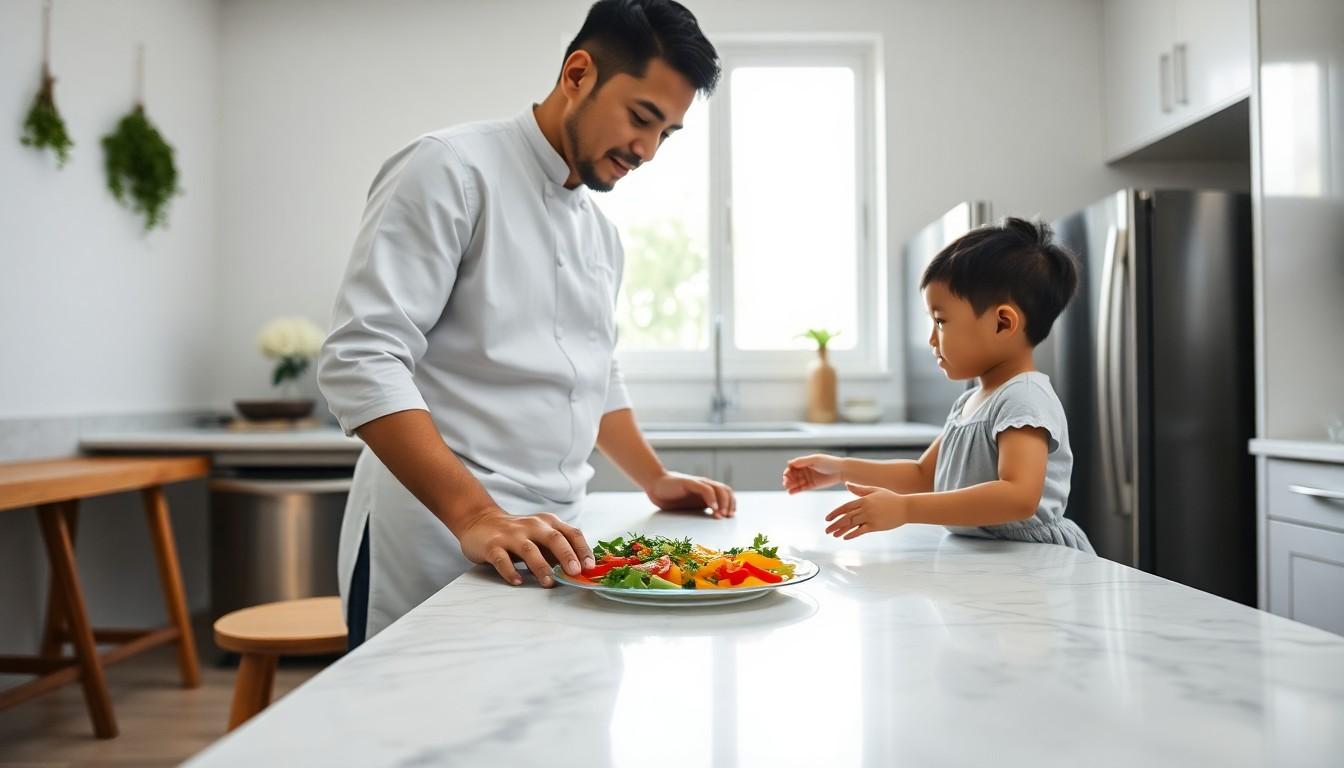

Celebrity private chef Khristianne Uy reveals unique strategies to foster positive mealtime experiences and encourage children to try new, healthier foods through trust, participation, and creative presentation.
Celebrity private chef Khristianne Uy, known as Chef K, says feeding children is as much about trust and atmosphere as it is about nutrition. In an as-told-to essay for Business Insider, the Los Angeles-based chef said years of cooking for families have taught her that children are far more willing to experiment when they feel included, rather than pressured. That approach, she argues, can turn mealtimes into something playful and reassuring instead of confrontational.
Uy’s advice broadly matches guidance from the US Centers for Disease Control and Prevention, which recommends pairing new foods with familiar favourites, serving small portions and involving children in preparation. The CDC also says repeated exposure often matters, because acceptance of a new food may take several tries. Other parenting resources, including PBS KIDS for Parents and New York State health officials, likewise stress that mealtimes should remain positive and that children should not be forced to eat.
One of Uy’s most distinctive tactics is a simple sorting system. She creates “forever” and “never” lists for children in the families she works with, allowing them to record what they already like and what they reject. When a child samples something new, it can move between those lists, giving the experience a sense of progress. She also uses colour-coded categories , green, yellow and red , to steer meals towards healthier choices without making the kitchen feel restrictive.
Rather than stripping out the foods children already love, Uy says she starts there and builds outwards. If a family is devoted to macaroni and cheese, for example, she may swap in brown-rice pasta rather than banning the dish altogether. That philosophy echoes public-health advice to begin with familiar textures and tastes, then introduce better-for-you alternatives gradually.
Uy also places strong emphasis on the emotional tone of the kitchen. She says children are more open when they feel a sense of belonging, and she often shares her own childhood dislikes to lower resistance. She never forces a child to taste anything, preferring to model curiosity by trying foods herself. In her view, that quiet invitation works better than pressure.
Presentation matters too. Uy says she tries to make unfamiliar ingredients look recognisable, from carrot sticks cut to resemble fries and served with ketchup to kale chips seasoned with nacho cheese. She also disguises vegetables inside dishes children already accept, such as cabbage folded into lasagne. The aim, she says, is not to trick children, but to reduce the sense that they are being asked to confront something alien.
Ultimately, Uy treats children as collaborators. She lets them help choose toppings, build their own versions of dishes and shape the final meal. That sense of participation, she says, can be especially effective with children who gravitate towards simple foods such as rice, bread or pasta. Her argument is straightforward: if children feel ownership over the process, they are more likely to come back for the next bite.
Disclaimer: This content is for informational purposes only and is not intended to be a substitute for professional medical judgment, advice, diagnosis, or treatment.