

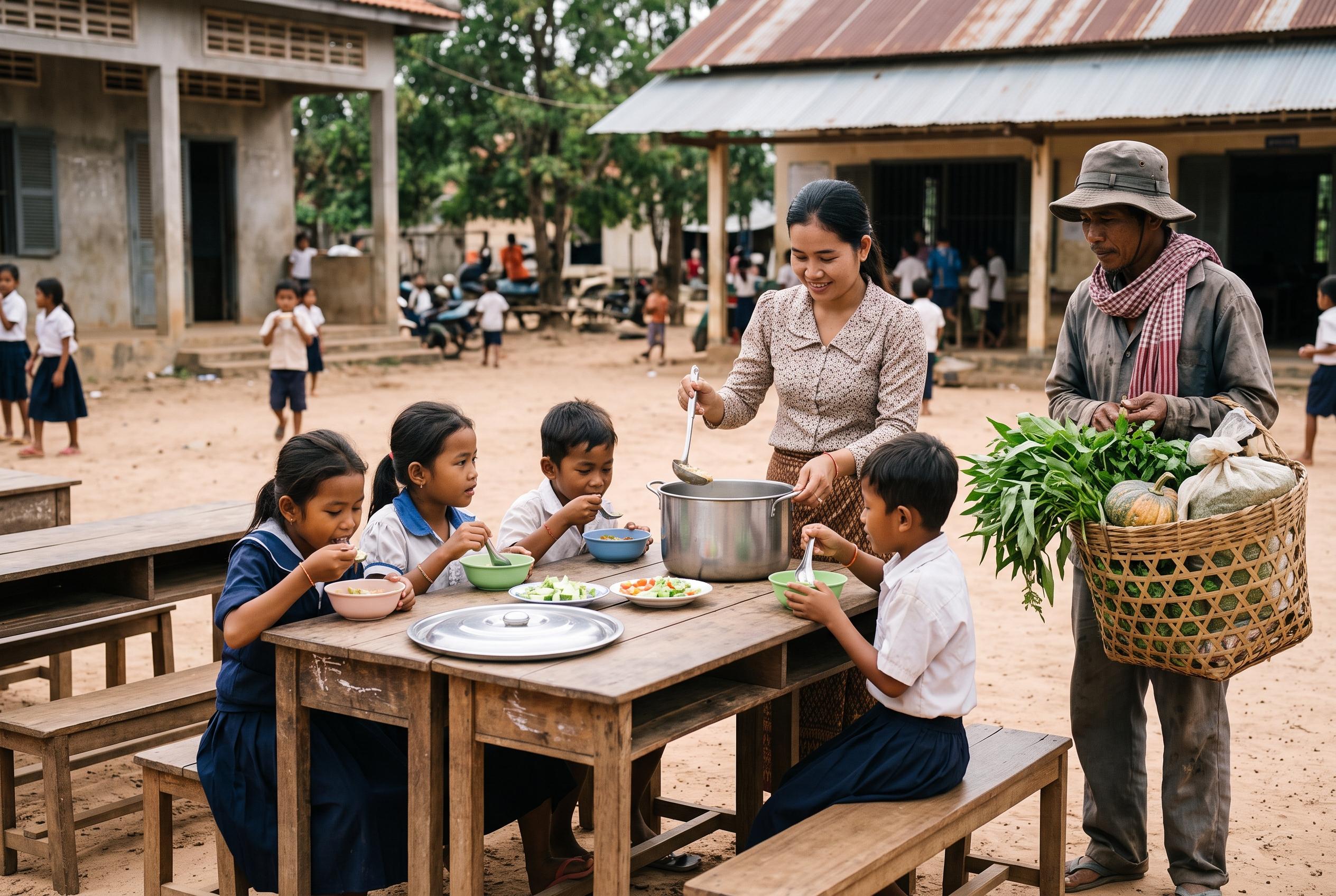

Cambodia plans to take full financial responsibility for its school feeding programme by 2028, aiming to improve child nutrition, promote healthier eating habits, and support local farmers, with initial efforts already reaching over 1,000 primary schools.
Cambodia plans to make its school feeding programme fully state-funded from 2028, a move Prime Minister Hun Manet said will help ensure primary pupils, especially in rural areas, receive regular nutritious meals while reducing reliance on outside support. Speaking at a ceremony at the University of Health Sciences on Sunday, he said the initiative is already under way in more than 10 provinces and now reaches more than 1,000 primary schools.
Hun said the programme is being run with the World Food Programme and other partners, but that the government will assume full financial responsibility for 1,114 schools by 2028. He said about 300,000 students currently benefit from the scheme, which aims not only to improve child nutrition but also to encourage healthier eating habits by reducing children’s exposure to foods high in sugar, fat and caffeine.
The prime minister also urged parents and schools to be more vigilant about sugary drinks, energy drinks and heavily processed snacks, warning that poor diets in childhood can have lasting health effects. He framed school meals as both a preventive health measure and a practical form of support, saying the programme is designed to intervene early while giving children reliable access to food during the school day.
The nutrition push also has an economic dimension. Meals are prepared using locally produced agricultural goods, creating a market for farmers and suppliers in surrounding communities. According to Hun Sovannara, deputy head of the Primary Education Department, the programme now covers about 15% of schools nationwide. He said the education ministry intends to extend it from the 2027 school year through 2031 to another 650 schools in four target provinces, including Preah Vihear, Stung Treng and Ratanakiri, under a financing arrangement in which Cambodia would provide about 60% and the United States 40%. Rice and cooking oil would come from the United States, while other ingredients would be bought locally.
The latest pledge builds on work already underway with international partners. In April 2025, Cambodia, the Korea International Cooperation Agency and the World Food Programme launched a US$10 million initiative to expand the national homegrown school feeding programme, which at that point was reaching 190,000 children in 686 schools. The plan is to provide hot meals to 133,300 children across 428 schools and gradually fold those schools into the national system, with full government ownership and management expected by 2028. A separate WFP evaluation of Cambodia’s home-grown school feeding work has also highlighted the programme’s broader goals of improving health, nutrition and hygiene while strengthening local procurement and longer-term sustainability.
Disclaimer: This content is for informational purposes only and is not intended to be a substitute for professional medical judgment, advice, diagnosis, or treatment.



