

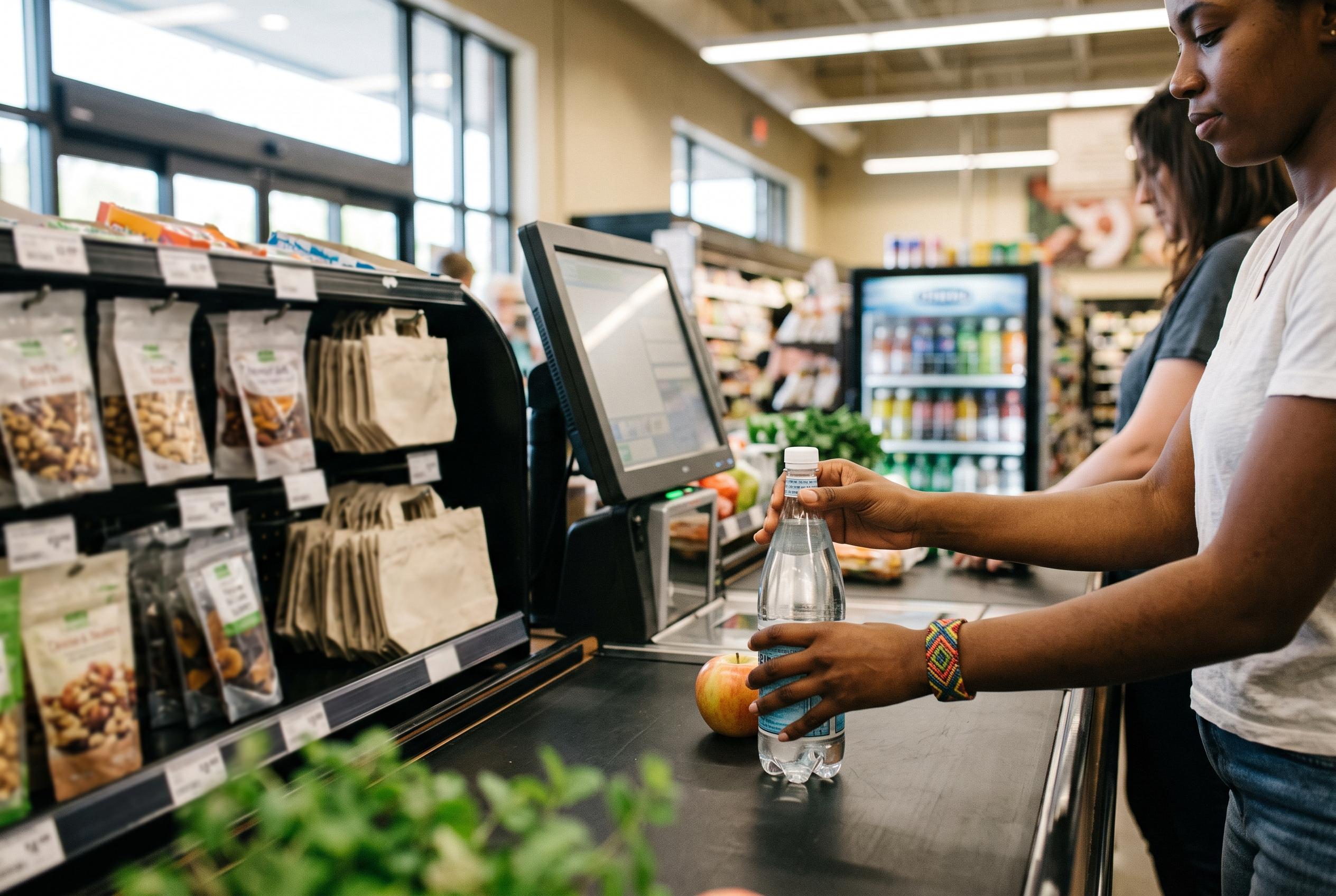

New research reveals Berkeley’s pioneering healthy checkout ordinances significantly cut sugary drink and candy sales, highlighting the policy’s potential for wider adoption and impact on shopping behaviour.
Berkeley’s first-in-the-world healthy checkout rules are now linked to a measurable drop in sugary drink sales, according to new research from Boston University and the University of California, Davis. The study found that after the city restricted candy, soda and other high-sugar products from checkout lanes in supermarkets, drug stores and mass-market retailers, soda sales fell overall and small-pack candy sales declined in supermarkets, where compliance was strongest.
The findings build on Berkeley’s campaign to reshape what shoppers see at the point of purchase. The city council approved the ordinance in 2020, and the policy took effect in stages, with enforcement beginning in 2022. Berkeley requires larger stores to replace checkout sweets and soft drinks with healthier items such as nuts, fruit and unsweetened drinks. Earlier work from the same research group found that the amount of added sugar in checkout foods and beverages dropped sharply after the rule was introduced, suggesting the policy changed both product availability and shopping behaviour.
Published in The Lancet Public Health, the latest study examined scanner data from 71 stores in Berkeley and comparison cities including Davis, Oakland and Sacramento between March 2019 and December 2023. It found that the biggest effects came in supermarkets, which complied more fully with the ordinance, while drug stores showed little change. The researchers said the results suggest healthy checkout rules can curb impulse buying, but warned that weak enforcement limits the impact. Justin White of Boston University said cities need to police such policies if they want lasting reductions in sugary purchases. Jennifer Falbe of UC Davis said the rules work best when paired with wider measures such as front-of-package labelling, taxes on sweetened drinks and subsidies for healthier foods.
Disclaimer: This content is for informational purposes only and is not intended to be a substitute for professional medical judgment, advice, diagnosis, or treatment.



