

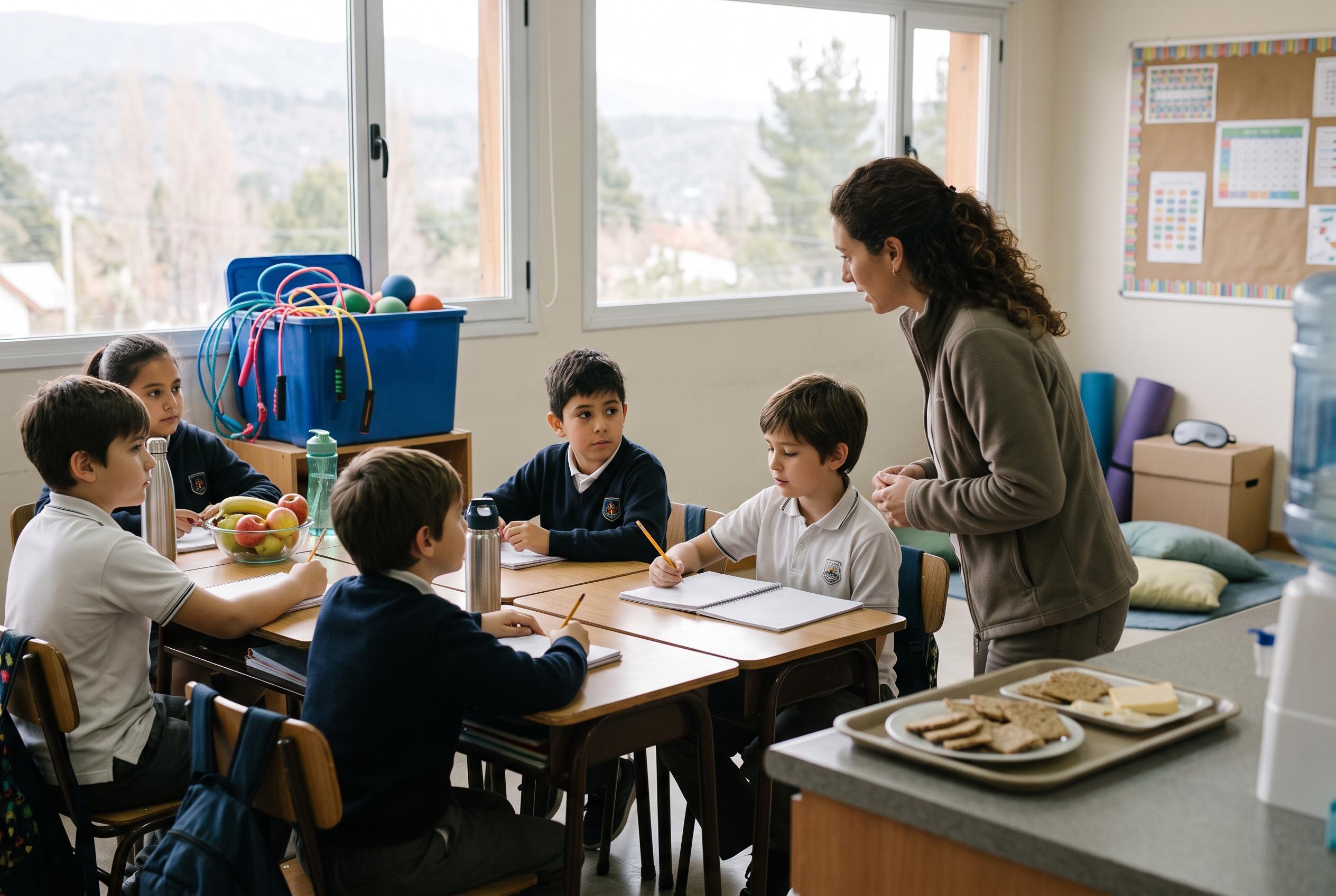

In Bariloche, a new initiative aims to combat childhood obesity by incorporating practical, community-driven strategies in schools, focusing on sleep, stress, activity, and dietary habits among children.
Researchers in Bariloche are preparing to take their findings on childhood obesity out of the laboratory and into a primary school, after years of tracking how weight, sleep, screen time, stress and exercise interact in local children.
The project grew out of a long-running study led by nutritionist Betina Buttó with specialists from the National University of Río Negro, the National University of Comahue, Argentina’s scientific research council Conicet and Bariloche’s public hospital. The team first identified a troubling pattern: a significant share of children in the city were living with overweight or obesity, and the problem appeared to worsen with age.
According to the research described by Rio Negro and the findings published in the Archives of Argentine Paediatrics in October 2023, the study covered 1,188 children from 31 schools, including children in reception year, first grade and seventh grade. That earlier paper, which analysed a smaller sample, found that 41% of participating children had overweight or obesity and concluded that diet alone did not explain the scale of the problem.
The Bariloche team widened the lens. Families completed questionnaires on habits at home, while older pupils answered questions about sleep, screen use, food routines and perceived stress. Buttó told Rio Negro that the goal was to understand where “malnutrition by excess” was coming from, rather than simply counting calories or blaming food choices alone.
The results pointed to a cluster of risk factors. In first grade, 35% of children were living with overweight or obesity, rising to 53% by seventh grade. The researchers also found that children in seventh grade with obesity tended to report higher levels of perceived stress. Sleep emerged as one of the clearest concerns: Buttó said 70% of seventh graders were sleeping less than recommended during the week, with irregular bedtimes at weekends adding to the disruption of their body clock.
Screen habits were another concern. The study found that 81% of first graders and 93% of seventh graders were using screens in the hour before sleep, despite advice to stop screen use before bedtime. It also found that 28% of first graders and 35.9% of seventh graders ate while looking at screens, a pattern the researchers say can reduce awareness of what is being consumed and encourage grazing.
Physical activity outside school was also limited. Only about half of the children exercised beyond the school day, with cold weather and limited opportunities cited as barriers. The researchers said fruit intake was particularly low, with 42% of children not eating fruit at all or eating it only once to three times a week.
Buttó said the point of the work was to move beyond a narrow nutritional frame. She said there is now clear evidence linking weight status with sleep, stress and activity levels, and warned that the health consequences of excess weight can include metabolic syndrome, high blood pressure and diabetes at increasingly young ages.
The next step is a pilot intervention in a public school in Bariloche, scheduled for 2027. Rather than offering one-off talks, the team wants to work inside the school with teachers and families to test practical changes. Buttó told Rio Negro that workshops delivered from outside rarely have much impact, and that lasting change is more likely when the school community helps shape the approach from within.
Disclaimer: This content is for informational purposes only and is not intended to be a substitute for professional medical judgment, advice, diagnosis, or treatment.



