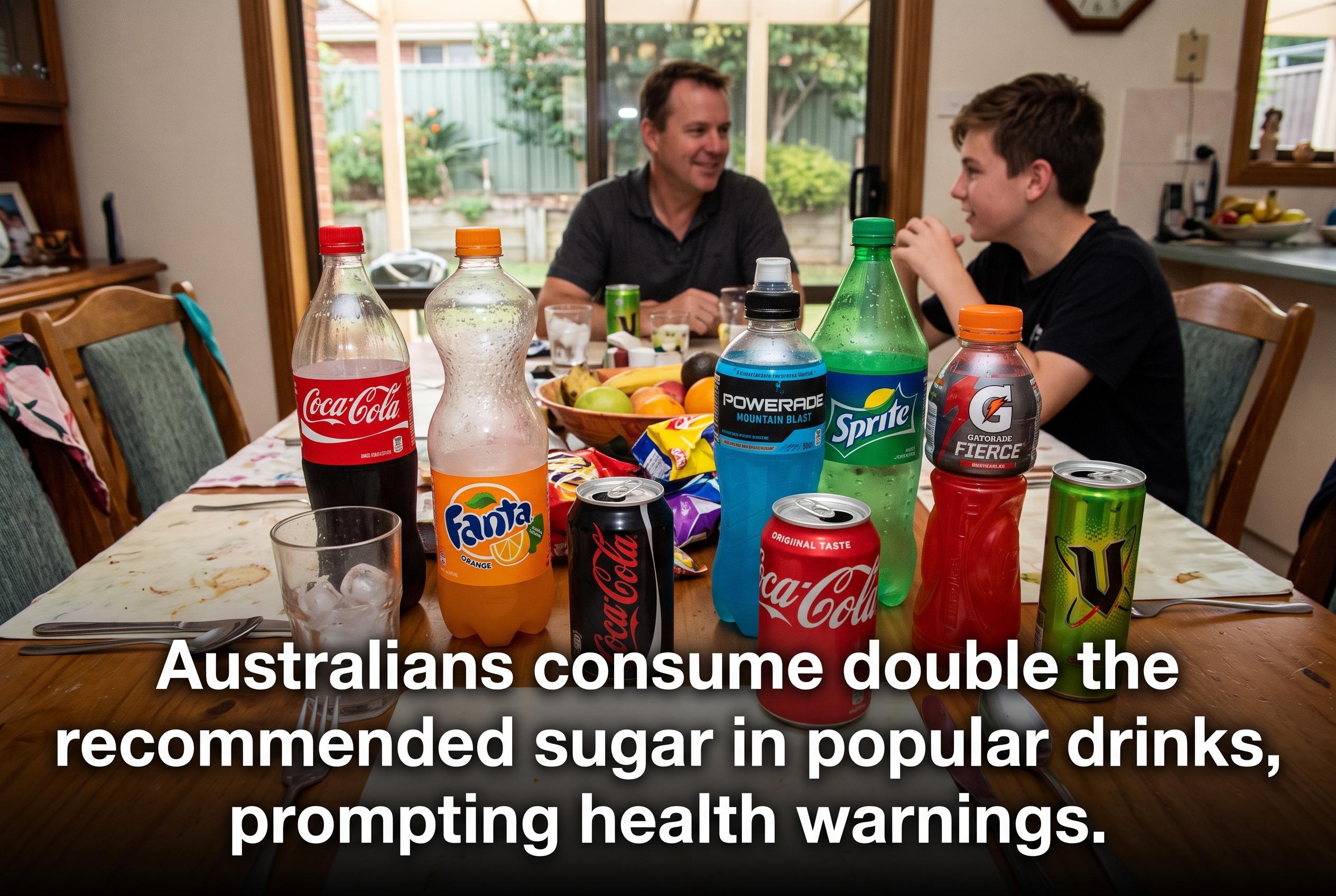

New audit reveals the sugar content in leading soft, energy, and sports drinks exceeds daily limits, sparking calls for stronger regulatory action amid rising health concerns.
Australians are drinking far more sugar than health authorities recommend, with a new audit finding that some popular soft drinks, energy drinks and sports drinks contain more than twice the daily limit in a single serve.
The Food for Health Alliance said several supermarket favourites were among the worst offenders, including Coca-Cola Classic and Solo Original Lemon, each containing about 16 teaspoons of sugar in a 600ml bottle. Monster Energy Green, V Energy and Red Bull were also flagged for especially high sugar levels.
The World Health Organisation says free sugars should make up less than 10% of daily energy intake, which is roughly 12 teaspoons for a 2,000-calorie diet, and that cutting intake to about 6 teaspoons may bring extra health benefits. Healthdirect says high sugar intake is linked to obesity, type 2 diabetes, heart disease, kidney disease, stroke, some cancers and dental damage.
Jane Martin, executive manager of the Food for Health Alliance, said sugary drinks remain the main source of added sugar in the Australian diet and are heavily marketed to consumers. She argued that companies will not lower sugar levels without stronger government action, pointing to annual sales of more than 1.3 billion litres across the country.
Dental experts also warn of the damage caused by acidic, sugary drinks. Monica Farrelly of the Australian Dental Association said they are a major driver of tooth decay across all age groups, adding to the burden on families and the health system.
The warning lands as Cancer Council Victoria research shows 77% of Australians surveyed support government measures to pressure drink makers into reducing sugar content. It also comes amid growing concern about links between sugary drinks and cognitive decline, after dementia specialist Helena Popovic described soft drinks as harmful to brain health and urged people to cut them from regular diets.
Disclaimer: This content is for informational purposes only and is not intended to be a substitute for professional medical judgment, advice, diagnosis, or treatment.