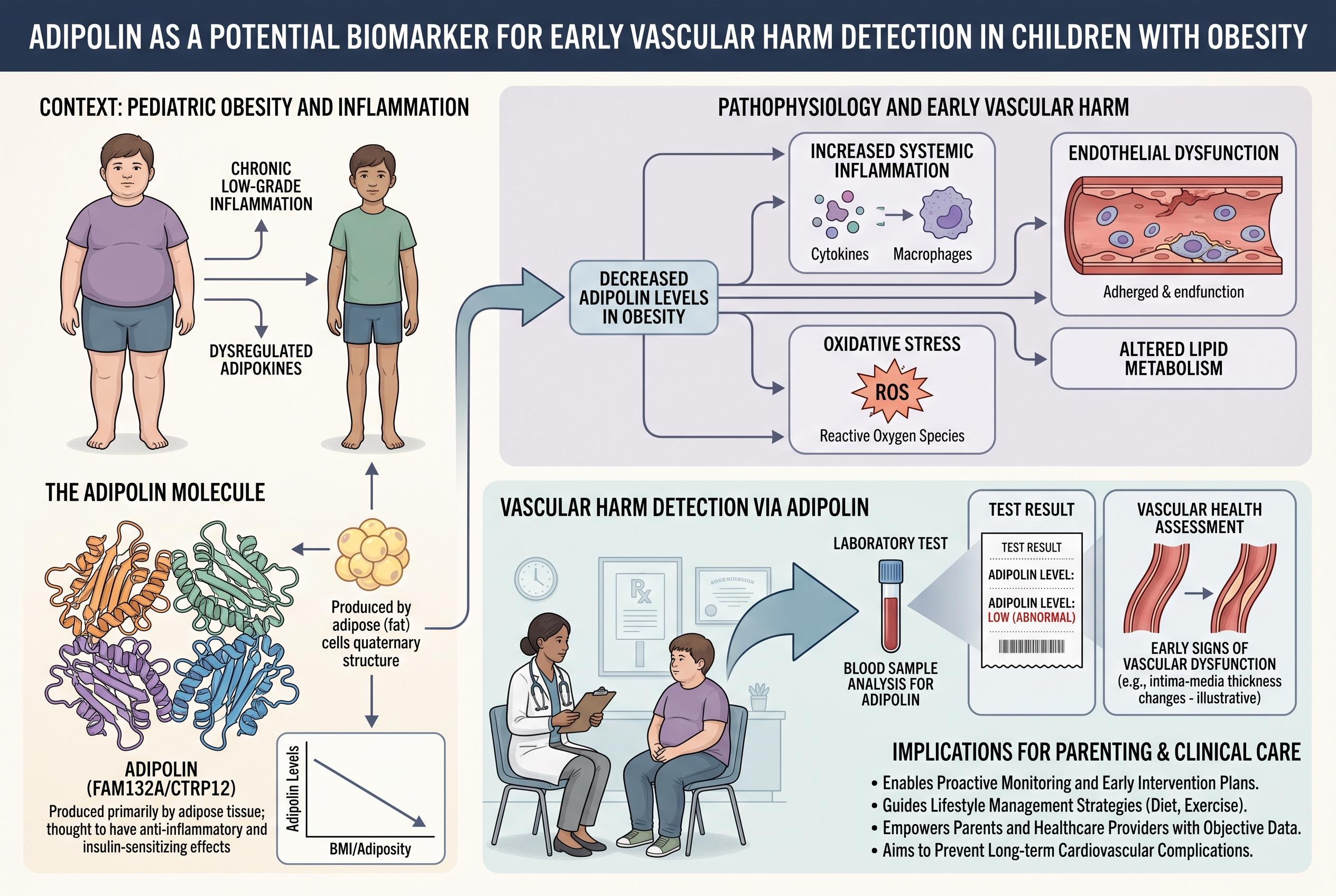

A molecule produced by fat tissue, adipolin, could help identify early signs of blood vessel damage in obese children before symptoms emerge, potentially transforming early intervention strategies.
A molecule produced by fat tissue may help doctors spot vascular harm in children with obesity before the damage becomes obvious, according to a study published in Pediatric Research. The research focuses on adipolin, also known as FAM132A or CTRP12, which is increasingly being studied for its role in the dialogue between adipose tissue, metabolism and the cardiovascular system.
The concern is that blood vessel injury often develops without warning. A child can appear healthy, with no symptoms and normal blood pressure, while changes are already taking place in the vessel wall. Detecting those shifts earlier could give clinicians a chance to act through diet, exercise and, where needed, medical treatment before long-term heart risk becomes entrenched.
Nature’s summary of the study says serum FAM132A levels were higher in Chinese children with obesity than in normal-weight controls and that the protein was positively associated with body mass index, waist-to-hip ratio and endothelial dysfunction markers including VCAM-1, E-selectin and ESM-1. That pattern supports the idea that adipolin could reflect early vascular stress rather than only broader metabolic disturbance.
The finding also fits with a wider body of paediatric research suggesting that obesity can affect the endothelium, the thin inner lining of blood vessels, at a very early stage. A mini-review in Frontiers in Pediatrics argues that soluble adhesion molecules and other endothelium-specific markers may help identify early injury, while earlier studies have linked obesity in children to higher vaspin, visfatin, cystatin C and endothelium-derived microparticles, all of which have been associated with insulin resistance or vascular dysfunction.
Even so, the case for adipolin remains preliminary. Researchers would need large, long-term studies to show that the marker is reliable across age, sex and puberty, and that it adds meaningful information beyond existing blood tests. If that evidence emerges, adipolin could become part of a broader, multi-marker approach to assessing cardiovascular risk in children with obesity, rather than a stand-alone diagnostic tool.
Disclaimer: This content is for informational purposes only and is not intended to be a substitute for professional medical judgment, advice, diagnosis, or treatment.