

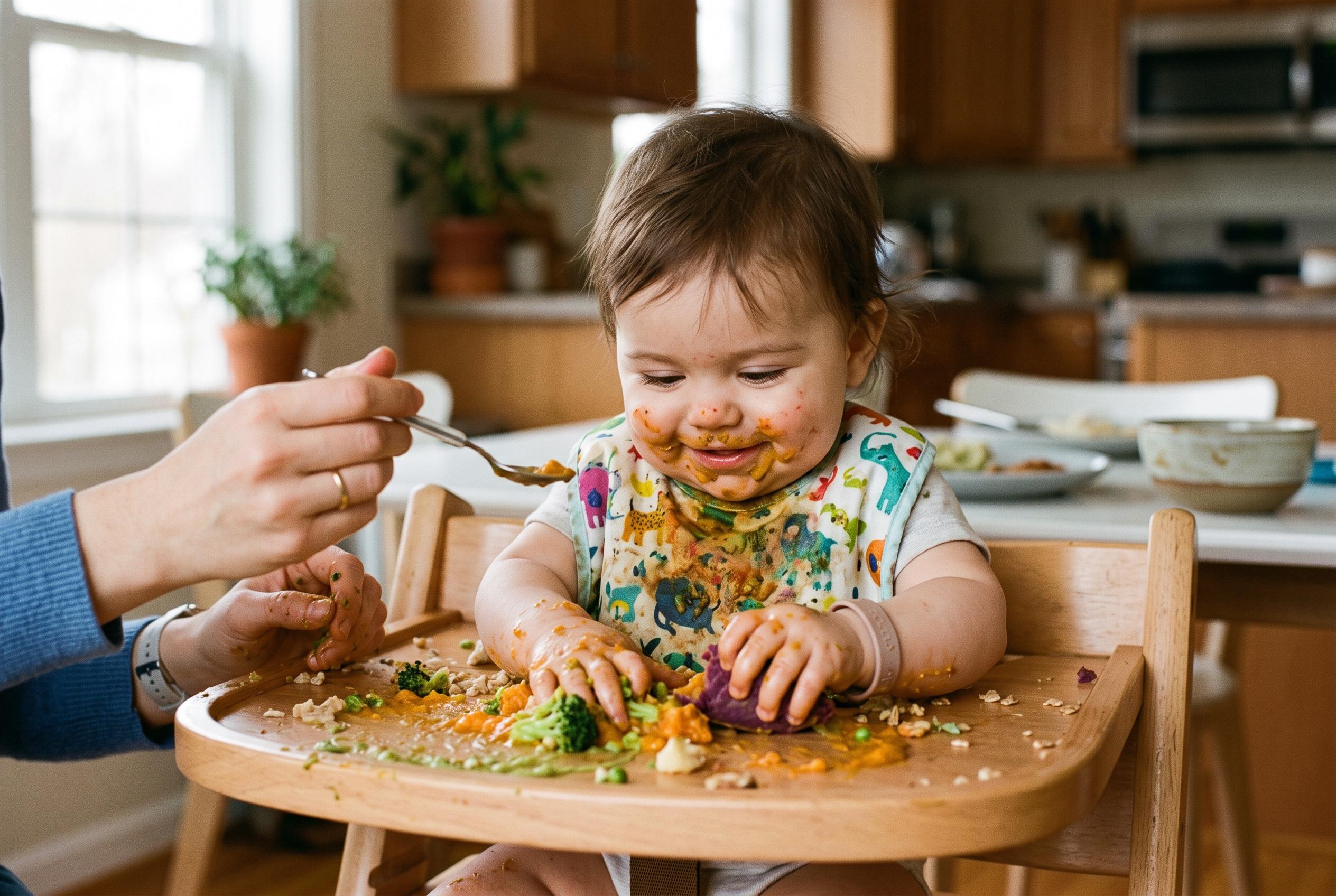

Smearing, squashing and grabbing food can help babies build motor skills, explore textures and move towards independent eating , provided parents keep choking risks in check.
What looks like a spectacular mealtime mess can still be a useful lesson in disguise. When babies smear yoghurt through their hair or squash broccoli into the tray, they are not simply making extra work for caregivers. They are gathering information through touch, pressure and movement, which helps them understand what food feels like and how it behaves. According to BabyYumYum, that hands-on exploration is part of how infants begin to learn about eating rather than a sign that the meal has gone wrong.
Messy experimentation also supports the physical skills babies need for self-feeding. Reaching, grasping and bringing food to the mouth help strengthen fine motor control and hand-eye coordination, while repeated contact with different textures builds sensory awareness. KinderCare says this kind of play can support the transition towards independent eating, and the American Academy of Pediatrics notes that baby-led weaning, in which children feed themselves rather than relying only on purées, can encourage autonomy and expose them to a wider range of tastes and textures.
That does not mean every form of food play is risk-free. The American Academy of Pediatrics cautions that parents still need to think carefully about choking hazards and nutritional balance, especially when introducing solid foods. Soft, age-appropriate pieces and close supervision remain important, even when the goal is exploration rather than neatness. In that sense, food play works best as a guided experience: one that allows curiosity, but within clear boundaries.
There are also longer-term reasons some experts see value in letting children get messy at the table. WebMD says food play can help children use their senses to make sense of the world, while Ovia Health and Enfamil both point to potential benefits for sensory development, fine motor skills and a more relaxed relationship with new foods. Pathways.org similarly describes food play as a way to introduce the ideas behind chewing and swallowing. For parents, the takeaway is simple: not every smeared spoonful is wasted. Sometimes, the lesson is happening precisely because the meal is messy.
Disclaimer: This content is for informational purposes only and is not intended to be a substitute for professional medical judgment, advice, diagnosis, or treatment.



