

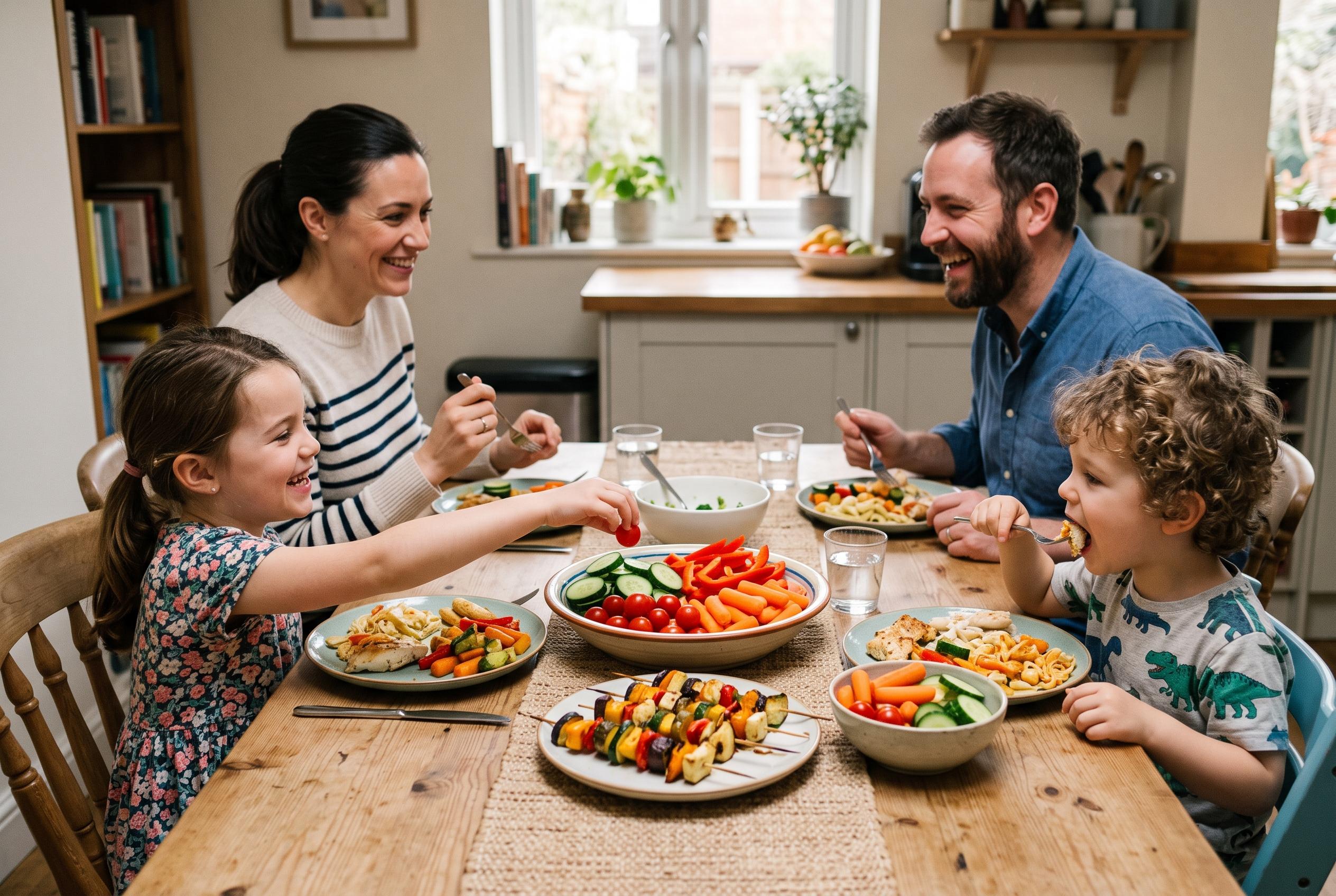

Simple strategies such as displaying chopped vegetables and creating a relaxed mealtime environment can encourage children to eat more vegetables, according to recent studies and nutrition experts.
Parents are often told that making vegetables more visible can help children eat them, and one simple home test suggests there may be something to that. After dismissing the idea at first, the writer found that putting chopped veg on a board or leaving it out before a meal led to noticeably better results with children who would usually turn their noses up at raw cucumber or carrots.
That experience fits with advice from Charlotte Stirling-Reed, a baby and child nutritionist, who says placing chopped vegetables on the table before dinner or after school can be an easy way to boost intake. The appeal, she says, is that children are often hungrier at those times and the food is offered without pressure, which can reduce mealtime battles. She also argues that repeated exposure matters, because familiarity can help children become more comfortable with foods they might not eat straight away.
There is some research to back up the wider idea. A 2013 study found that offering a variety of fruit and vegetables as snacks increased the chances that preschool children would choose and eat them. Another study, published in 2019, found that vegetable-enriched snack bars became more popular with children after repeated exposure, although their overall liking for vegetables did not change much. That suggests the format can help, even if it does not instantly transform broader taste preferences.
Other work points in the same direction. A 2020 study found that visual cues on children’s plates, such as pictures of fruit and vegetables, were linked with higher intake, while a 2015 study found that segmented plates with pictures increased both the amount of fruit and vegetables taken and eaten by preschool children. More recently, a 2023 randomised clinical trial found that longer family meals were associated with greater fruit and vegetable consumption, underlining the idea that timing, presentation and a relaxed atmosphere can all influence what children actually eat.
Disclaimer: This content is for informational purposes only and is not intended to be a substitute for professional medical judgment, advice, diagnosis, or treatment.



