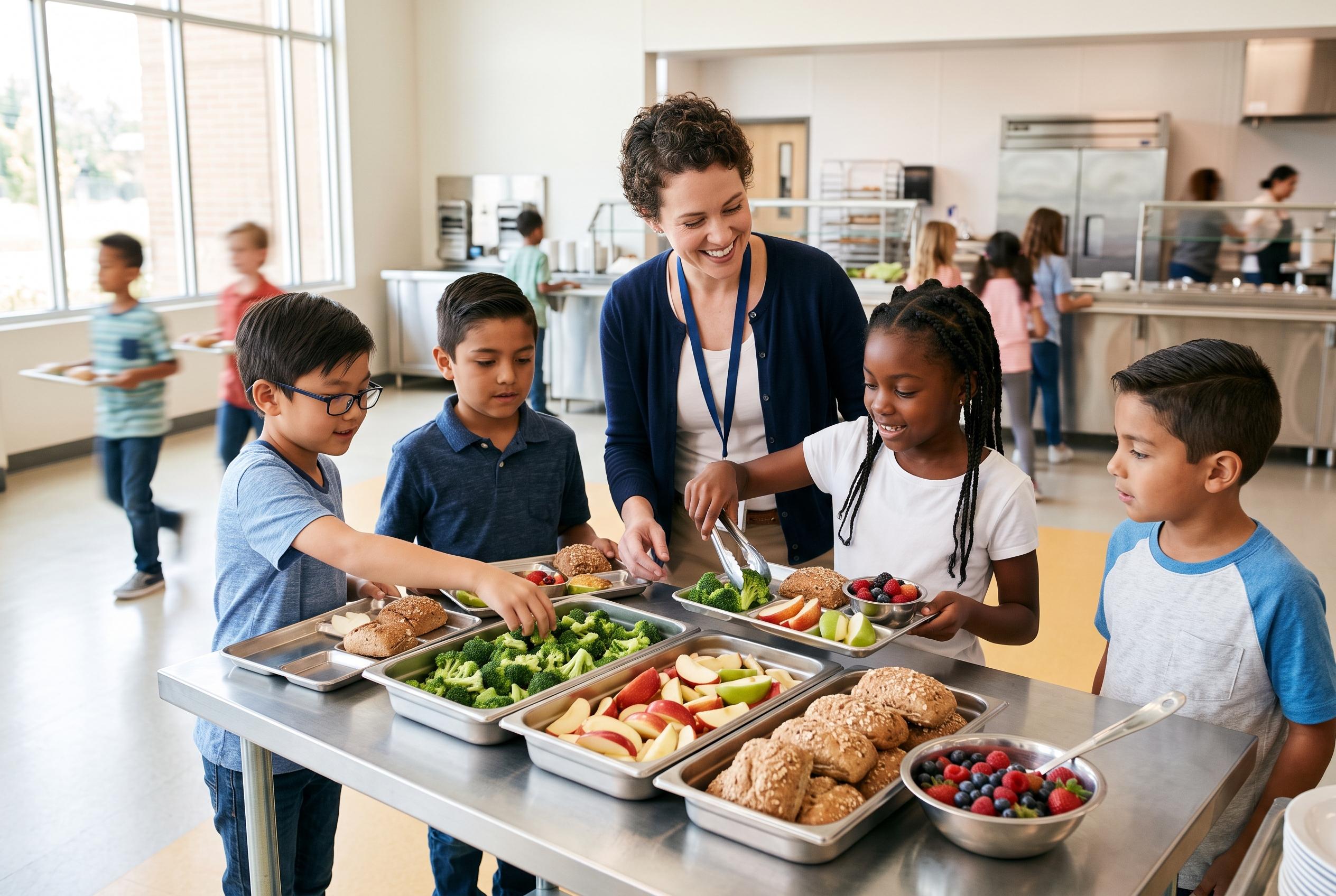

As federal regulations on added sugars and sodium in school meals become stricter from July 2027, some states are already implementing their own bans on ultra-processed foods and synthetic dyes, prompting a shift in school nutrition policies and choices.
For many parents, the school lunch question is less about ideology than logistics: buy, pack or mix the two. The answer does not have to be all or nothing. What matters most is whether a child is getting enough food, enough variety and enough to eat during the school day. The National School Lunch Programme still gives schools a basic nutrition framework built around fruit, vegetables, grains, protein and milk, with limits on calories, saturated fat and sodium.
That framework is changing again. The US Department of Agriculture says schools will face tighter added sugar limits from 1 July 2027, when no more than 10% of weekly calories in school meals may come from added sugars. The same update also lowers sodium targets by 10% at breakfast and 15% at lunch, part of a phased effort to align school meals more closely with federal dietary guidance.
Some states are moving faster. Arizona’s Healthy Schools Act takes effect in the 2026-27 school year and bars public schools from serving or selling certain ultra-processed foods during the school day. The Arizona Education Department says the law targets ingredients including several dyes and additives. California has approved its own restrictions on some synthetic dyes, while Nebraska has passed a separate dye ban set to begin in August 2027, showing how state policy is moving ahead of federal changes.
Even with these changes, school lunch is still not automatically the best choice for every child. A cafeteria meal can offer useful exposure to vegetables, beans, whole grains and other foods that may never appear in a lunchbox, but short lunch periods and limited appeal can mean food gets left behind. For children with allergies, sensory sensitivities or strong preferences, a packed lunch may work better; for other families, a combination of home-packed and school-bought meals is the easiest fit. The USDA says the programme is meant to provide balanced, low-cost or free lunches, but actual participation still depends on whether children will eat what is served.
Disclaimer: This content is for informational purposes only and is not intended to be a substitute for professional medical judgment, advice, diagnosis, or treatment.