

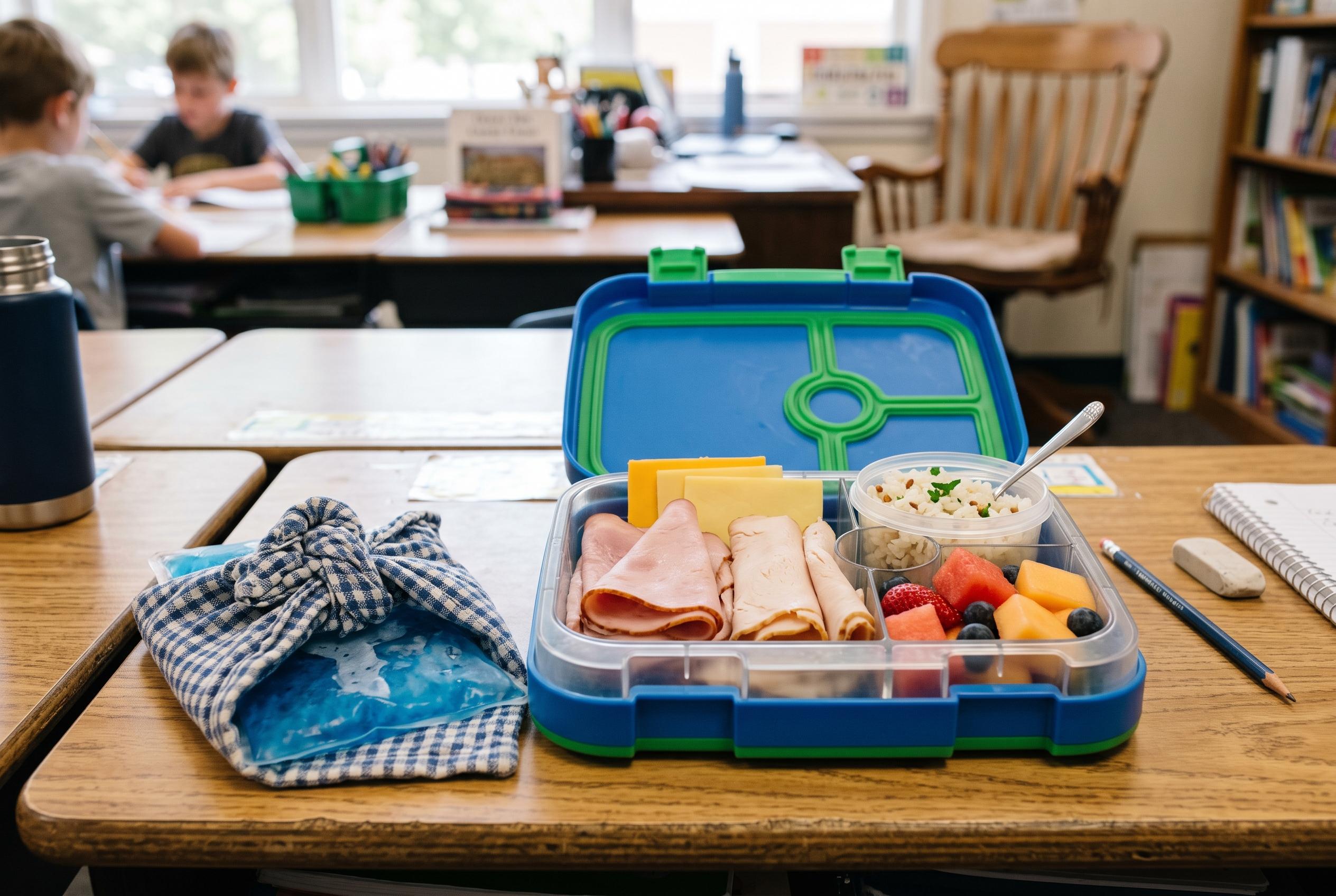

Deli meats, dairy, cooked rice and cut fruit can become risky before lunchtime unless they are kept cold, experts warn.
Parents packing lunch at dawn often assume a child’s meal will be fine until midday, but food safety experts warn that the gap between packing and eating can create a real risk. Perishable foods can enter what specialists call the temperature danger zone, where bacteria multiply quickly, if they sit too long outside refrigeration. A commonly cited rule is that cold food should not remain unrefrigerated for more than two hours, or one hour when the weather is especially hot.
That advice matters most for foods that look harmless but are particularly vulnerable once they leave the fridge. Sliced deli meats, chicken salad, tuna salad, cheese sticks, sliced cheese, yoghurt, hard-boiled eggs and cooked leftovers all need to stay chilled because they are moist, protein-rich and easy for bacteria to spoil. Yahoo’s nutrition coverage and other lunchbox safety guides also flag cooked poultry, seafood salads and dairy-based fillings as items that should not be left to warm up in a backpack or classroom cubby.
Some of the biggest problems involve foods that are prepared in advance and then handled again before school. Cooked rice and pasta can pose risks if they are cooled too slowly or held warm, because bacteria such as Bacillus cereus can survive cooking and produce toxins that reheating will not reliably remove. Fruit and vegetables are not exempt either: once melon is cut, the protective rind is gone, and dips such as hummus, ranch or yoghurt-based sauces also need to be kept cold.
Food safety guides recommend treating lunchbox packing as a cold-chain problem rather than a convenience task. That means chilling leftovers quickly, refrigerating them overnight, and using insulated bags with ice packs or other frozen items to keep the lunch at a safe temperature. Some guides suggest freezing yoghurt tubes, water bottles or even sandwiches the night before so they act as extra cold sources on the way to school.
There are also practical ways to reduce the risk without giving up variety. Shelf-stable items such as peanut butter and jelly sandwiches, unopened juice boxes and some boxed milks do not need the same level of protection, while pre-heated thermoses can keep food safely hot if they are properly filled and sealed. The basic rule is simple: if a food would normally live in the fridge, it should travel there too, at least until lunchtime.
For parents and caregivers, the safest lunchbox is usually the one that combines common sense with a cold source. The details may seem small, but they matter: a frozen gel pack, an insulated bag and a few minutes of planning can make the difference between a healthy midday meal and food that has sat too long in the danger zone.
Disclaimer: This content is for informational purposes only and is not intended to be a substitute for professional medical judgment, advice, diagnosis, or treatment.



