

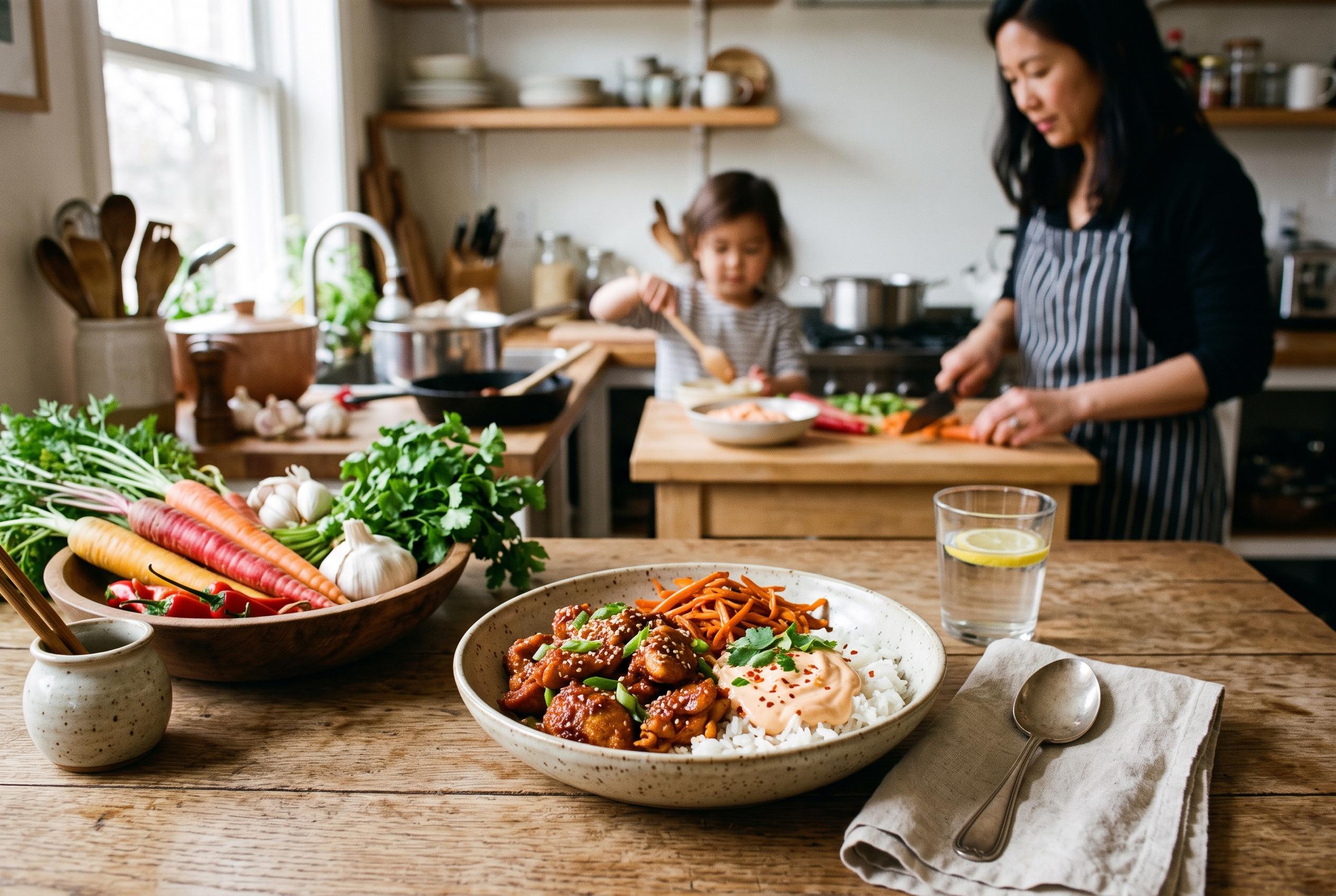

Gochujang-marinated chicken, caramelised shredded carrots and kimchi mayo turn a single-tray supper into a colourful, make-ahead bowl with plenty of crunch.
Sheet-pan dinners continue to appeal to busy home cooks because they keep the flavour high and the washing-up low, and this version from Wandering Chickpea leans into that formula with particular confidence. The recipe pairs gochujang-marinated chicken tenders with carrots that are shredded, dried and roasted until the edges take on a crisp, caramelised finish, then serves everything over rice with cucumbers and a quick kimchi mayonnaise. The result is a weeknight bowl built on a familiar Korean-inspired sweet-heat profile, but made simpler through smart shortcuts and a single tray.
At the centre of the dish is gochujang, the fermented Korean chilli paste that gives the chicken its sweet, savoury and gently smoky character. The recipe uses tenders rather than larger cuts, which helps the meat cook quickly and allows more surface area to pick up colour in the oven. Similar sheet-pan chicken dishes from other recipe developers also rely on gochujang for its ability to add depth without requiring a long ingredient list, while some versions boost the heat with gochugaru, Korean chilli flakes.
The carrots are what give this meal its most distinctive practical edge. Instead of whole vegetables, the recipe calls for bagged shredded carrots tossed with shallots, cornstarch, oil, soy sauce and a little more gochujang. That combination is designed to encourage browning rather than steaming, a common technique in sheet-pan cooking when a cook wants texture as well as flavour. Other cooks working in the same format use a similar strategy, roasting root vegetables alongside chicken or swapping in different vegetables depending on what is in the fridge.
The finishing touches keep the bowl balanced. A two-ingredient kimchi mayo adds creaminess and a tangy, salty kick, while smashed cucumbers bring freshness and crunch. That combination of rich sauce, sharp pickle notes and cool vegetables is echoed in other gochujang bowl recipes, including versions that pair the protein with slaws, rice or noodles to soften the spice and add contrast. The Wandering Chickpea recipe also points out that the dish works well for meal preparation, which is one reason sheet-pan Korean-style dinners have become such a reliable format for weeknight cooking.
There is also enough flexibility here to make the recipe useful beyond a single night. The chicken can be marinated in advance, the rice can be made ahead or pulled from the freezer, and the soy sauce can be swapped for tamari if gluten-free cooking is needed. The recipe notes that gochujang labels vary in heat and flavour, which matters because different brands can taste milder, sweeter or noticeably hotter. That kind of adaptability is part of the appeal of this style of dish: it gives home cooks a clear framework, then leaves room for small substitutions without losing the essential balance of heat, sweetness and crunch.
Disclaimer: This content is for informational purposes only and is not intended to be a substitute for professional medical judgment, advice, diagnosis, or treatment.



