

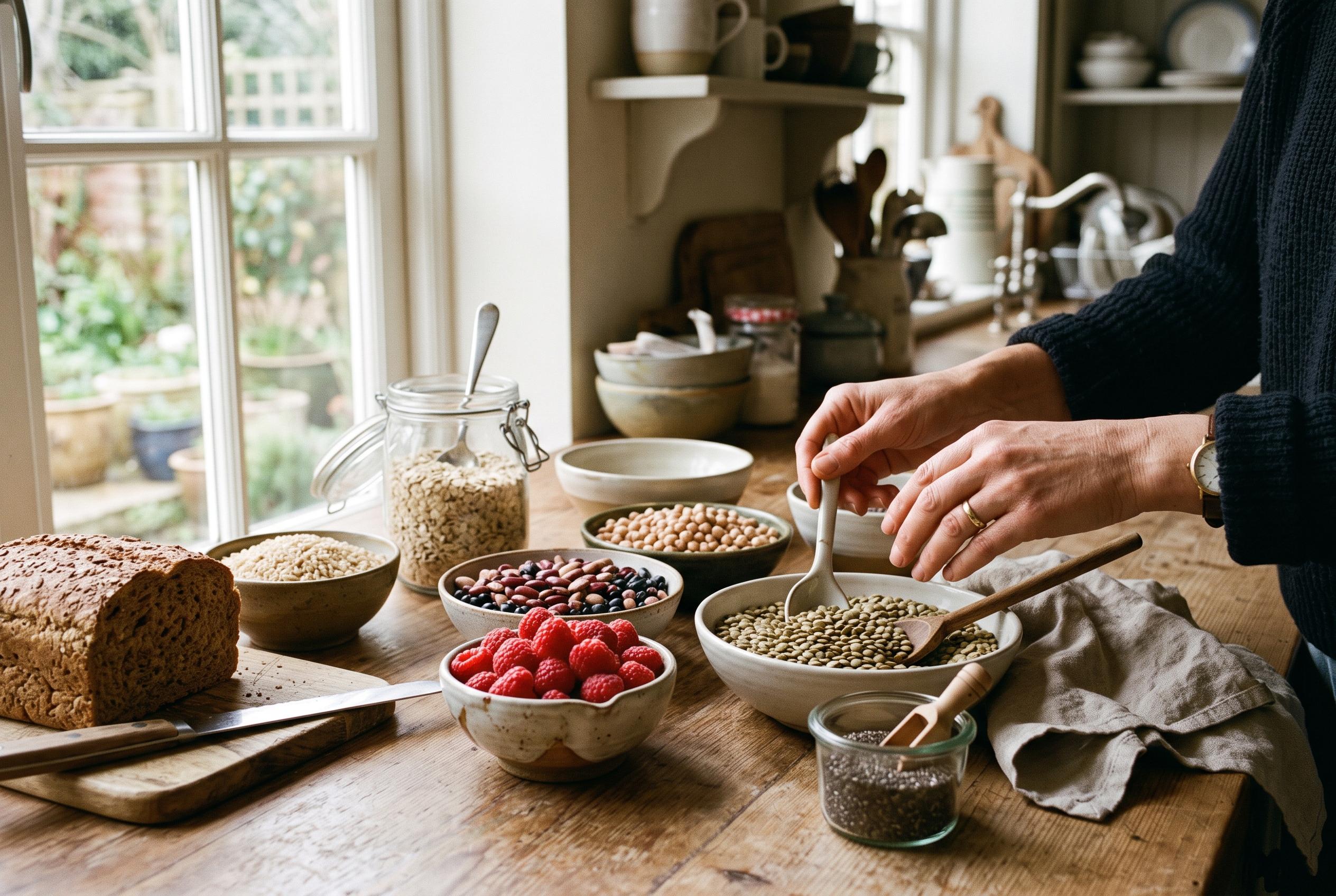

From lentils and beans to raspberries, oats and chia seeds, these versatile everyday foods can help raise fibre intake without costly or complicated meal changes.
Fibre often gets discussed as a single daily target, but in practice it is easier to reach by building meals around foods that do more than one job. Lentils are a strong example. Healthline notes that a cooked cup delivers about 18 grams of protein and 15 grams of fibre, while also remaining low in fat and modest in calories. Because they cook quickly and do not need soaking, lentils are one of the simplest high-fibre staples to keep on hand for soups, grain bowls and batch-cooked lunches. Healthline and WebMD also point to their links with better heart health and improved post-meal blood sugar control, which makes them especially useful for people trying to manage cholesterol or glucose.
Split peas and black beans offer a similar advantage: they are filling, versatile and inexpensive. Verywell Fit says cooked split peas provide 8.3 grams of fibre per 100 grams, while other nutrition sources cited in the wider reporting put a cup of split peas at roughly 16 grams of fibre. Consumer Reports notes that cooked green peas can deliver about 16 grams of fibre per cup and may support gut health, adding another option for families who want a vegetable side that is more substantial than the usual salad. Black beans, meanwhile, hold up well in tacos, bowls and reheated lunches, making them a practical choice for meal planning as well as nutrition.
Fruit can help raise fibre intake too, especially when it is chosen carefully. Raspberries stand out because they pack far more fibre than most other berries without bringing a heavy sugar load with them. Mayo Clinic has highlighted a simple breakfast example in which raspberries, oats and almonds can provide a large share of a day’s fibre before lunch. That is useful for parents and caregivers looking for a realistic way to improve a family’s diet without overhauling every meal. Chia seeds work in a similar way, since a tablespoon adds several grams of fibre and can disappear into yoghurt, smoothies or pudding. Because chia absorbs liquid and thickens, it can also help breakfast feel more satisfying.
Some of the most effective fibre sources are the ones people overlook in the produce aisle. Artichokes provide a meaningful fibre boost for a single vegetable, and they also bring antioxidants to the table. Oats are another quietly powerful option, especially because much of their fibre is beta glucan, a soluble fibre that has been linked to healthier cholesterol levels. A 2020 review in Nutrients associated higher fibre intake with better gut bacteria, improved regularity, heart health and a lower risk of type 2 diabetes. Bran cereal can be even more efficient for busy mornings: half a cup of a high-fibre bran cereal can supply 14 grams of fibre, making it an easy no-cook option when time is short.
The most useful takeaway is that fibre is rarely about one perfect food. It is about a pattern that repeats across the day. A bowl of oatmeal at breakfast, beans at lunch, lentils or split peas at dinner, and fruit or seeds between meals can close the gap far more reliably than waiting for a single “superfood” to do the work. The foods on this list share another advantage: they are familiar, affordable and easy to keep stocked, which is often what determines whether a healthy habit lasts.
Disclaimer: This content is for informational purposes only and is not intended to be a substitute for professional medical judgment, advice, diagnosis, or treatment.



