

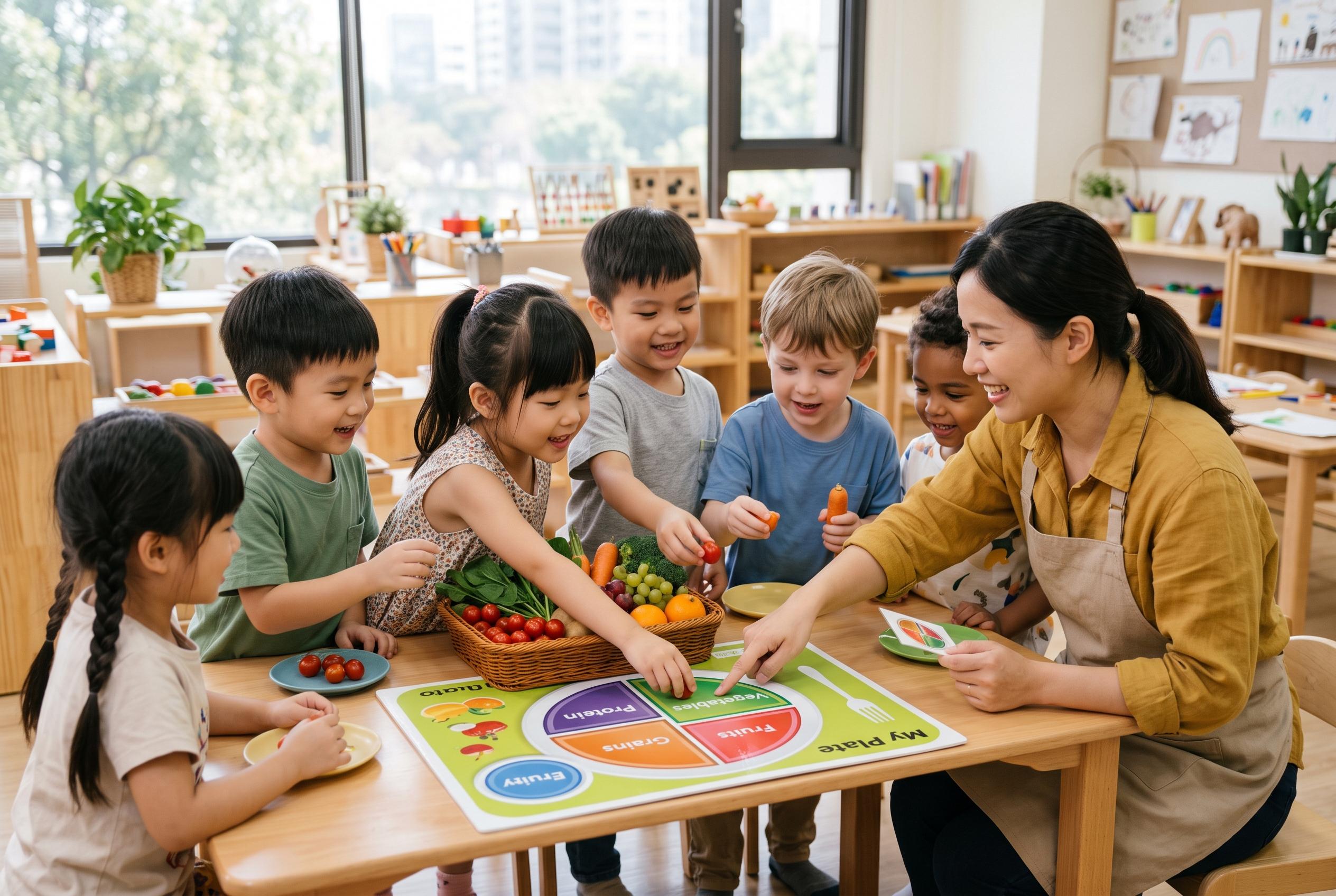

A kindergarten in Taichung is transforming lunchtime into a practical lesson on healthy eating using the government’s “My Plate” guide, coinciding with the expansion of free school lunch programmes across Taiwan that aim to improve children’s nutrition and foster healthier eating habits.
In Taichung, a kindergarten is turning lunchtime into a lesson in nutrition, using the government’s “My Plate” guide to help children judge whether their meals are balanced. Rather than simply telling pupils to finish what is on their tray, teachers are asking them to look at the food in front of them, identify the main groups and think about what might be missing.
The children begin with simple observations, such as rice, chicken and vegetables, then move on to planning menus, shopping and cooking. By comparing their meals with the six major food groups, they notice when fruit or dairy is absent and start thinking about how to fill the gap. Teachers say the exercise also makes room for individual needs, such as children who cannot drink milk or who are still unable to chew harder foods because they are changing teeth.
The lesson has also changed how some children respond to unfamiliar dishes. According to the school, pupils who once resisted new foods are now more likely to ask what ingredients are being used and to try them. The academy behind the programme says the aim is not rote memorisation of nutrition terms, but practical learning through real meals, so that children gradually build the habit of judging what a healthy lunch should contain.
The approach arrives as free school lunch policies widen across Taiwan. Taiwan News reported that Taoyuan expanded its free milk programme in August 2026 to include about 67,000 junior high school students, while New Taipei was due to begin free school lunches for all public and private elementary and junior high students on August 31, 2026. Kaohsiung announced its own citywide free lunch plan in January 2026, and Taipei said this year that it would provide free nutritious lunches for all public and private elementary and junior high students from the 2026 academic year.
Disclaimer: This content is for informational purposes only and is not intended to be a substitute for professional medical judgment, advice, diagnosis, or treatment.



